Iran’s Islamic Revolutionary Guard Corps has declared the strategically vital Strait of Hormuz closed to all vessel traffic, warning that any ship attempting to transit the waterway will be attacked, according to Iranian media.
Reuters quoted local media as saying on Monday that a ranking IRGC commander said that the Strait of Hormuz is closed, and Iran will set on fire any ship trying to pass.
"The strait (of Hormuz) is closed. If anyone tries to pass, the heroes of the Revolutionary Guards and the regular navy will set those ships ablaze," Ebrahim Jabari, a senior adviser to the Guards commander-in-chief, said in remarks carried by state media.
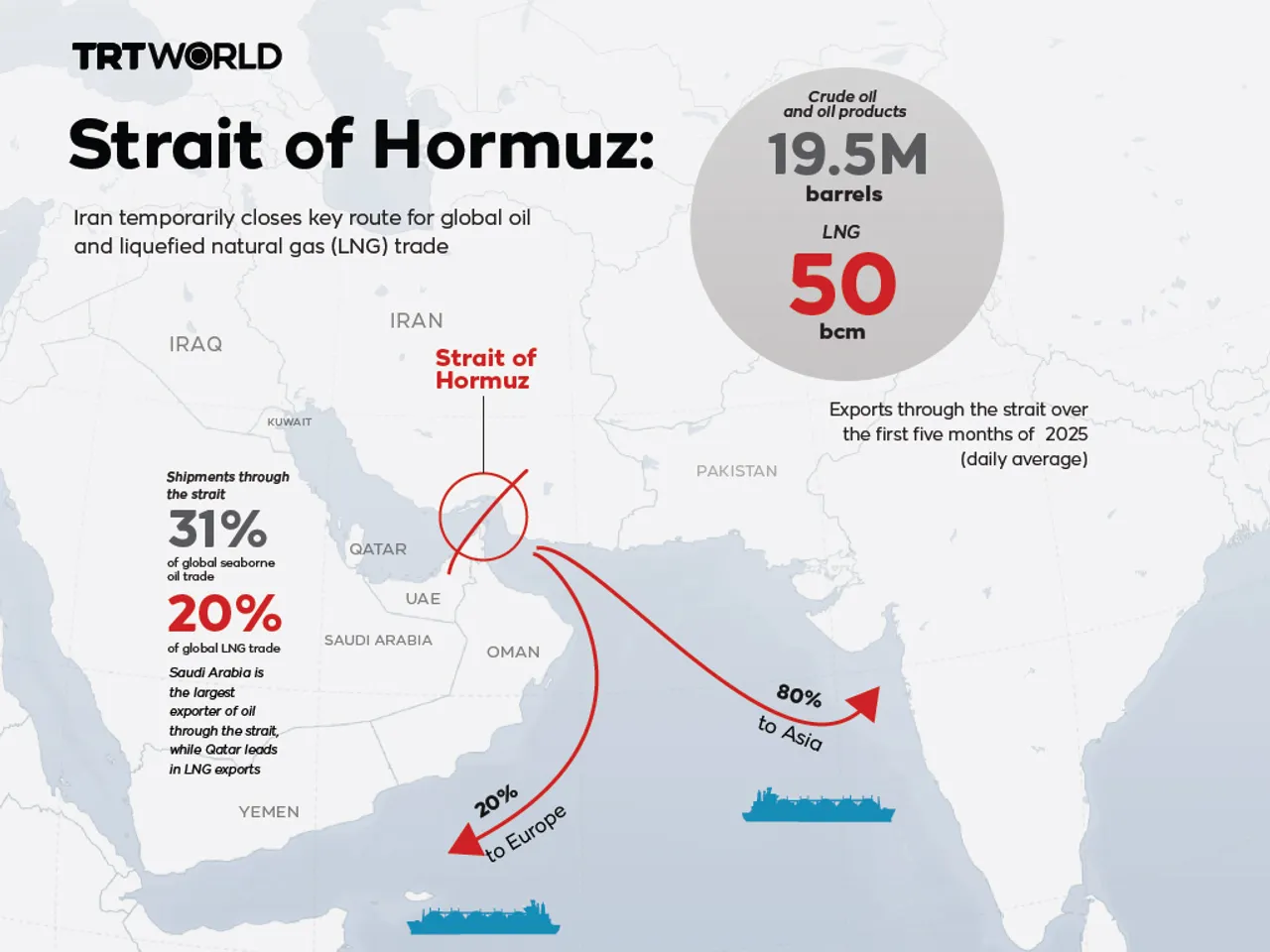
The move, if carried out, will effectively halt commercial shipping through a chokepoint that carries about one-fifth of the world’s oil exports.
The Strait of Hormuz is the narrow mouth of the Gulf through which about a fifth of the world's oil passes.
Tankers traveling through the strait, which is bordered in the north by Iran, carry oil and gas from Saudi Arabia, Kuwait, Iraq, Qatar, Bahrain, the UAE and Iran. Most of that oil goes to Asia.
Any disruption to traffic through the Strait of Hormuz is highly disruptive to the oil trade.
“The scale of what is at stake cannot be overstated,” said Hakan Kaya, senior portfolio manager at investment management firm Neuberger Berman. He said a partial slowdown lasting a week or two could be absorbed by oil companies. But a full or near full closure lasting a month or more would push crude oil prices, trading around $70 on Monday, “well into triple digits” and European natural gas prices “toward or above the crisis levels seen in 2022.”
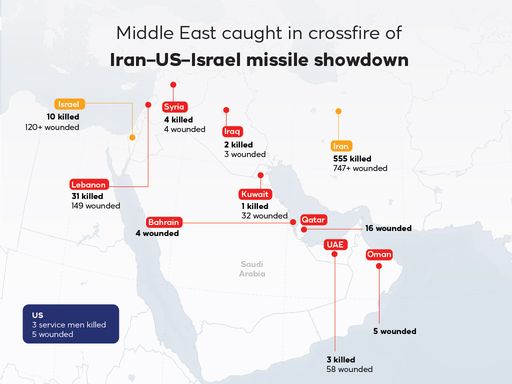








Widening Iran war
Here’s what to know about the strait and the widening Iran war.
A key waterway for global shipping The Strait of Hormuz is a bending waterway, about 33 kilometers (21 miles) wide at its narrowest point. It connects the Gulf to the Gulf of Oman.
From there, ships can then travel to the rest of the world. While Iran and Oman have their territorial waters in the strait, it's viewed as an international waterway all ships can ply.
The UAE, home to the skyscraper-studded city of Dubai, also sits near the waterway.
The strait long has been important for trade The Strait of Hormuz through history has been important for trade, with ceramics, ivory, silk and textiles moving from China through the region. In the modern era, it is the route for supertankers carrying oil and gas from Saudi Arabia, Kuwait, Iraq, Qatar, Bahrain, the UAE and Iran.
Is the Strait closed?
While there are pipelines in Saudi Arabia and the UAE that can avoid the passage, the US Energy Information Administration says “most volumes that transit the strait have no alternative means of exiting the region.”
Threats to the route have spiked global energy prices in the past, including during the Israel-Iran war in June.
The strait is not officially closed, but tanker traffic has dropped sharply as satellite navigation systems were disrupted, data and analytics firm Kpler said on X.
The UK Maritime Trade Operations Centre reported attacks on several vessels in the area on either side of the strait and warned of elevated electronic interference to systems that show where ships are.
A bomb-carrying drone boat struck a Marshall Islands-flagged oil tanker in the Gulf of Oman, which leads into the strait from the east, killing one mariner, Oman said.