 Zeynep Conkar
Scattered across the hills of occupied Palestine, millions of pine trees stand as one of the most visible signs of Israeli colonial ambition.
They were planted from the 1920s onward, first under the British Mandate Forestry Service and then massively expanded by the Jewish National Fund (JNF) after 1948, the Nakba.
After Israel was declared a Jewish ‘homeland’ and around 800,000 Palestinians were forcibly driven from their homes, native trees were systematically uprooted and replaced with pine trees to undermine Palestinian livelihoods.
Today, the ruins of those depopulated villages lie beneath Israeli forests, their stones and terraces swallowed by dense, European-imagined woodland.
But Israeli pine trees don't belong there, ecologically.
The hills of Palestine have a Mediterranean and semi-arid climate shaped over millennia, home to specific species that can survive there – among them are olive, fig, carob, oak and wild almond.
These are the trees that generations of Palestinian farmers cultivated, that stored water in their bark, that anchored themselves in the limestone soil.
Typical cases of settler colonialism like this one always entail ecocide, the destruction of the environment, according to Palestinian scientist and author Professor Mazin Qumsiyeh, a nominee for the 2025 Nobel Peace Prize.
“Like most colonisers, they came to a land that was unfamiliar to them. In this case, Zionist settlers came from Europe to a place that was not European; it had different people, different flora and fauna,” Qumsiyeh tells TRT World.
“So they tried to reshape it to resemble Europe by replacing native species with monocultures of pine trees, which are not suited to this climate of dry summers and are highly susceptible to fire,” Qumsiyeh, founder and director of the Palestine Institute for Biodiversity and Sustainability and the Palestine Museum of Natural History, adds.
The climate has run out of patience
No one predicted that this artificially constructed, non-native forest system would eventually collapse under its own contradictions.
Today, across occupied Palestine's planted forests, the picture is one of mass die-off, and the numbers are damning.
“When local communities are displaced, what is lost is an entire system of ecological knowledge, stewardship, and historical interaction with the landscape,” Dr Lucas Ferrante, a researcher at the University of São Paulo with expertise in landscape ecology and land grabbing, tells TRT World.
“As a researcher working on landscape change, territorial dispossession, and the ecological consequences of forced occupation, I see the loss of Palestinian territories not only as a political or humanitarian issue, but also as a profound ecological one.”
Global examples, including the Brazilian Amazon, demonstrate that invasions and the displacement of traditional peoples often trigger ecological damage, from forest degradation to the erosion of sustainable territorial management, according to Ferrante.
A remote-sensing survey of around 100,000 dunams of southern forests, spanning from the Be'eri area to the Yatir Forest, found more than 50 percent mortality among conifers, mainly cypress trees.
The JNF's own Forest Management chief described the damage as producing "unprecedented tree mortality rates."
In Carmim Forest, Shikma, Meitar, Lachish, Yatir, Dudaim, and Gerar, the same pattern repeats.
These trees were never suited to the land they were forced into. They shed acidic needles that poison the surrounding soil and provide no firebreak, according to experts.
Olive and citrus trees, by contrast, are fire-resistant; they store water and are leafy, naturally acting as firebreaks against wildfires.
The pines, on the other hand, burn fast and hot.
When fires tore through more than 100 locations across the Judaean Mountains in April 2025, forcing evacuations, injuring dozens, and prompting Israel to declare a national emergency, it was these alien conifers that fuelled the flames.
After the 2021 Jerusalem mountain fires, the charred landscape revealed the ruins of Palestinian villages destroyed during the Nakba, along with 400-year-old agricultural terraces once cultivated by Palestinian farmers.
Colonisers don't only destroy people; they also destroy biological diversity, including species, habitats, and entire ecosystems, according to Professor Qumsiyeh, who cites many examples.






“In what became the United States, not only were Indigenous tribes destroyed, but vast forests were wiped out alongside them. Less than three percent of the original forests remain today."
“Native Americans had different tribes, different religions, and different languages. That human diversity was destroyed. But so was the biological diversity that existed alongside it. In Palestine, we are seeing the same thing," Qumsiyeh says.
"In Australia, British colonisation brought invasive species, the destruction of riverbeds, and widespread ecological damage. The same logic applies, a foreign power arriving and remaking a landscape that was never theirs."
The olive refuses to disappear
As non-native pine trees decline due to drought, fire, and ecological stress, indigenous species have begun to reappear in some areas. Species such as olive, fig, carob and native shrubs are gradually emerging in spaces left by damaged forests.
“When these people retain or recover territorial control, the landscape has a greater chance of maintaining or rebuilding ecological integrity,” Ferrante says.
“Landscapes remember. Even after violent disruption, traces of prior ecosystems and cultivated environments may persist, including the recovery of native or historically embedded species, such as olive and fig.”
Ferrante adds that enabling Palestinians to regain stewardship of their land would not only address issues of justice but also help restore ecological continuity, protect biocultural heritage, and strengthen the land’s long-term resilience.
Israeli settlers in the occupied West Bank are estimated to have destroyed as many as one million olive trees in an attempt to deprive indigenous Palestinians of their livelihoods.
During just two weeks of the 2025 harvest season, illegal settlers destroyed more than 900 trees and saplings across the occupied West Bank, frequently under military escort.
The UN's human rights office in the occupied territories has said that in Palestine, the olive is never just a tree, but a historic vein connecting Palestinians to the land.
The olive tree has always been the sharpest symbol of this. For generations, the olive harvest in Palestine has been a time of celebration, with families gathering in groves passed down over the centuries, under trees that represent rootedness, resilience, and peace.
The occupation has understood what the tree means, which is precisely why it keeps trying to remove it.
Professor Qumsiyeh adds that some losses are irreversible.
“Palestine has been devastated, both in terms of human and biological diversity. It has become, in many ways, a catastrophic zone.”
“Certain species are gone, for example, the fishing owl has disappeared. In the Hula Lake area, 219 species were lost when wetlands were drained for agriculture. These cannot simply be brought back,” Qumsiyeh says.
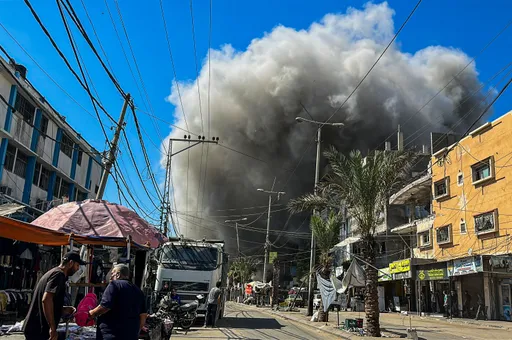
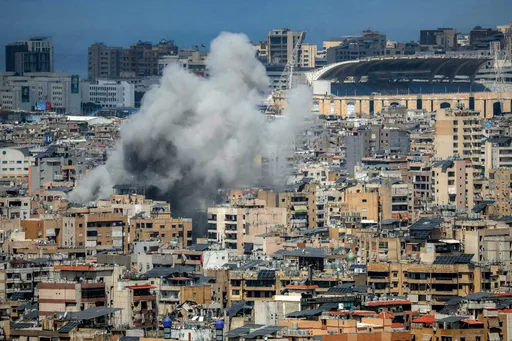
“Take Gaza: can soils be restored after exposure to chemicals like white phosphorus, depleted uranium, and other residues of war? We don’t yet know. Some areas may recover, others may not, and even where recovery is possible, it could take decades.”
Israeli settlers in the occupied West Bank are estimated to have destroyed as many as one million olive trees, in a bid to deprive indigenous Palestinians of their livelihoods.
During just two weeks of the 2025 harvest season, illegal settlers destroyed more than 900 trees and saplings across the occupied West Bank, frequently under military escort.
The UN's human rights office in the occupied territories has said that in Palestine, the olive is never just a tree, but a historic vein connecting Palestinians to the land.
The colonial project tried to replace this landscape's memory, to plant a European forest over a Palestinian one, to make the land forget what it had always been.
The climate and the soil however, is not cooperating with the occupation. The pines were never from here, olives were. And in the end, the land knows the difference.