 Zeynep Conkar
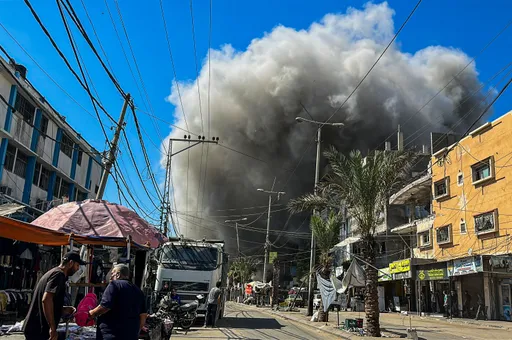
For more than a year, the International Court of Justice has issued provisional rulings, the United Nations General Assembly has passed resolutions, and legal experts have submitted briefs accusing Israel of genocide in Gaza.
Yet the gap between these legal processes and any real-world consequences remains vast and glaring.
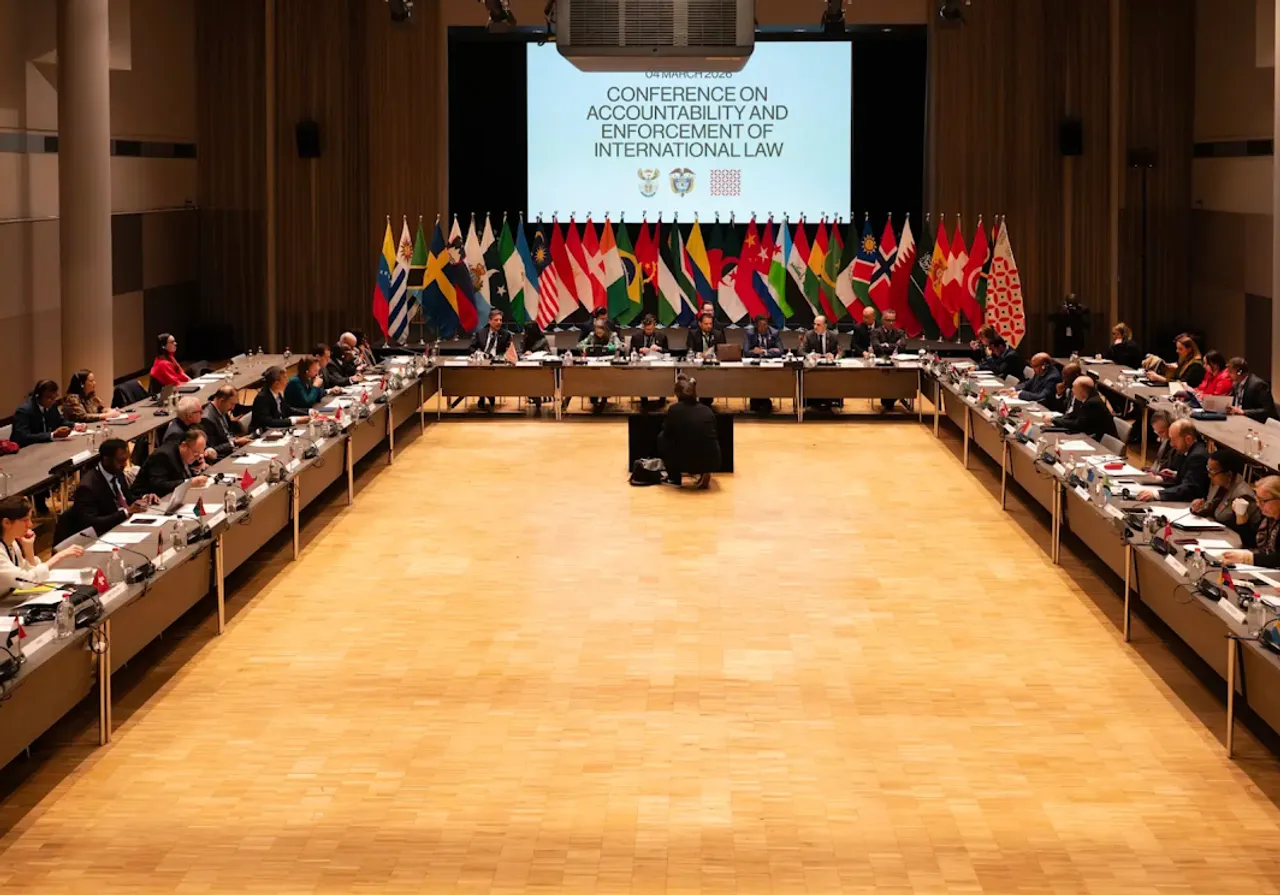
Last week, forty countries gathered in The Hague for the largest meeting yet of the Hague Group, a coalition formed in January 2025 with a clear purpose: to close the gap between international law and its enforcement.
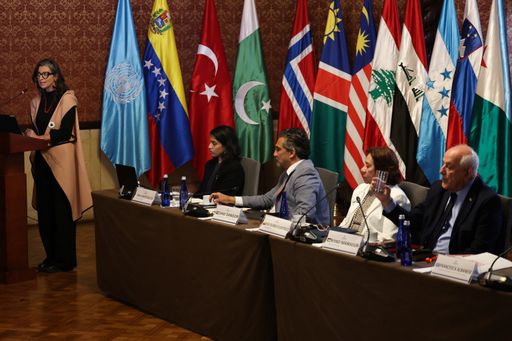
“What we are seeing through The Hague Group is a willingness by states from different regions to move beyond statements and to coordinate practical steps to uphold international law,” Alvin Botes, South Africa’s Deputy Minister of International Relations and Cooperation, tells TRT World.
“The participation of new states reflects a growing recognition that the genocide in Gaza and ongoing occupation of Palestine is a test of the international legal order itself.”
The meeting, co-chaired by South Africa and Colombia, brought together a geographically wide coalition from across Africa, Asia, Europe and Latin America, including Brazil, China, Mexico, Qatar, Spain, Switzerland and Türkiye.
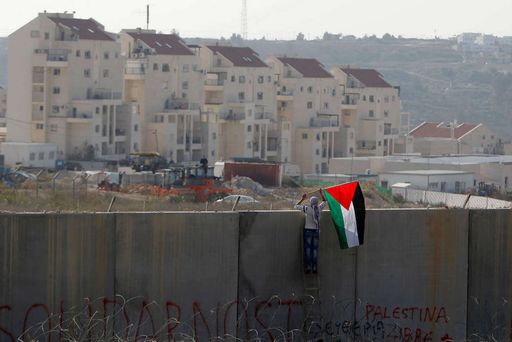
It convened, participants said, amid an "unprecedented acceleration" of illegal Israeli settlement policy, including the approval of the E1 project in the occupied West Bank and the de facto annexation of occupied territory.
The session was conducted at an ambassadorial level, with a ministerial or heads-of-government meeting anticipated next month, where formal measures would be presented.
“Many countries are deeply concerned by the acceleration of settlement expansion and annexation measures in the West Bank, which directly undermine the Palestinian people’s right to self-determination,” Botes says.
What the courts have already said
The legal foundation for action is substantial, even if enforcement has been lacking.
In January 2024, the ICJ ruled in a case brought by South Africa that it was plausible Israel was committing acts that could constitute genocide in Gaza, ordering provisional measures requiring Israel to prevent such acts and allow humanitarian aid.
Israel contested the ruling, and its genocidal war continued.
In July 2024, the court issued an advisory opinion on Israel’s broader occupation of Palestinian territories, finding that its continued presence in the occupied West Bank and East Jerusalem is unlawful, that settlements violate international law, and that all states are obliged neither to recognise this occupation as legal nor to support it in any way, but to cooperate in ending it.
By September 2024, the UN General Assembly reinforced this position with a resolution calling on Israel to end its occupation within twelve months.
Yet neither ruling carried an enforcement mechanism: the ICJ cannot compel compliance, and the General Assembly cannot impose sanctions.
It is precisely this institutional gap, the space between legal obligations and real-world enforcements, that the Hague Group seeks to fill through coordinated national action.







South African Minister Botes hopes the initiative will continue to grow as states collaborate to ensure they meet their obligations under international law, so that freedom for the Palestinian people can be achieved.

Three levers of pressure
The proposals from Friday's session fall into three categories, each framed as an implementation of those existing legal obligations.
The first targets accountability: states would screen travellers arriving on Israeli-issued documents under domestic war-crimes inadmissibility rules, ensuring individuals involved in military attacks face scrutiny at borders.
The second focuses on settlements: participating countries would ban the import of settlement-produced goods and bar companies under their jurisdiction from operating in occupied territory.
The third focuses on arms: the proposals would restrict the transfer, transit, and shipment of weapons, military fuel, and dual-use items to Israel, including through port controls and export licensing, while requiring governments to audit public procurement to prevent contracts that could sustain Israel's occupation using public funds.
“We discussed a range of measures aimed at ensuring that international law is effectively implemented,” Botes says.
“These include steps to ensure accountability for serious international crimes, measures to prevent economic or institutional support for illegal settlements, and actions to ensure that states do not contribute, directly or indirectly, to dispossession, occupation and genocide.”
Whether any of this constitutes meaningful enforcement is the question hanging over the entire initiative.
The measures under discussion are a patchwork of national steps, coordinated but voluntary, that each participating government must choose to adopt within its own domestic legal frameworks.
“Our intention is to identify areas where coordinated action can have the greatest impact,” Botes adds.
What the forty countries are currently trying to do is replace political will, gathered state by state, measure by measure, with the enforcement framework that international law has never quite succeeded in establishing.
“We do see growing interest from states across different regions, including Europe, Africa, Asia and Latin America. We started with nine states at our first meeting in The Hague in January 2025 - and more have been convened with each successive meeting,” Botes tells TRT World.
“That reflects a shared understanding that the credibility of the international system depends on whether international law is applied consistently.”