 Zeynep Conkar
In 2024, people saw accountability take on a more formal dimension.
For the first time since Israel’s founding in 1948, following territorial expansion and Palestinian land seizures, accountability shifted from political debates to courtrooms.
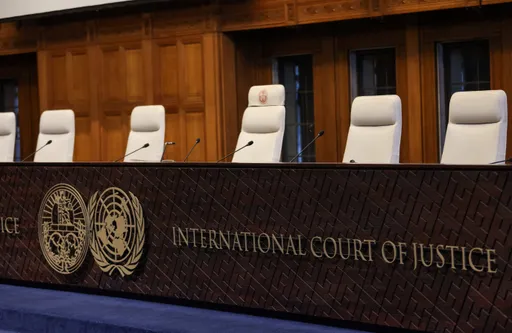
The International Court of Justice (ICJ) initiated genocide proceedings against Israel and declared the country’s long-standing occupation of Palestinian territory illegal.
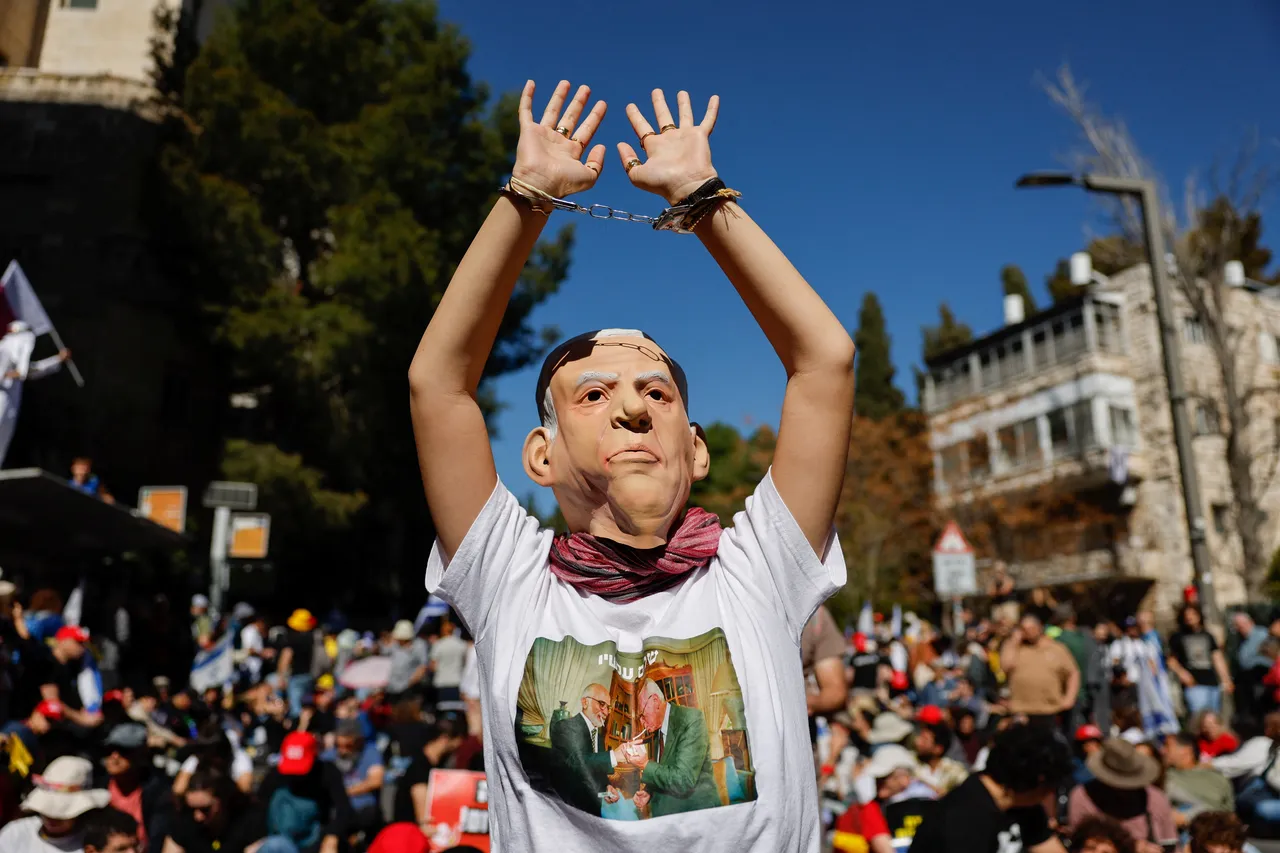
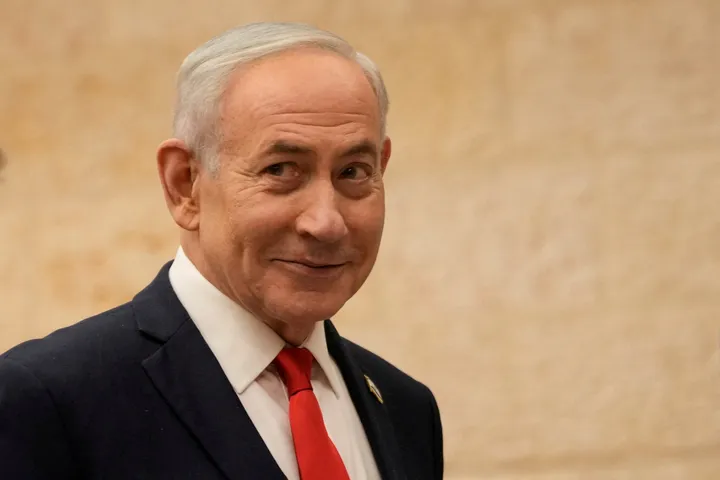
The International Criminal Court (ICC) also sought arrest warrants for Israel’s top political leaders, including Prime Minister Benjamin Netanyahu.
These developments were broadly seen as a turning point, marking the moment when Israel’s long-standing impunity finally started to break down.
A year on, that hope has largely evaporated.
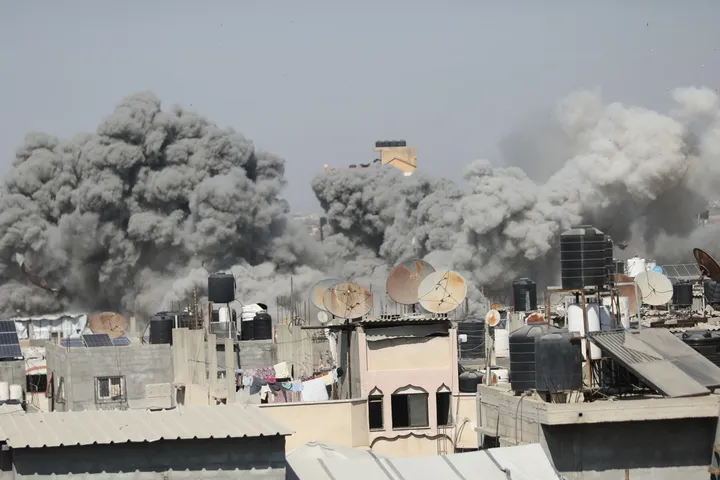
In 2025, Israel escalated its genocidal war on Gaza, deepened its occupation of the West Bank, and dismissed international legal decisions with little repercussion.
What followed was a normalisation of impunity.
Despite the most extensive international legal actions ever mounted against Israel, they did not stop the violence, end the occupation, or prevent the continued erosion of Palestinian life.
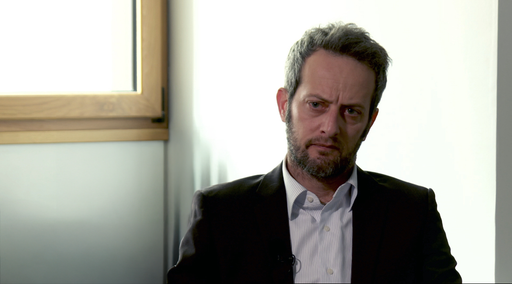
According to human rights lawyer and writer Maria Kari, there was no ambiguity about what the law required, and in 2024, it seemed to operate as intended, but the sense of accountability proved fleeting.
“What 2025 exposed is that international law was never meant to be enforced against those who sit at the apex of power. The problem is not an absence of law, nor that the law is somehow unclear or underdeveloped,” Kari tells TRT World.
“The problem is the law simply cannot restrain power that refuses to be restrained, and that explains the lack of impunity. It's because of the active sabotage by powerful states, led by the US, which has rendered international law nothing more than a theatre of no consequence,” Kari adds.
Legal dead ends
As the genocide proceedings continued, Israel openly defied the court’s provisional measures.
The humanitarian aid blockade persisted, exacerbating starvation, healthcare collapse, and the decimation of entire families.
Gaza was steadily reduced to ruins.
“There are two sets of international law that exist in the world today: one for the Global South, and the other for the Global North. And the latter refuses to subject itself to international law as the Global South is expected to,” Na’eem Jeenah, senior researcher at Mapungubwe Institute and the executive director of the Afro-Middle East Centre, tells TRT World.
“What this shows is that international law is not international. The ICC’s record makes that clear: those prosecuted are overwhelmingly from the Global South, while war crimes committed by the Global North go unpunished.”
“Germany, for example, carried out two genocides in southern Africa at the beginning of the twentieth century while simultaneously shaping rules for warfare,” he says.
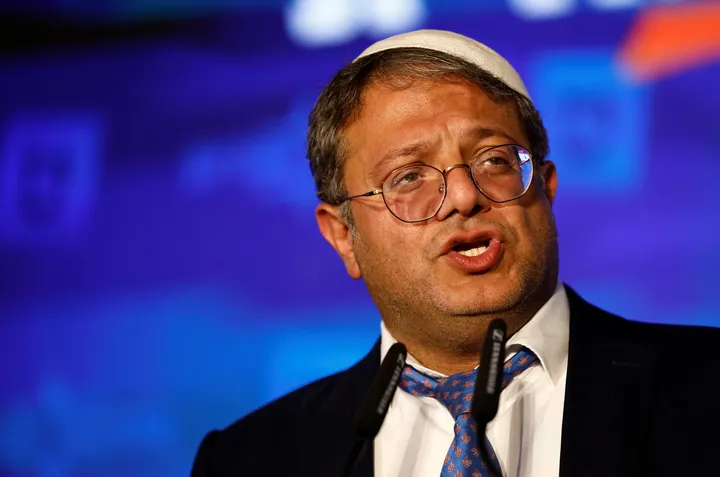
The ICC’s arrest warrant requests for Prime Minister Benjamin Netanyahu and former Defence Minister Yoav Gallant marked another unprecedented step. On paper, they obligated member states to arrest Israeli leaders if they entered their territory.
In practice, several states openly declared they would not enforce the warrants.
Under diplomatic pressure from the US and European allies, the warrants became purely symbolic.
Even Nicaragua’s case against Germany, which argued that countries supplying Israel with weapons could be complicit, failed to bring about any restraint.
Germany not only continued its military cooperation with Israel but also stepped up its political support, signalling that potential legal consequences would not outweigh its strategic commitments.
In 2025, law went backwards instead of forward as states backtracking on existing commitments, according to Andrea Maria Pelliconi, a human rights law professor at the University of Southampton.
“No other state will abide by the system if they see that others, especially the most powerful states, are ignoring it. This can lead to international legal anarchy, a return of the law of the strongest, where all states do what they want and use war, intimidation, and economic coercion to achieve their objectives,” Pelliconi tells TRT World.
“We're already seeing this with Palestine, but also Western Sahara, Ukraine… States are normalising using war to expand and acquire territory, as it used to be a century ago,” she adds.




The failure of the post-1945 order
Throughout 2025, UN Security Council resolutions related to Gaza remained unimplemented.
Veto powers continued to shield Israel from binding action. UN agencies were pushed out of Gaza, starved of resources, or subjected to political attacks, while independent investigations were obstructed at every turn.
Established in 1945 by the victors of World War II, the UN was built on the promise of preventing mass atrocities and upholding international law.
Yet its most powerful body, the Security Council, remains dominated by five permanent members: the US, UK, France, Russia and China, each wielding veto power.
International law scholar and former UN Special Rapporteur Richard Falk has long argued that this structure creates an exceptionalist system.
Permanent members are shielded from the very rules the UN claims to enforce, he told TRT World in an earlier interview, adding that the global power dynamics have shifted.
Gaza revealed the consequences. The institution responsible for stopping Israel’s ongoing assaults on civilians persisted.
“This rogue state is being shielded by the US empire, which has reduced international law to a mockery,” Kari says.
“That is why 2025 feels like a turning point, and I can only imagine the discussions in law schools across the country -- how are we going to teach the future generation of international legal scholars and jurists about the powers of the ICJ and ICC when these institutions have been rendered completely impotent?
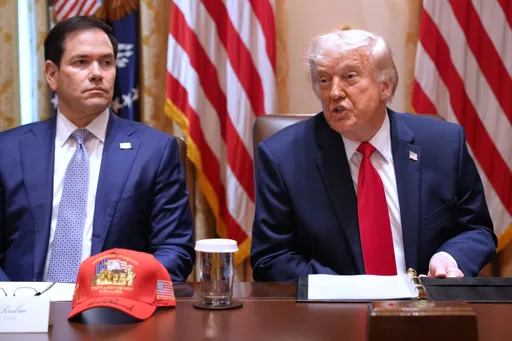
“‘The law for thee not for me,’ the UN was built on the promise of "never again" -- we all know that. But we have people like Sen. Lindsey Graham who openly boasted that "international law won't be used against us" meaning Western states,” she says.
By 2025, calls for UN and Security Council reform have grown even more, with changes to veto power and the construction of a more equitable system cited as existential necessities.

Western complicity
The collapse of accountability in 2025 cannot be understood without recognising the US and Europe as active enablers.
Mainly, Washington's unconditional support and continued military aid to Israel constitute violations of the crimes of "conspiracy to commit genocide" and "complicity in genocide" as defined in the Genocide Convention.
Western governments silenced dissent, criminalised Palestine solidarity, and deployed misinformation frameworks to restrict public debate.
Protest bans, surveillance, and prosecutions were justified in the name of security, while international law was treated as optional.
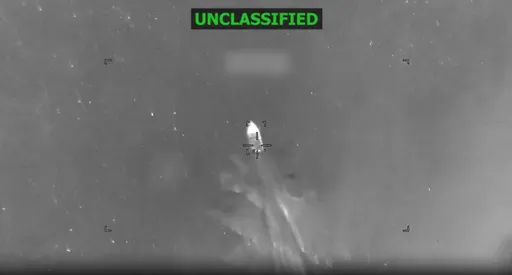
“The US is conducting illegal acts of war against civilians in the open seas and provoking Venezuela into a war. In Sudan, the RSF has left mass graves visible from space. That world courts have been unable to stop any of this is the direct and expected result of US-backed support for empire and colonialism,” Kari says.
The UNSC, and one might argue the UN system as a whole, has reached a point of collapse, according to Jeenah.
“Its rescue depends on whether Global North states recognise their folly and rein in their allies, especially Israel, and whether Global South states are willing to fight to change this order.”
“If the current trajectory continues, international law will cease to exist as a reality, or even as a theory, and human-rights protections will disappear. Beyond the genocide in Gaza, Sudan offers another example, where the UAE acts with complete impunity, shielded by the support of Israel and the US.”
Legal experts increasingly warned that if a genocide can continue for a second year despite court proceedings, provisional measures, and global mobilisation, the credibility of the entire human-rights framework is at stake.
“The Security Council has long passed its prime. It was built as a system to constraint the big powers but has now turned into a system to paralyse meaningful action,” Pelliconi argues.
“For a long time now there have been proposals to reform the Security Council and its functioning, but unfortunately these proposals are consistently blocked by the Security Council's permanent members themselves,” she adds.
The question that defined 2025 was not whether international law exists, but whether it still constrains power.
If even genocide cannot activate accountability, then what, exactly, is international law for?