 Kazim Alam
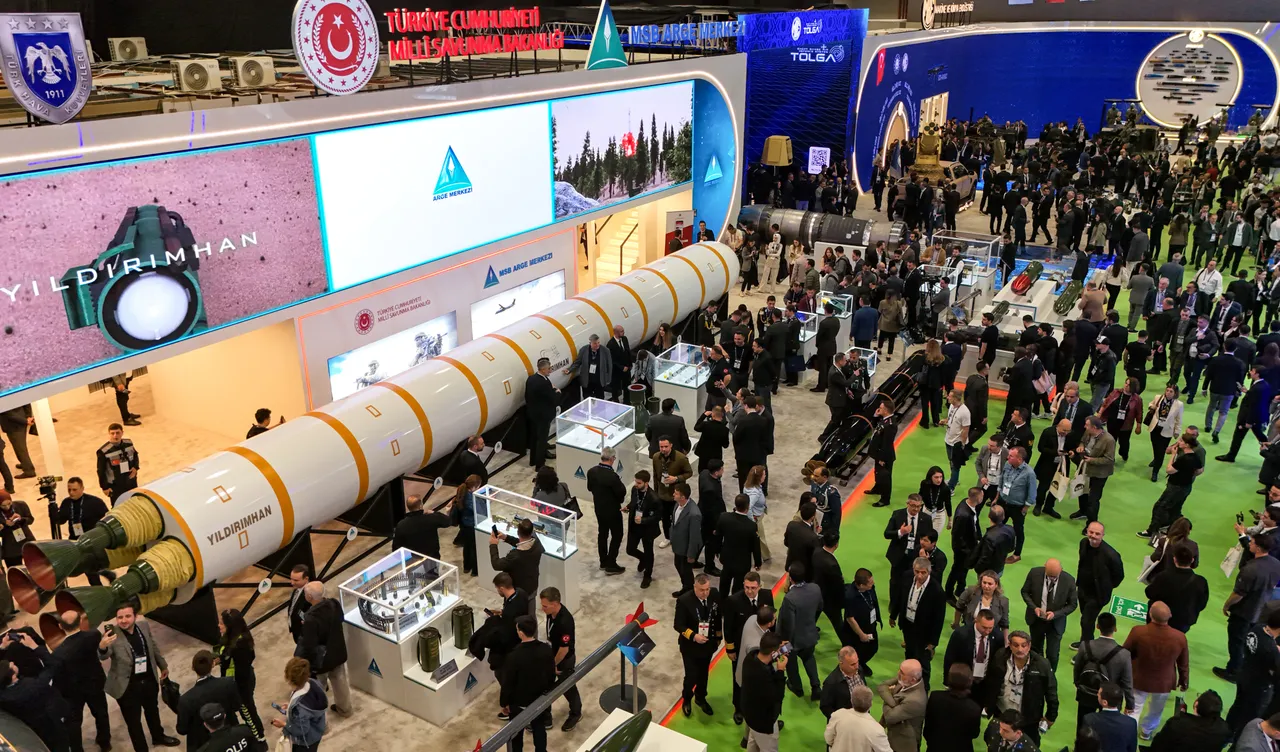
When Türkiye unveiled its first intercontinental ballistic missile (ICBM), Yildirimhan, at the SAHA 2026 defence and aerospace expo in Istanbul, it marked yet another milestone for the country’s robust defence industry, known for its cutting-edge military equipment.
Developed by the Turkish Ministry of National Defence’s Research and Development Centre, the Yildirimhan features a range of 6,000 kilometres, roughly equaling 15 percent of the Earth’s total circumference.
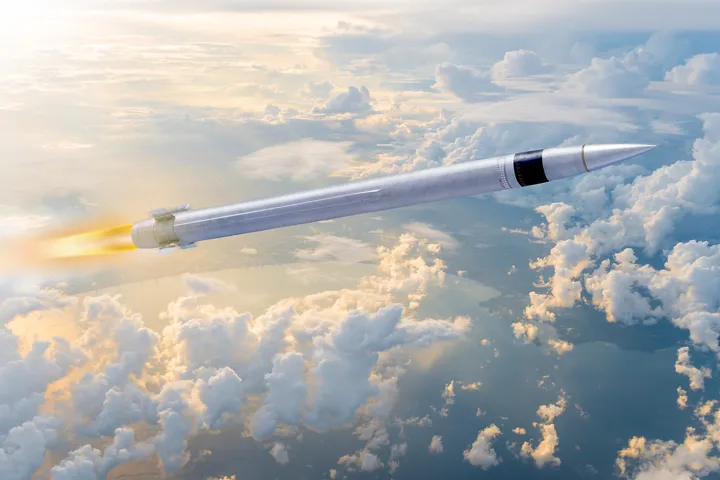
The missile can travel at up to Mach 25, an extreme hypersonic speed equivalent to 25 times the speed of sound, or nearly eight kilometres per second.
These attributes make the Yildirimhan the country’s most advanced long-range strike system to date.
Mursel Dogrul, associate professor at the Joint War College of the Turkish National Defence University, tells TRT World that the missile symbolises the maturation of Türkiye’s indigenous defence-industrial ecosystem.
“The Yildirimhan represents a significant advancement in Türkiye’s missile ecosystem, moving beyond the traditional short- and medium-range deterrence logic of systems such as the J-600T Yildirim, the Bora/Khan and the Tayfun, as well as the developing Cenk platform,” Dogrul says.
The J-600T Yildirim and Bora/Khan are Turkish missiles with ranges of 150 kilometres and 280 kilometres, respectively.
Tayfun is Türkiye’s first hypersonic ballistic missile, having a range of up to 1,500 kilometres, while Cenk is a medium-range ballistic missile with a reach exceeding 2,000 kilometres.
Though not all features of the Yildirimhan have been made public, the most obvious difference that sets it apart from other missiles is its long range, Dogrul notes.
At 6,000 kilometres, the missile enters the lower end of the intercontinental ballistic missile spectrum, dramatically increasing Türkiye’s strategic reach far beyond its immediate neighbourhood.
Its speed of up to Mach 25 “significantly complicates” the interception timeline for existing missile defence architectures, creating a distinct advantage in survivability against layered air defence systems, Dogrul says.
In the same vein, the payload capacity of the Yildirimhan distinguishes it from other missiles, he says.
The new missile can carry a payload of up to 3,000 kilograms, unusually heavy compared to earlier conventional ballistic missiles in Türkiye’s inventory.
Unlike previous systems that were predominantly solid-fuelled, the Yildirimhan uses four liquid-fuel rocket motors with nitrogen tetroxide.
While liquid fuel introduces some “operational trade-offs” in terms of launch readiness, it enables greater optimisation of range and payload, Dogrul says.
From a survivability perspective, the missile’s combination of hypersonic speed, high-altitude trajectory options, and manoeuvrability could make it difficult for adversaries to intercept, he adds.
“Even if some of the specifications remain unverified, the signalling effect alone is strategically significant.”
The Yildirimhan also reflects the steady progress of Türkiye’s homegrown defence capabilities.
The progression from the Bora, Tayfun and Cenk to the Yildirimhan demonstrates a “gradual but consistent expansion” in propulsion, guidance, systems integration, and strategic strike engineering, he says.
This progress in missile capability also reinforces Türkiye’s ambition to become a fully sovereign long-range strike power.
The Turkish defence industry has been growing by leaps and bounds, with with exports crossing $10 billion in 2025, up 48 percent from a year ago.
A signal to potential adversaries


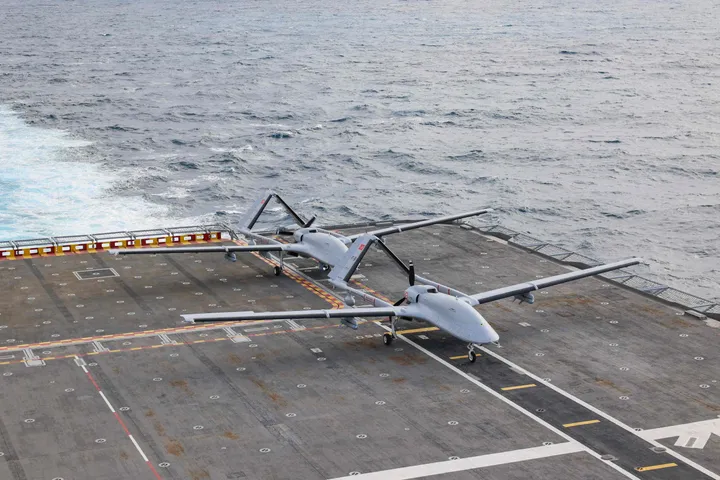



The unveiling of the new missile at SAHA 2026 was a well-considered decision, according to Dogrul.
By presenting the system at one of the region’s premier defence exhibitions rather than announcing it discreetly, Türkiye sent a clear geopolitical message.
“Türkiye is presenting itself as a technologically advanced middle power that can independently influence regional security balances,” he says.
The newly acquired long-range missile capability will reshape the strategic calculations of Türkiye’s potential adversaries.
With its 6,000-kilometre range, military planners across Europe, the Middle East, North Africa, and parts of Eurasia must now factor in Türkiye’s emerging long-range strike capabilities when making contingency plans, he says.
But this does not signal aggression. Rather, it reflects a recalibration of deterrence.
“Potential adversaries can no longer assume that strategic depth or geographic distance automatically protects them from a Turkish conventional strike,” he says.
The system enhances Ankara’s options for managing escalation, introducing the possibility of deep conventional strategic strikes against critical infrastructure, military bases, and logistics corridors far beyond Türkiye’s immediate borders.
As a result, neighbouring and regional actors will likely reassess investments in missile defence, early warning systems, hardened infrastructure, and force dispersal, he says.
Dogrul points to a broader global trend where states are expanding stand-off and counterstrike capabilities amid weakening confidence in traditional alliance guarantees.
To that end, the Yildirimhan offers signalling value within NATO, the 32-member military alliance in which Türkiye maintains the second-largest military force.
The alliance, in which an attack against one member is considered an attack against all, has seen deep cracks amid recent US threats of withdrawal.
On one hand, a stronger Turkish deterrent could contribute to the resilience of the alliance’s southern flank, Dogrul says.
On the other, Türkiye’s growing independent strategic capabilities reinforce Ankara’s increasingly autonomous security posture.
“Yildirimhan introduces strategic ambiguity,” he says.
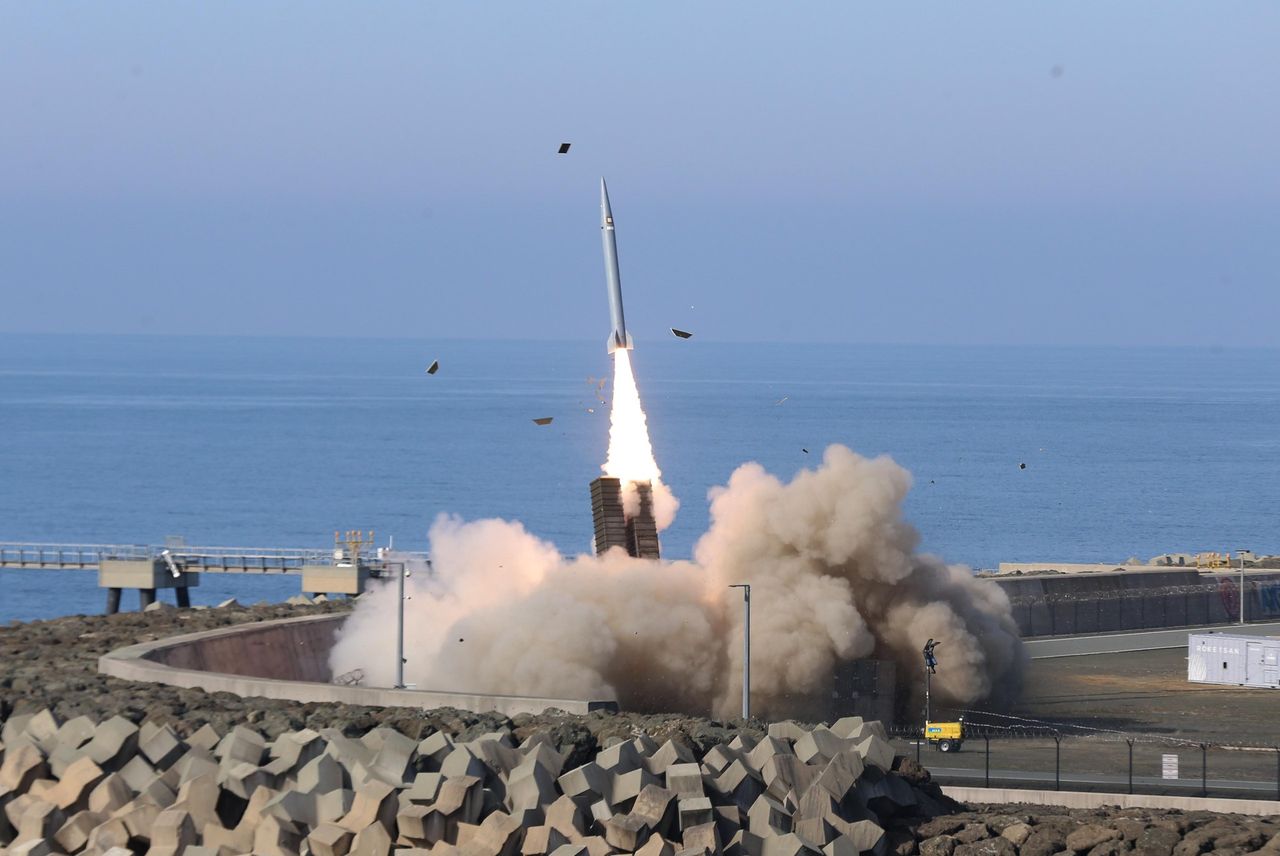
“Even without nuclear warheads, long-range, hypersonic-capable ballistic systems affect adversaries’ threat perceptions because they compress decision-making timelines and increase uncertainty during crises. This alone enhances the value of deterrence,” he notes.
Geopolitical crises over the past decade, from US pressure over Türkiye’s acquisition of the Russian S-400 missile defence system to CAATSA sanctions, have underscored the vulnerabilities of relying on external security providers.
“Yildirimhan is a perfect fit for Türkiye’s broader strategic autonomy doctrine,” Dogrul says, adding that it reduces dependence on externally supplied strategic deterrence, while strengthening national decision-making freedom during crises.
Furthermore, the Yildirimhan strengthens Türkiye’s bargaining position internationally. States with indigenous advanced strike systems enjoy greater diplomatic leverage, as they are less vulnerable to sanctions or arms embargoes, he says.
It complements Türkiye’s emerging middle-power strategy, which emphasises diversified partnerships, indigenous production, and strategic flexibility rather than dependence on rigid blocs.
“Yildirimhan symbolises Türkiye’s transition from being a primary consumer of NATO security to a state seeking to produce and project strategic deterrence independently,” Dogrul says.