Police in India’s most populous state have shot hundreds of Muslim men accused of cow smuggling in the legs in encounters that critics describe as extrajudicial justice designed to pander to India’s Hindu majority, an Associated Press investigation found.
Police in Uttar Pradesh say they shoot in self-defence and that the state’s “zero tolerance” policy on crime has helped restore law and order.
Now the tactic of shooting people just below the knee — known locally as ‘Operation Lame’ — is spreading to other states in India.
Activists, opposition leaders and local judges, however, say the violence amounts to extrajudicial punishment and intimidation that disproportionately impacts India’s large Muslim minority, and undermines the rule of law.
“This is a dangerous situation,” said Mangla Verma, a human rights lawyer based in New Delhi. “It’s become a routine police practice … Instead of investigating, police kill or injure a person and justice is done.”
The Center for the Study of Organised Hate, a Washington-based think tank, compiled records of nearly 650 cases of suspects accused of cow smuggling who have been shot and injured by Uttar Pradesh police since 2020. Its findings were shared exclusively with the AP, which independently reviewed a sample of more than 200. The overwhelming majority of cases involved Muslims, the centre found.
In case after case, bullets struck the same part of the suspect’s body — the leg, most often below the knee. This reporting is based only on incidents police themselves publicised and almost certainly represents an undercount.
Amitabh Yash, a senior Uttar Pradesh police official, told the AP that police are instructed to respond only in self-defence, and said police in his state have killed and injured far fewer suspects, per capita, than police in the United States.
Yash said there is no order to shoot suspects in the leg and added that he would investigate the consistent pattern of injuries if an appropriate complaint were lodged.
“The police must be questioned for every action they take. Every action is open to scrutiny, whether it is a death or an injury,” he said. “In the last year, there has been no reason to punish any police officer for inappropriate use of force.”
‘Operation Lame’ is now spreading to other states
The tactic of shooting to injure, known locally as “Operation Langda” — or ”Operation Lame” — has become widespread across Uttar Pradesh. It is deployed against suspects accused of cow smuggling as well as other crimes, including theft and rape. Cattle smuggling is an offence that carries particular weight in India, where cows are revered by many Hindus and cow protection has been politically charged.
India has a long history of so-called encounter killings, in which police shoot and kill a suspect often under dubious circumstances. Some activists argue that police have evolved their strategy, shooting to injure instead of kill in what are known locally as “half encounters,” to spark less public outcry.

The violence has unfolded alongside a political push for tougher policing under Prime Minister Narendra Modi and his allies in Uttar Pradesh, who have promoted a “zero tolerance” policy against criminals to instill fear and promote law and order.
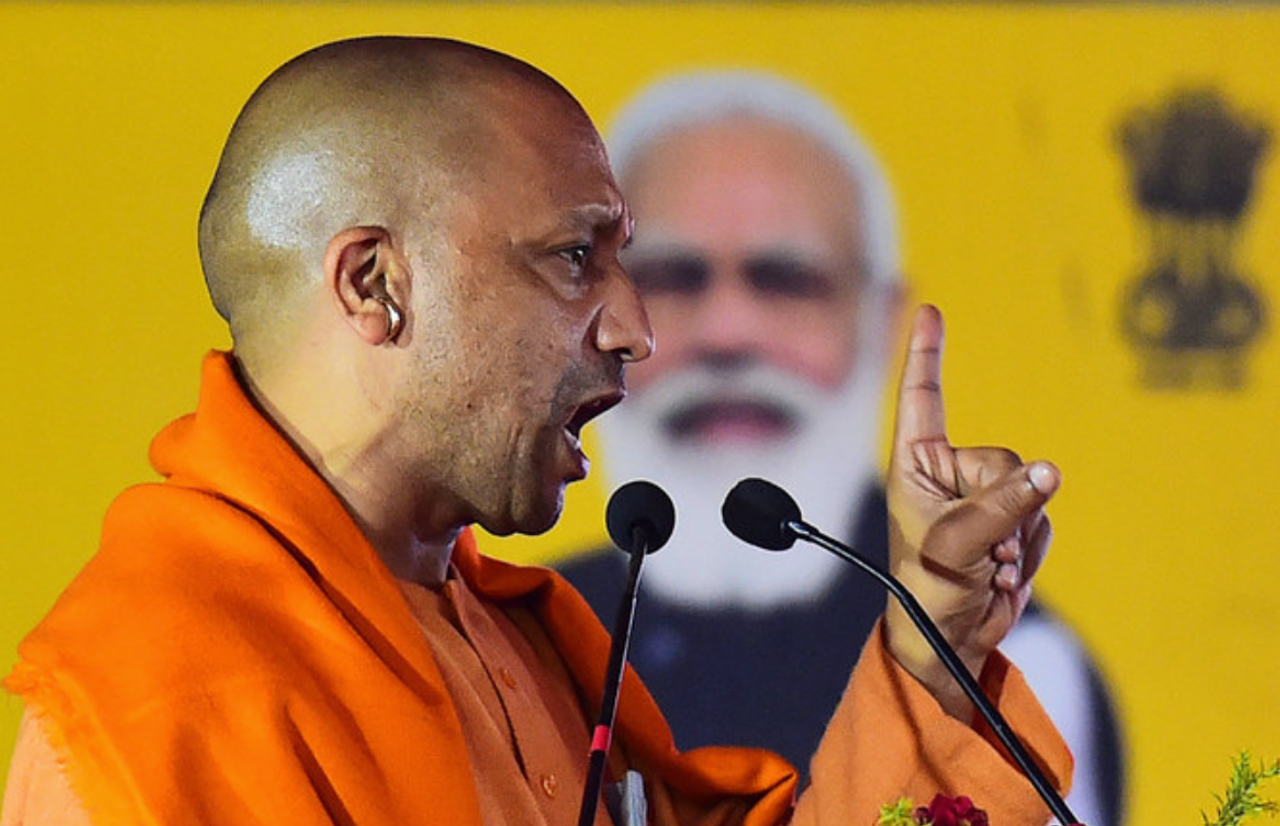
Uttar Pradesh is led by Yogi Adityanath, a Hindu monk-turned-politician and a senior leader of Modi’s Hindu nationalist Bharatiya Janata Party. From the time Adityanath took office as chief minister in March 2017 through October 13 of this year, 316 suspects were killed in encounters and 110 of them were Muslim, according to state police data obtained by the AP. That's a higher proportion than the state’s overall population, which is around one in five Muslim.
Over the same period, 12,890 suspects were injured, while 18 police were killed and 1,953 injured in the line of duty. Data on the religion of suspects injured by police was not available.
The zero tolerance policy "has increased fear among criminals and strengthened the feeling of security among the general public,” Uttar Pradesh police said in a May statement. “This is the reason why the state’s law and order is being appreciated at the national level.”
Activists say the practice is now spreading to nearby BJP-run states like Haryana, Bihar, Uttarakhand and the outskirts of the nation’s capital, New Delhi.
Experts question the consistent pattern in shootings
In social media posts publicised by police, officers describe similar scenes: suspects fleeing, police coming under fire and officers shooting to disable rather than kill.
But human rights advocates have long alleged that many police shootings in India occur when the suspect doesn’t pose a threat. Some question the consistent pattern of bullets delivered below the knee, arguing that it suggests the wounds were not really inflicted in self-defence.
“Such incidents make a mockery of the law. They sabotage the system,” said Sandeep Pandey, an activist and opposition political leader based in Uttar Pradesh. “It’s state-sponsored violence.”
Dr Mohd Kaleem Khan, a professor of forensic medicine at Aligarh Muslim University’s Jawaharlal Nehru Medical College in Uttar Pradesh, said it is highly unlikely a bullet could be delivered horizontally, without touching bone, through the calf muscle of a person who was fleeing or fighting, especially at a distance.
“It’s not a shot in defence,” he said. “It’s a deliberate close shot of a person.”
Judges warn that police impunity is a threat to democracy
The violence has drawn judicial scrutiny.
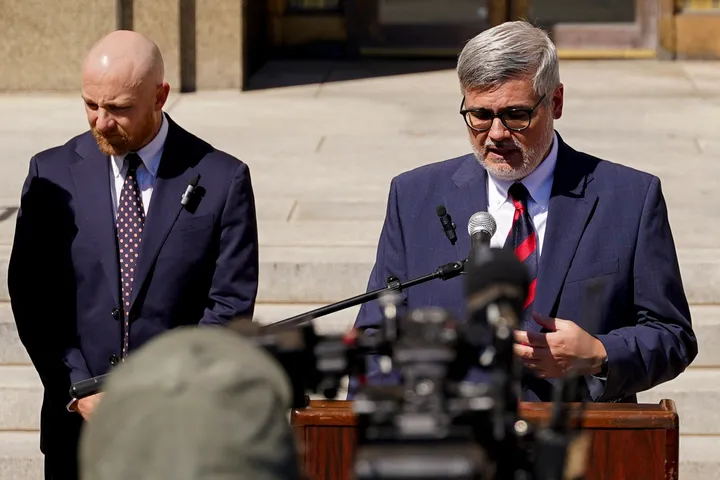




In January, the Allahabad High Court, the state’s highest judicial authority, issued a rare public rebuke of the growing number of police shootings in Uttar Pradesh, warning that officers cannot replace the justice system and chastising police for failing to comply with legally mandated reporting and investigation procedures.
“This Court has noticed that the practice of police encounters, particularly firing at the legs of accused persons, has seemingly become a routine feature,” one judge wrote in a ruling on a bail hearing earlier this year, calling such conduct “wholly impermissible” under the rule of law.
The Allahabad High Court suggested some officers may be motivated by career incentives or publicity, noting that police appear to be “misusing their authority in order to attract the attention of higher officers or to create an impression of public sympathy.”
In a separate case, another Allahabad High Court judge wrote in June that he had “deep constitutional concern” over what he described as a “culture of institutional impunity” in Uttar Pradesh.
Despite such public laments, judicial action in the last decade has been slow. In 2018, for example, the People’s Union for Civil Liberties, a human rights group, presented evidence of police encounter killings in Uttar Pradesh and asked the court to ensure that such incidents are investigated by an independent entity. The case is pending.
Since then, the number of police shootings — resulting in both deaths and injuries — in Uttar Pradesh has surged.
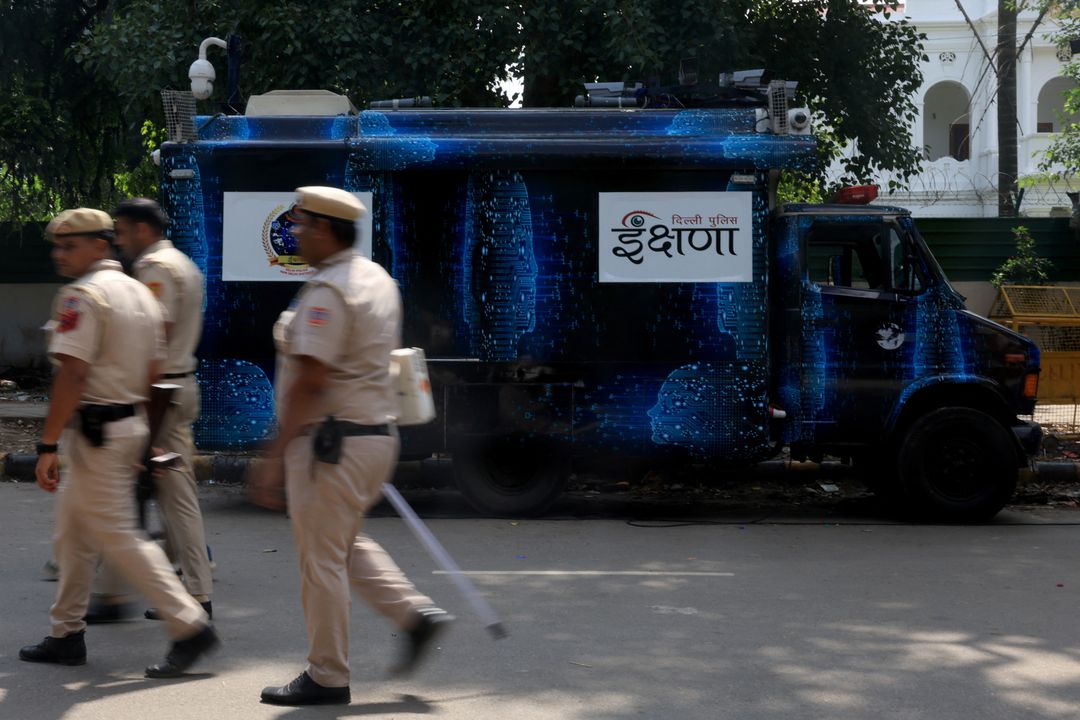
Yash, the Uttar Pradesh police official, dismissed allegations that justice has become politicised and said police are not rewarded for shooting suspects.
“There is no policy of any career advancement related to any police engagement,” he said. “Absolutely none.”
Families say the shootings leave them destitute
The AP spoke with the families of six Muslim men in Uttar Pradesh who had been shot in the leg by police. All spoke on condition of anonymity, saying they were too fearful to speak publicly. All six men were still in jail or living in hiding at the time.
One woman told the AP that her son had supported the extended family by trading buffalo, which don’t fall under cow protection laws.
“He’s been left lame. His leg has developed a large swelling,” she said. “If someone gives us something, we accept it. That’s how we’re getting by. That poor man can’t go out and work anymore. Whatever people give us, we eat.”
Another woman said her son, who worked as a dairy buffalo trader, had been shot in both knees, leaving the family to survive by taking out small loans. When she went to see him in the hospital, she said, blood was oozing from his wounds.
“He’s completely broken,” she said. “He just held our hands. The whole family cried. He cried continuously.”
The police shootings also have a religious dimension
According to data compiled by the Center for the Study of Organized Hate, nearly 93 percent of suspects injured in cow-smuggling-related encounters were Muslim. Both India’s population and its police are overwhelmingly Hindu.
The analysis reflects only the 627 cases where names or other identifying information were available.
The evidence collected on hundreds of shootings “clearly shows that the state institutions, particularly the law enforcement, are increasingly being used as the vehicles for the persecution of Muslim minority,” said Raqib Naik, the centre’s executive director. “This appears to have evolved into a bureaucratisation of persecution, where policing increasingly seems to appear to be intertwined with majoritarian politics.”
Under Modi’s leadership, India has moved away from its founding as a secular democracy and towards a Hindu-first state. In Uttar Pradesh, the chief minister, Adityanath, has positioned himself at the hard edge of this surging religious nationalism, and critics say his tough-on-crime approach amounts to a veiled attack on Muslims that panders to the hard-line Hindu vote.
“When you shoot people who are carrying cattle, you are sending a message that you are upholding a Hindu agenda,” said Pandey, the activist and opposition leader.
Police official Yash said the high proportion of Muslims among cattle smuggling suspects injured by police reflects the large number of Muslims involved in the cattle trade.
“The police itself has all castes and religions,” Yash said. “You cannot try to target one group.”
India stopped reporting the proportion of Muslims serving as police officers more than a decade ago, when they were significantly underrepresented in Uttar Pradesh at just 4.8 percent of the force, according to 2013 National Crime Records Bureau data.
For victims and their families, the consequences of the shootings can be lasting.
“They target perfectly decent people,” said a Muslim man who told the AP that his nephew was picked up by police while on the way to see his children, accused of cow smuggling and shot in the leg. “The only fear now is that they’ll pick up someone else in the name of cows — or shoot someone else.”