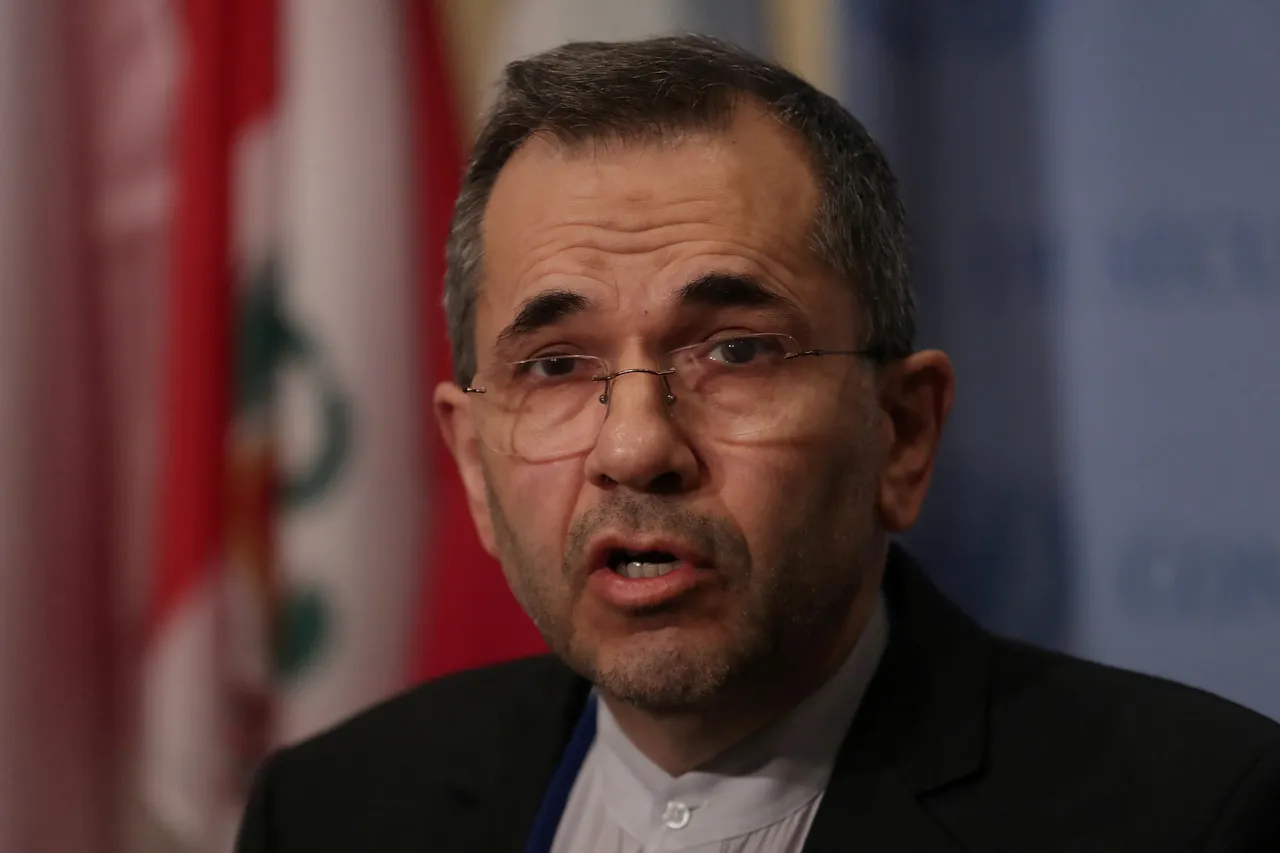
Iran wants to ensure that a war will not be imposed on it again in the future, deputy foreign minister Majid Takht-Ravanchi told AFP, as the conflict raged with the United States and Israel.
"We want to see that war is not going to be imposed again on Iran," said Takht-Ravanchi in an interview with AFP in Tehran.
"When the war started last June, after 12 days there was so-called cessation of hostilities... but after eight or nine months, they regrouped and they did it again," he said, referring to the US and Israel.
"We do not want to be treated like this again in the future."
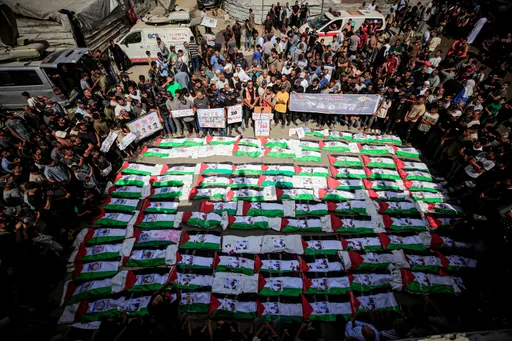
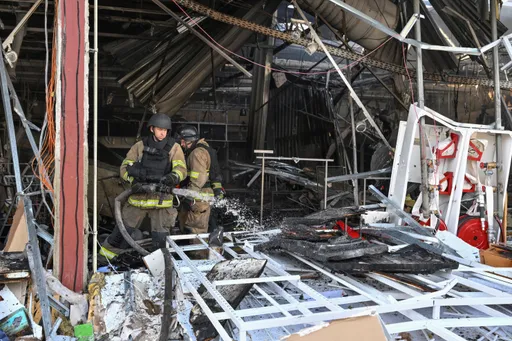
On February 28, Israel and the United States launched strikes on Iran, killing its supreme leader Ali Khamenei and triggering a war that spread across the Middle East.
Iran responded by targeting Israel and US interests across the region.
"Before the war started, on different occasions, we informed our neighbours that if America is engaged in aggression against Iran, all the US assets and all the US bases are legitimate targets for Iran," said Takht-Ravanchi.
"We are acting in self-defence. We continue to act in self-defence as long as necessary."
The Israeli and US attacks took place two days before Washington and Tehran were scheduled to hold talks following three prior rounds of negotiations.
Omani mediators had said there was "significant progress" in the talks.
The strikes recalled the 12-day war in June, when Israel launched attacks just days before a planned sixth round of talks between Tehran and Washington.
This war has, however, created the biggest oil supply shock in history, the International Energy Agency warned, sending prices spiking above $100 a barrel.



Shipping in and around the crucial Strait of Hormuz — through which 20 percent of the world's oil normally transits — has remained near a standstill in recent days following attacks on ships.
On Wednesday, US President Donald Trump said US forces had struck 28 Iranian mine-laying vessels.
Takht-Ravanchi, however, denied the claim, saying "it is not true" that Iran was laying mines in the strategic waterway.
"Within our territorial waters in the southern area near the Persian Gulf, we take precautionary measures to be prepared to protect our water and our homeland," he said, without elaborating.
He even said that Iran has allowed ships from some countries to cross the strait.
"Some countries have already talked to us about passing the strait and we have cooperated with them," he said, without specifying which countries.
"As far as Iran is concerned we feel that those countries who have joined the aggression should not benefit from safe passage through the Strait of Hormuz," he added.
Takht-Ravanchi confirmed that Iran has been approached by some "friendly countries" to put an end to the conflict, without specifying which.
"We are telling them the same thing, that we want the ceasefire to be part of an overall formula for ending the war altogether," he added.
On whether the US and Israeli attacks threatened the survival of Iran, Takht-Ravanchi said "we have passed that stage".
"The Americans and the Israelis felt that in a matter of 24 or 48 hours, the whole system would collapse and that was not the case. The enemy is aware that this system is strong enough to stand on its feet."