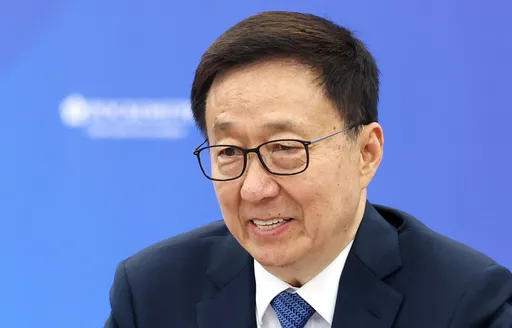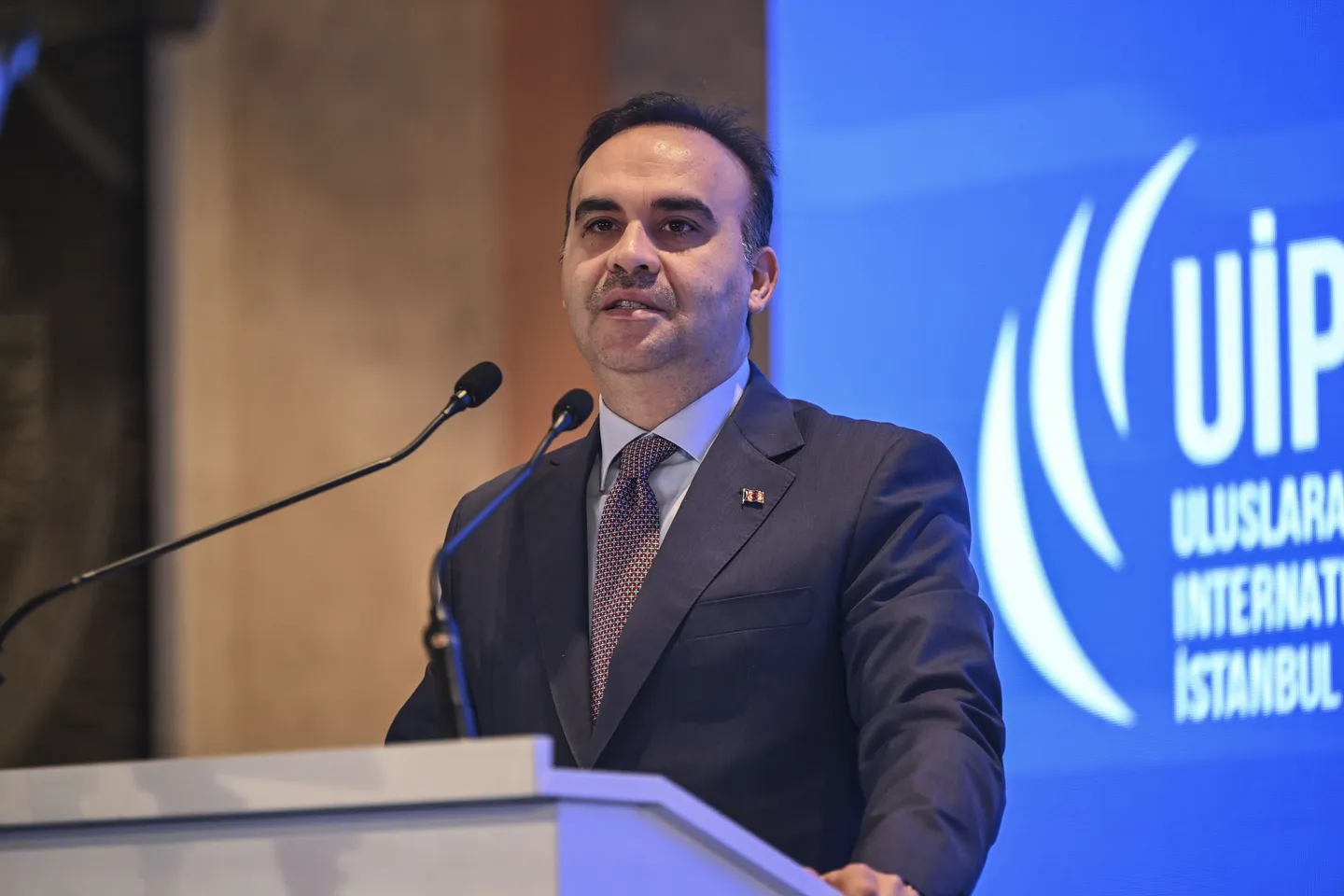
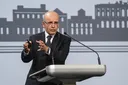
Turkish Industry and Technology Minister Mehmet Fatih Kacir has said that Türkiye is the only country providing the “economic dynamism and the competitiveness that the EU needs” through its local manufacturing capacity.
The remarks were made on Thursday at the opening of the 17th Bosphorus Summit, which kicked off in Istanbul and is organised by the International Cooperation Platform (UIP-ICP).
Kacir said that deepening the long-standing industrial and technological partnership between Türkiye and the EU will effectively respond to Europe’s geostrategic and economic challenges, especially with 30 years of Customs Union membership, as “Türkiye has become deeply integrated within European industry’s production and value chains.”
He noted that cooperation among nations amid growing uncertainties in the global economy is key, and that development is possible through partnerships based on mutual trust and fairness.
“We hope that our partners will act with the same resolve and deem the challenges we face not as a cause for division but as an opportunity for stronger solidarity, as we expect our approach to cooperation based on building a future together to be received well from the EU, which needs to create economies of scale, accelerate innovation and boost efficiency amid recent challenges in global competition,” he said.
“Türkiye boasts a potential far beyond where it stands, and ensuring that Turkish-origin products are included in the Made in EU regulation is in our mutual interest, as we want to emphasise that the path to enhancing Europe’s competitive edge lies in further deepening the mutual ties -- we will support and stand by investors who have their faith in our country and accelerate the green and digital transformation efforts, while diversifying our export markets,” he added.
Kacir noted that technology is increasingly a geopolitical power factor, with capabilities and competencies developing across fields like artificial intelligence (AI), semiconductors, biotechnology and energy systems.
He said Ankara, under Turkish President Recep Tayyip Erdogan, worked to transform the country into a key player in global competition through production capabilities and technological expertise, elevating Türkiye to the ranks of Europe’s and the world’s leading production hubs during the last 24 years.
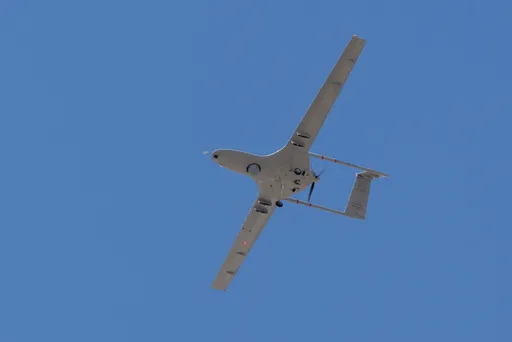
Kacir said Türkiye’s rising research and development spending and the growing number of personnel in the field, along with developments in its defence industry, drove the nation’s rise to global leadership in unmanned aerial vehicles (UAVs) and warships, increasing defence and aerospace exports.



Ankara also supported investments in batteries, electric vehicles, solar cells, wind turbines, chips, defence technologies, data centres, artificial intelligence, and industrial robotics under the HIT-30 High-Tech Investment Program with a goal of implementing high-tech investments worth $30 billion in state support by 2030.
Kacir said the government supported 213 investment projects to date under the Technology Initiative Program, and that the projects will contribute $11.3 billion to the nation’s current account balance.
Meanwhile, efforts are underway to provide AI literacy training to at least 5 million people in the first two years of the 2026-2030 Türkiye AI Action Plan, while the initiative aims to train 10,000 advanced AI specialists and 100,000 AI application professionals.
At least 2,000 publicly owned datasets will be made available via the National Data Library amid efforts to increase the installed data centre capacity to at least 1 gigawatt by 2030 and attract at least $10 billion in private-sector investments for data centre and cloud compute sectors.
Kacir stated that the ministry mobilised around 300 megawatts of investment during the last year, while efforts are under way to establish four new industrial corridors.
The mega-industrial zones will boast social amenities and be developed on the principles of the circular economy and green production, while facilitating access to global markets, alongside the Development Road, the Zangezur Corridor and the Northern Marmara Railway Crossing projects.
He added that Türkiye also provided more than $1 billion in financing to industrialists, small- and medium-sized enterprises, and green tech startups via collaboration with the World Bank under the nation’s Green Transformation Program.