 Murat Sofuoglu
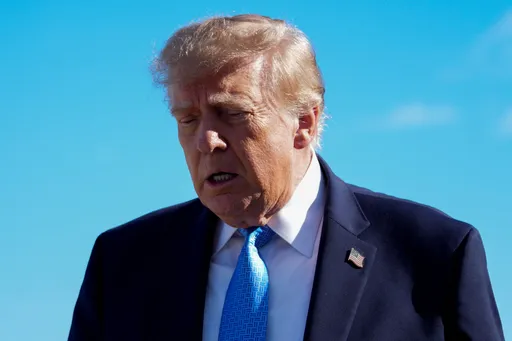
US President Donald Trump’s gunboat diplomacy across the Caribbean, which has targeted alleged drug boats operated by Latin American gangs, has evoked memories of controversial American interventions in the region – from Mexico to Cuba, Nicaragua, Haiti, the Dominican Republic and most lately Panama.
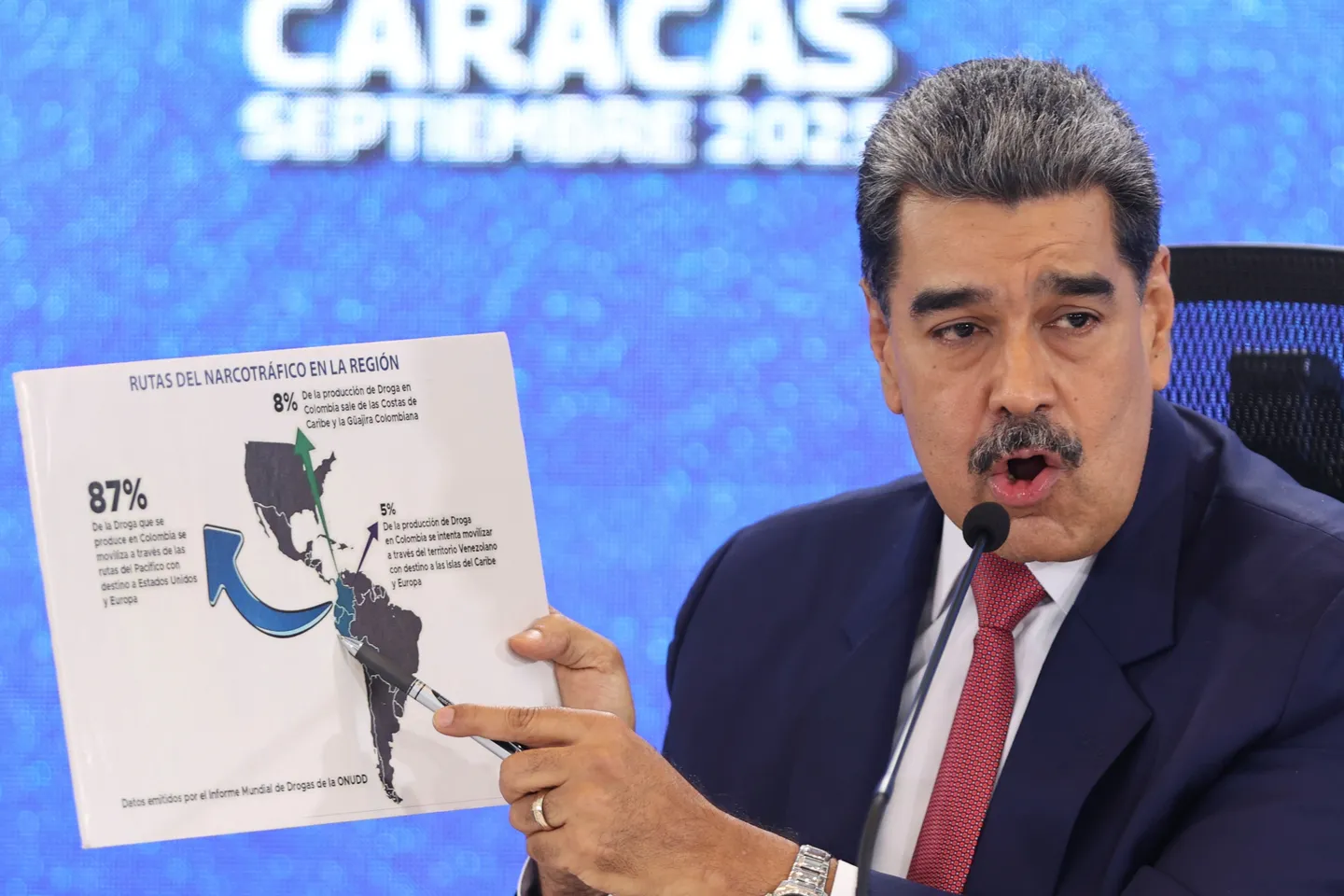
While Washington initially confirmed US operations were primarily directed against allegedly Maduro-linked drug cartels, Trump's air strikes on boats in the Caribbean Sea have killed dozens from not only Venezuela but also Ecuador, Colombia, and Trinidad and Tobago.
Trump threatened Venezuelan President Nicholas Maduro and Colombian President Gustavo Petro, calling the latter an “illegal drug leader” and warning of US aid cuts unless Petro closes drug production areas.
Through its Caribbean operations, the Trump administration has stated it aims to target the Cartel of the Suns and Tren de Aragua – two criminal drug organisations originating in Venezuela – which it has designated as terrorist groups.
US authorities accuse Maduro of controlling both cartels.
But many believe Trump’s Caribbean attacks are blurring the lines between targeting drug cartels and regime change by expanding American influence in a region vital for US interests.
Some senior US officials have referred to Trump’s latest moves in Latin America as the “Donroe Doctrine”, a modern adaptation of the 1823 Monroe Doctrine, named after former president James Monroe, a staunch advocate of US dominance in the Western Hemisphere.
Like the Monroe Doctrine, which is strongly linked to expansionist American Manifest Destiny ideology, the Donroe Doctrine aims to restore American hegemony across Latin America, according to experts.
“If the Trump administration truly sees its regional strategy as a ‘Donroe Doctrine’, it’s essentially a deliberate attempt to reassert US dominance in Latin America, but through a lens that is far more nationalistic, unilateral, and transactional than before,” Lorena Erazo Patino, a professor of Global Studies at the University of La Salle, tells TRT World.
“If Trump seeks to revive the Monroe Doctrine, it could signal the return of a controversial legacy to the region, aligned with his ‘America First’ agenda.”
Despite Trump’s threats against Venezuela and Colombia, Latin America will primarily respond to this doctrine negatively, according to the Colombia-based professor.
“From a geopolitical perspective, this strategy could backfire. Rather than reinforcing US influence, it risks reviving anti-American sentiment and encouraging Latin American countries to diversify their alliances, especially toward China, which promotes economic engagement without political strings,” Patino says.
Beijing’s push for protecting sovereignty and mutual respect stands in sharp contrast to Washington’s coercive tone, making China’s model increasingly appealing to many Latin American states like Maduro's government, she adds, noting that the Xi Jinping administration publicly opposed US military operations in the Caribbean.
China owns more than 90 percent of Venezuelan oil exports, making significant investments in the country through long-term agreements signed between the two countries. Russia, a key ally of China, also has strong military and economic connections with Venezuela, which has the world’s largest oil reserves.
But relations between Latin America and China go beyond Venezuela’s connection with Beijing. Most countries in South America trade with China rather than the US, making Beijing’s influence a real factor in America’s so-called former “backyard”.
“It’s quite plausible that Trump’s actions could expand China’s influence in Latin America. By embracing a confrontational approach of sanctions, aid cuts, and threats of intervention, Washington risks alienating regional partners and creating a political and economic vacuum that Beijing is well positioned to fill,” says Patino.
Fan Hongda, a Chinese professor at Shaoxing University and an expert on Beijing's diplomacy, also sees various regional negative consequences for Trump’s policy towards Venezuela and Colombia.
Latin American countries, whose concerns about US suppression will only grow due to Trump’s strikes across the Caribbean, will likely “seek or deepen their relationships with friendly countries like China," he says.




“If China, which upholds non-interference, gains influence in this region, US threats should be a motivating factor for this,” he tells TRT World.
The professor believes that the US, which sees itself as a supreme force over other countries, as “a manifestation of American imperialism”, cannot tolerate some Latin American countries like Venezuela deepening their relations with Russia, China, and Iran.
But he warns that “the so-called 'backyard' of a great power is no longer in line with today's world.”
Rising anti-Americanism
Experts believe the ‘Donroe Doctrine’ will likely fuel anti-American sentiment across Latin America. This region has endured numerous US interventions over the past 200 years, often resulting in political instability, economic inequality, and social divisions.
James E. Mahon, Jr, a professor of political science at Williams College, believes that while the dislike for the Maduro regime is “widespread” in the region, Trump’s Caribbean attacks will “likely prove counterproductive”, pushing many governments into opposing the US policy.
The professor believes that the ‘Donroe Doctrine’, which he describes as “silly”, might meet a “latent Latin American solidarity” even though there are plenty of ideological and practical disagreements in the region.
He notes that the US leadership in the late 1920s and 1930s discovered that “bombing insurgents in Nicaragua negatively affected the fortunes of American companies trying to invest in and trade with the entire hemisphere.”
“Trump is obviously looking to provoke Maduro into something that could serve as casus belli [a Latin phrase that denotes an act used to justify a war]. Despite all his previous rhetoric, he wants to be a war president, in order to win the acclaim and reflexive support of the domestic populace,” the professor adds.
Unity or discord
While the Trump administration’s Caribbean attacks feed anti-American popular sentiment across Latin America, the region suffers from various divisions as no Latin American state has come out in clear support of either Venezuela or Colombia against the US, according to Patino, the Colombia-based professor.
Ecuador's re-elected right-wing leadership under Daniel Noboa moved to allow the US military access to its territory, while Paraguay, Argentina, and Chile have designated the Cartel of the Suns and Tren de Aragua as terrorist organisations. El Salvador, which has accepted many deported migrants from the US, also has a pro-Trump president.
Trinidad and Tobago, a small dual-island Caribbean nation with a strategic proximity to Venezuela, has even gone further, participating in the US-led military exercises in the Caribbean Sea.
On the other hand, the anti-American ALBA bloc — led by countries such as Cuba, Bolivia, and Nicaragua — has condemned US operations as a violation of national sovereignty.
Mexico and Brazil have emerged as the main advocates of the non-intervention principle, staying consistent with their long-standing foreign policy traditions.
“This reflects a broader lack of regional unity, as each country prioritises its own national interests while stepping away from traditional multilateral mechanisms such as the Inter-American Treaty of Reciprocal Assistance (TIAR), the Organisation of American States (OAS), and the Community of Latin American and Caribbean States (CELAC),” Patino says.
While Cuba and Nicaragua continue to back Venezuela, Colombia faces a growing risk of being a collateral casualty of the regional standoff between the US and its adversaries due to President Petro’s combative stance, according to Patino.
“Latin America today is deeply divided and politically polarised, a fragmentation that heightens instability and increases the risk of regional confrontation,” she concludes.