 Kazim Alam
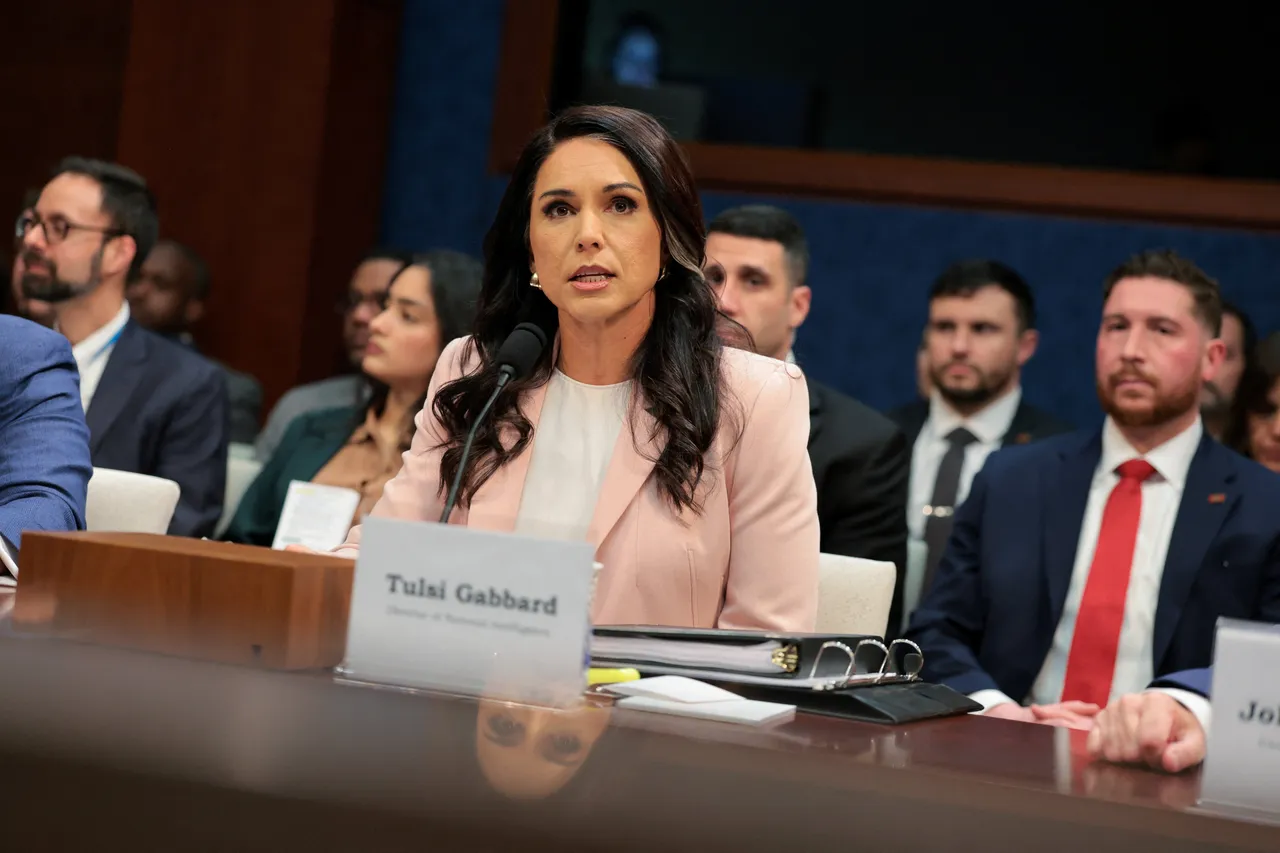
In her March 18 testimony before the US Senate Intelligence Committee, Director of National Intelligence Tulsi Gabbard said that Pakistan could develop intercontinental ballistic missiles (ICBMs) with the range long enough to strike the US mainland.
Clubbing Pakistan with China, Russia, Iran and North Korea, the principal adviser to the US president on intelligence issues accused the South Asian country of developing “novel, advanced or traditional” missile delivery systems with nuclear payloads that put the US “within range”.
Pakistan immediately rejected the claim, with a spokesperson for the Ministry of Foreign Affairs calling Gabbard’s view “not grounded in strategic reality.”
Islamabad insisted that the country’s missile and nuclear capabilities are “exclusively defensive” and “India-specific”.
Gabbard’s statement runs counter to the unexpected thaw in US-Pakistan relationship under President Donald Trump, who has repeatedly praised Pakistani civilian and military leadership and extended favourable trade terms under the new tariff policy.
Gabbard’s critical words for Pakistan in the Senate committee meeting left many in Islamabad wondering whether the remarks were designed to drive a wedge between the two capitals at a moment when New Delhi is already feeling jittery about warming bilateral ties.
Gabbard’s long record of public admiration for India’s Hindu nationalist Prime Minister Narendra Modi adds fuel to the speculation.
She has repeatedly praised Modi, visited India, and positioned herself as a strong advocate of India-US partnership.
Pakistani analysts were quick to dismiss her claims.
Mushahid Hussain Sayed, former chairman of Pakistan’s Senate Foreign Relations Committee, feels that Gabbard’s statement reflects her “personal political proclivities”, not the institutional position of the American establishment.
“Gabbard is rabidly pro-India, indeed pro-Modi,” he tells TRT World.
From the beginning of her career in politics decades ago, Gabbard received financial support from people associated with the Sangh Parivar – a network of religious, political, paramilitary, and student groups that subscribe to the Hindu supremacist, exclusionary ideology known as Hindutva.
Sayed highlights the timing of her remarks. Washington is pressing Pakistan to adopt an overtly pro-American stance on the Iran war, he says.
“The US wants to pressure Pakistan into changing its position,” Sayed says, implying that the latest remarks by Gabbard are meant as leverage rather than intelligence.
Sayed says the US intelligence chief’s statement smacks of the handiwork of the Indian lobby, which has a “deep ingress in the American system”.
An analysis of Gabbard's financial disclosures from 2011 to 2018 by news website Intercept revealed that more than 100 members of US Sangh affiliates and their families donated “hundreds of thousands of dollars” to her campaigns.
In Sayed’s view, the combination of Gabbard’s ideological leanings and New Delhi’s influence network in Washington has created a perfect smokescreen to present Pakistan as a global threat precisely when bilateral relations with Washington are on the mend.

A diplomatic minefield
Amir Zia, a Karachi-based political analyst, offers a more cautionary perspective on Gabbard’s statement.
While acknowledging her “tilt towards India and admiration of the Hindutva ideology”, he tells TRT World that multiple US administrations have raised similar red flags in the past.
The Biden administration imposed sanctions on Pakistani companies, including a state-run entity, in December 2024 for their alleged involvement in the missile programme.





Urging pragmatism, Zia says the interests of Pakistan do not perfectly align with Washington’s policies, such as the bolstering of India against China.
But cooperation on counter-terrorism between the US and Pakistan remains valuable, he says.
Islamabad must navigate the diplomatic minefield with the aim of sustaining and boosting its relations with the US, while protecting its core national interests, Zia says.
Muhammad Faisal, a South Asia security researcher at the University of Technology Sydney, warns against overplaying the “subjective preferences of individuals” that subside when they assume official government roles.
He tells TRT World that concerns about Pakistan’s long-range missiles date back to the Obama administration (2009-16). They intensified under the Biden administration (2021-25), and have now resurfaced under Trump’s second term.
“This indicates an institutionally consistent view within the US foreign policy and intelligence communities across successive administrations,” Faisal says.
The revival of such talk after a period of relative quiet, he says, “points to institutional continuity rather than personal ideological preference”.
Faisal also downplays the foreign lobbying power in the US, saying it ultimately has a “limited and uneven influence”.
He refers to US-India trade tensions and Washington’s tariffs on New Delhi’s Russian oil purchases as evidence that India does not always get its way.
India-centred nuclear doctrine
Experts seem unanimous on Pakistan’s nuclear and missile doctrine being specific to India.
From the programme’s inception in the 1970s – launched in direct response to India’s nuclear tests – Islamabad has insisted that its arsenal exists solely for deterrence within South Asia, not beyond.
Sayed says Pakistan has maintained strategic clarity on the nuclear and missile programmes from day one.
“The entire programme, in terms of its depth and range, remains India-focused,” he says.
Zia makes the same point, but more forcefully.
“Pakistan’s nuclear and missile programmes have been developed keeping solely India in mind. In fact, the credit for the nuclearisation of South Asia goes to India,” he says.
“Islamabad has no targets and ambitions beyond South Asia — and that too is for defensive purposes,” he says.
Faisal highlights that Pakistan has so far not deviated from its India-specific nuclear doctrine in either declared posture or demonstrated capability.
Pakistan’s longest-range operational missile, the Shaheen III, can hit a mark from a distance of 2,750 kilometres, which is enough to cover India, but far short of the intercontinental range.
Extending that to the 10,000-plus kilometres needed to threaten the US mainland is but a distant possibility.
“Pakistan would first have to test at ranges upwards of 5,500 kilometres to field an intermediate-range ballistic missile, a threshold it has not yet crossed, and may be several years to a decade away from that stage,” Faisal says.