Escalating conflict in the Middle East could push more than 30 million people into poverty worldwide, with some of the most severe long-term consequences falling on countries far removed from the fighting, a new report by the United Nations Development Programme warns.
The analysis highlights how a regional military escalation risks triggering a global development setback through rising energy prices, food insecurity and slowing economic growth, effects that are already being felt across more than 160 countries.
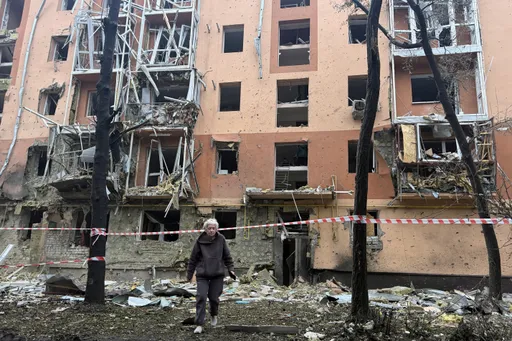
While the immediate humanitarian toll is concentrated in the conflict zone, the UNDP cautions that the broader economic fallout is likely to be both widespread and enduring, disproportionately affecting low- and middle-income nations with limited financial resilience.
“War is development in reverse. Conflict can undo in weeks what countries have built over years,” said UNDP Administrator and UN Under-Secretary-General Alexander De Croo.

A global shock with distant victims
According to the UNDP, the crisis is no longer a short-term disruption but a structural shock to the global economy. In a worst-case scenario, up to 32.5 million additional people could fall below the poverty line, reversing years of development gains.
Countries geographically distant from the Middle East, including parts of Sub-Saharan Africa, South Asia and small island economies, are among the most vulnerable. Many rely heavily on imported fuel and food, leaving them exposed to price spikes driven by instability in global energy markets.
The report identifies a “triple shock” driving the impact: surging energy costs, rising food prices and weakening economic growth.
International Monetary Fund Managing Director Kristalina Georgieva has warned that “poor, vulnerable countries” without fiscal space would be hit the hardest.
She had noted that many countries had little to no fiscal space to help their populations weather the price increases caused by the war, which in turn also increased the prospects of social unrest.
Energy and food prices amplify risks
Higher oil and gas prices are already feeding into inflation worldwide, increasing transportation and electricity costs and pushing up the price of basic goods. For poorer households, which spend a larger share of income on food, even small increases can have significant consequences.
In parallel, disruptions to supply chains and higher agricultural input costs, such as fuel and fertilisers, are compounding food insecurity in vulnerable regions.
The Asia-Pacific region alone could face economic losses approaching $300 billion under severe escalation scenarios, according to UNDP estimates.

A key concern highlighted in the report is the uneven capacity of governments to respond.
Wealthier countries have been able to cushion the impact through subsidies and fiscal support. By contrast, many developing economies face high debt levels and limited fiscal space, forcing difficult trade-offs between stabilising prices and maintaining essential public services, the report highlights.
Growth outlook deteriorates
Recent forecasts from the International Monetary Fund reinforce the UNDP’s warning, pointing to slowing global growth and more persistent inflation as the conflict weighs on economic activity.
The IMF said in its 2026 outlook that global growth could slow to 3.1 percent while inflation rises, warning that prolonged conflict could push price growth above 6 percent.
It has cut its growth forecast for emerging markets to 3.9 percent, citing rising energy and food costs and increased vulnerability among import-dependent economies.
The IMF warned the global economy is already drifting towards a weaker scenario, with growth potentially falling to 2.5 percent or even 2 percent under prolonged conflict conditions.
The World Bank has issued similar warnings, saying a sustained escalation could shave up to one percentage point off global growth, describing the effects as “cascading” across economies.

Long-term development setbacks
Beyond immediate economic strain, the UNDP warns of deeper, longer-term consequences.
Many of those at risk of falling into poverty are people who only recently moved above the poverty line, raising the prospect of a reversal in development progress that could take years to rebuild.
Additional risks include rising public debt, reduced investment in health and education, and declining remittances from migrant workers.
Women and informal workers are expected to bear a disproportionate share of the burden, further widening existing inequalities.
To mitigate the impact, the UNDP is calling for targeted cash transfers and more coordinated international action, estimating that relatively modest global support could help protect the most vulnerable populations.