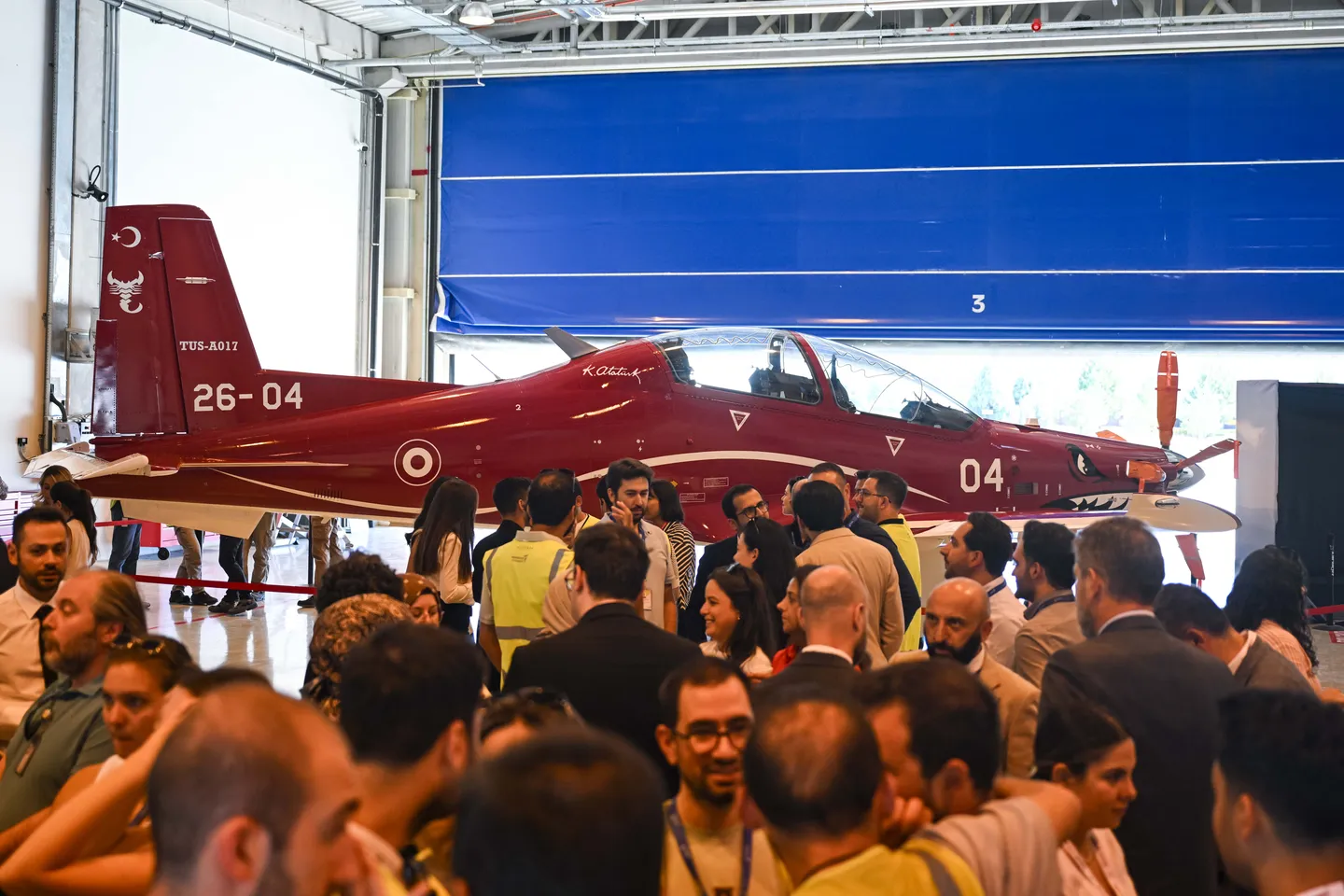
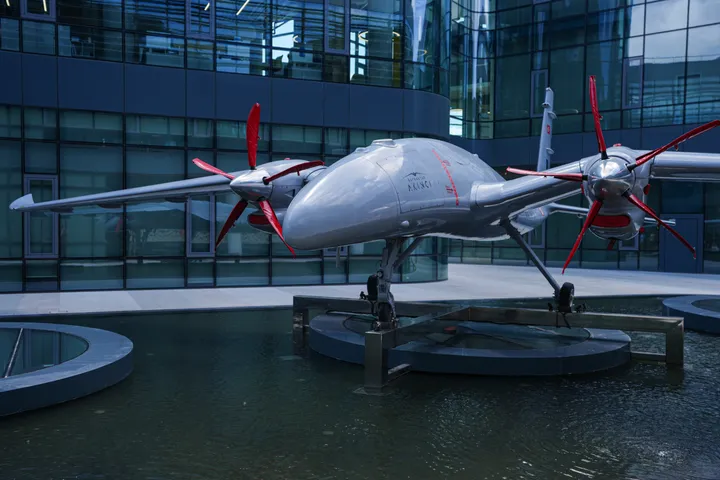
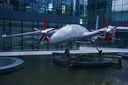
Türkiye’s new-generation basic trainer aircraft, the Hurkus-II, is set to enter the Turkish Air Force’s inventory, marking a new milestone for the country’s defence industry.
Haluk Gorgun, head of Türkiye’s Defence Industries Secretariat, and Turkish Air Force Commander Gen. Rafet Dalkiran took part in flights aboard the domestically developed Hurkus-II and Hurjet aircraft.
Gorgun said the first Hurkus-II would be delivered to the Air Force Command soon.
“When you sit in an aircraft’s cockpit, you feel much more closely the immense effort extending from the design table to the production line, and from testing to flight,” he wrote on the Turkish social media platform NSosyal.
“Now, this effort is about to yield another result. We will deliver our first Hurkus-II aircraft to our Air Force Command very soon.”
In a video shared after the flight, Gorgun described the impending delivery as a milestone for Türkiye.
“For the first time, Türkiye is delivering a domestically produced aircraft to its own armed forces. It was very, very meaningful,” he said.
“These were also the final tests today. Being part of these final tests was an additional source of pride for us.”
Dalkiran also highlighted the significance of flying aboard a Turkish-made aircraft.

“As commander of the Turkish Air Force, nothing could make me prouder than flying an aircraft produced by our own country,” he said.
After the flight, Gorgun asked Dalkiran whether the aircraft had passed the test and its acceptance process had been completed. “Excellent. Done,” Dalkiran replied.
Hurjet demonstrates domestic radar capabilities
Gorgun and Dalkiran also participated in a Hurjet test flight during which the aircraft demonstrated Türkiye’s domestically developed radar capabilities.
During the flight, the Hurjet P2 used Aselsan’s domestically developed MURAD active electronically scanned array radar to detect and lock onto the Hurjet P1.
Gorgun said Turkish Air Force personnel would receive their initial training aboard the Hurkus before progressing to advanced training on the Hurjet.
“The Hurjet flown by our commander, which was equipped with the AESA radar developed by Aselsan, locked onto the Hurjet we were flying from a certain distance,” he said.
“This was a first. Experiencing this, witnessing a historic moment and walking this path together with our entire team and valuable personnel is immensely meaningful.”