 Sabena Siddiqui
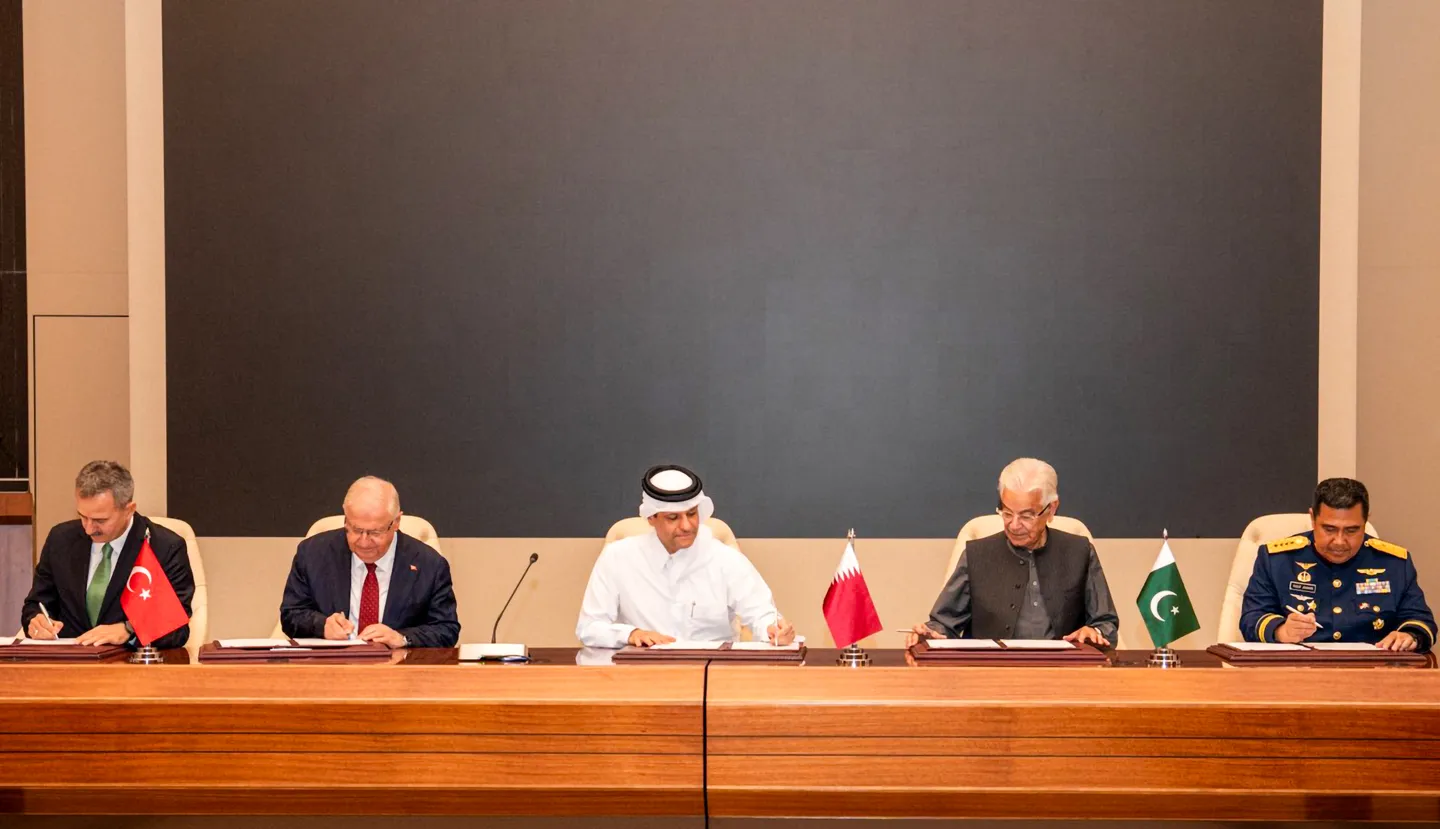
On October 21, Qatar, Indonesia, Türkiye and Pakistan launched the Badr Memorandum of Understanding (MoU), a quadrilateral defence partnership, in the capital, Doha.
The arrangement adds a new layer of security cooperation to a developing regional landscape, combining defence-industrial collaboration with military ties.
Announced barely two months after the Makkah Joint Defence Agreement (MJDA) brought Ankara, Riyadh and Islamabad under a mutual defence pact, the Badr initiative comes as the US-Iran war enters its eighth month, with few signs of easing off.
But unlike the Makkah pact, the new grouping takes a different approach, striving to build a framework for security cooperation without binding its members to any mutual defence commitment.
A symbolic name
With historical and symbolic significance, the name 'Badr' refers to the Battle of Badr in 624, when the Prophet Muhammad and his followers defeated their opponents in one of the first major Islamic battles on the Arabian Peninsula.
According to the Qatar Defence Ministry, the MoU aims to foster cooperation and enhance defence capabilities, with the four participating nations complementing each other through the agreement.
The name 'Badr', meaning full moon, symbolises this cooperation.
An executive board representing the four countries would identify joint projects, while a strategic board would approve them and set implementation timelines.
With the prolonged US-Iran conflict raising concerns about weapons shortages and the depletion of military stockpiles, the manufacturing of armaments is likely to emerge as a key priority. To that end, member countries are bringing existing industrial partnerships to the table.
Qatar has invested in the Turkish defence industry for more than a decade, while Ankara deployed additional Turkish forces during the 2017 Gulf diplomatic crisis.
Meanwhile, Pakistan has been working with Türkiye on the MILGEM naval manufacturing project for years, while Indonesia and Türkiye have been jointly developing a tank.
With diplomatic efforts to secure a lasting US-Iran peace deal still in limbo, Gulf states could face retaliatory attacks from Tehran if hostilities resume.
As a result, interest is growing in strengthening domestic defence industries and military capabilities. Although Gulf Cooperation Council (GCC) states are not looking to abandon their reliance on Washington for security, they want more regional defence options.
The trend began when Riyadh formalised its decades-old defence ties with Islamabad under the bilateral Strategic Mutual Defence Agreement (SMDA) in September 2025.
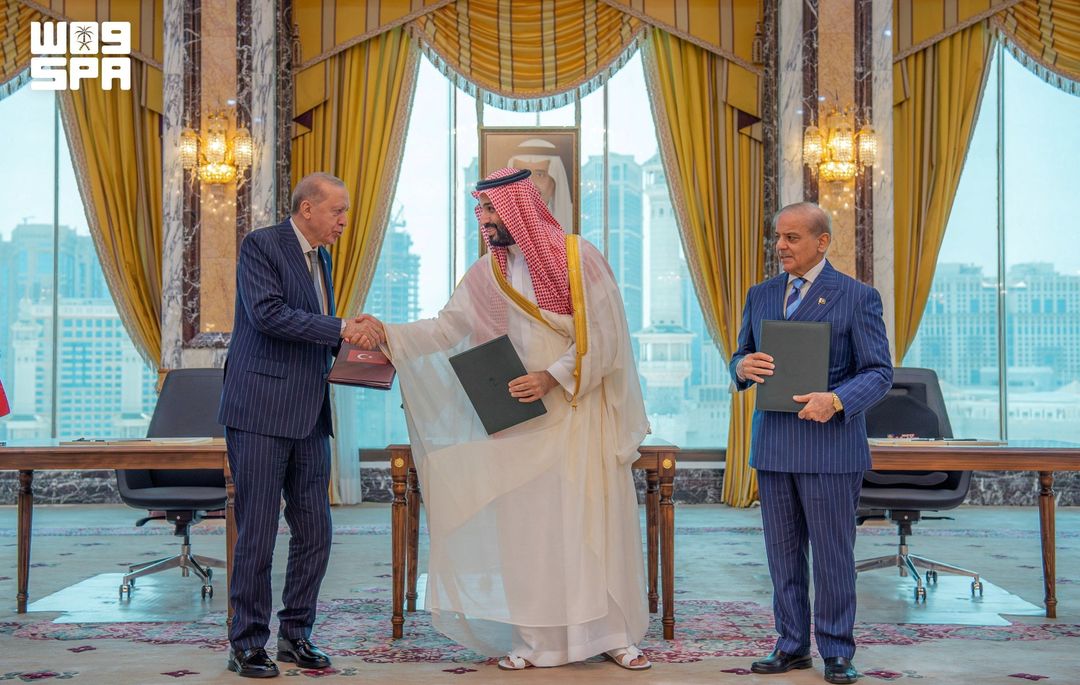
The kingdom followed by signing the Makkah Joint Defence Agreement (MJDA) with Pakistan and Türkiye in August this year.
Rather than entering a mutual defence pact, Doha has opted for a defence industry cooperation framework with Ankara, Islamabad and Jakarta under the Badr MoU.
How is Badr different from the Makkah pact?
Although both arrangements involve Pakistan and Türkiye, their objectives and obligations differ fundamentally.
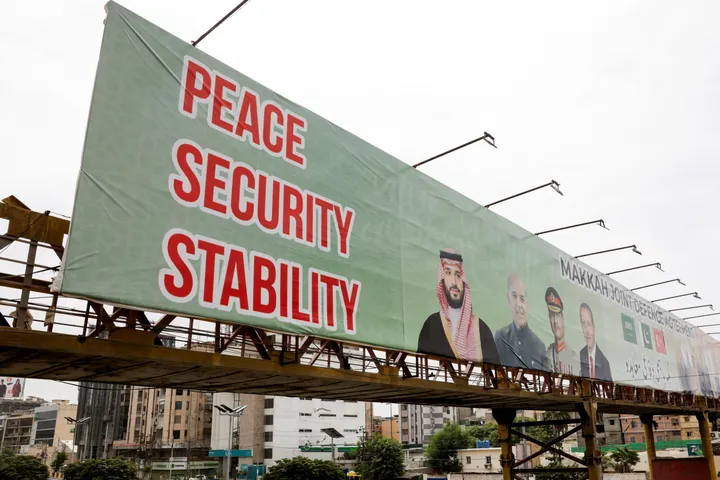

Modelled on the bilateral SMDA between Islamabad and Riyadh, the trilateral MJDA stipulates that an armed attack against one member would be considered an attack against all three, committing them to joint deterrence.
Saudi Arabia and Pakistan have officially approved the agreement, while parliamentary ratification in Türkiye remains underway.
However, Badr takes a more industry-focused approach, with joint production, technology transfer and technical training, without requiring members to defend one another in the event of external aggression.
Relatively less complicated, Badr also offers opportunities for cooperation involving Turkish military technology and Pakistani aircraft or weapons systems.
Thus, while the Makkah pact is a collective defence commitment, Badr focuses on defence industry cooperation without mutual defence obligations, making the two mechanisms complementary rather than competing frameworks.
Reflecting a preference for customised security partnerships, it remains to be seen whether more partnerships like the Makkah pact or Badr will emerge.
The confrontation involving Iran, Israel and the United States has exposed Gulf infrastructure, energy facilities and maritime routes to security risks. As Washington remains occupied with Tehran, it has struggled to secure Gulf states, prompting them to seek greater strategic flexibility.
The GCC's 2000 Joint Defence Agreement already provided for collective defence, modelled on NATO's Article 5, but the bloc could not achieve the military integration it initially planned.
The Peninsula Shield Force (PSF), created in 1984, and the Unified Military Command, established in 2013, have also struggled due to differences in threat perceptions and decision-making.
Working with long-trusted partners, such as Pakistan for Saudi Arabia or Türkiye for Qatar, might help Gulf states cooperate without getting caught up in internal disagreements.
This also leaves the door open for more agreements or expanded membership under the Makkah pact or Badr MoU, potentially paving the way for a more comprehensive agreement.
These arrangements can also function together without creating a complex new Gulf security architecture. Though they overlap, they remain complementary, with Türkiye and Pakistan occupying central roles and addressing different security requirements.
What makes the Badr MoU sustainable?
By focusing on long-term sectors such as defence manufacturing, technology transfer, and research and development, Badr can sustain collaboration beyond immediate regional security concerns.
With Qatar providing financial backing and the other three partners working in distinct fields without mutual defence commitments, this security model remains politically convenient, allowing members more room to pursue their individual foreign policy priorities.
In particular, this concept could work for Türkiye, given its growing defence industry.
According to the Defence and Aerospace Industry Exporters' Association, more than 55 percent of Türkiye's defence exports since 2012 took place in the last four years.
In 2025, Türkiye's defence and aerospace exports rose by 48 percent. According to the Stockholm International Peace Research Institute (SIPRI), Türkiye increased its arms exports by 122 percent over the last five years to become the world's 11th-largest arms supplier.
Against this backdrop, Badr offers Ankara an opportunity to further extend its defence-industrial reach.