 Abhishek G Bhaya
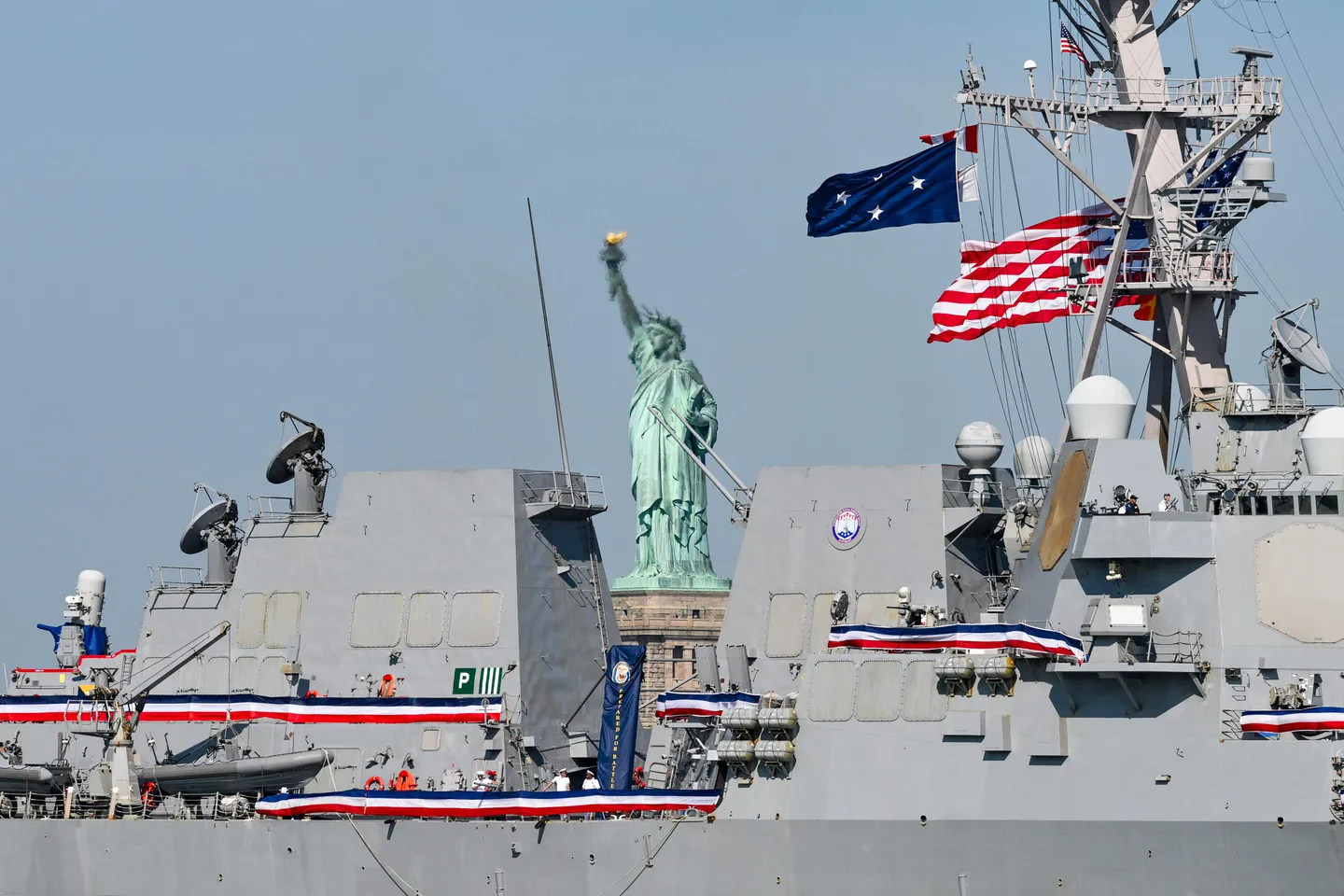
The United States, in a dramatic policy shift, announced earlier this month that it is opening the door for foreign shipbuilders to design and construct warships, as Washington tries to reverse years of stagnation in the size of its Navy and respond to China's rapidly expanding fleet.
The White House presidential memorandum, titled ‘Rebuilding the United States Navy and America’s Shipbuilding Industrial Base’, calls for greater investment in shipyards, the workforce and suppliers, while President Donald Trump’s administration is also exploring the use of allied shipyards to accelerate warship construction.
The urgency is clear. The US Navy had 291 battle-force ships as of May 2026, while China’s People’s Liberation Army Navy (PLAN) operates over 1,000 – 1,005 to be precise – active vessels as of August 2026, according to globalmilitary.net. China's commercial shipbuilding industry is also vastly larger than America's.
The gap has become one of the central concerns of US naval planners.
But the challenge for Washington is not simply to build more ships than China. It is to sustain a global naval force while preparing for a potential conflict with its most capable military competitor.
“The US retains a qualitative edge over the PLAN, but the gap is shrinking year-by-year,” Richard Thomas, editor-in-chief of GlobalData's defence desk, told TRT World. The question, he added, is whether the United States can rebuild the capacity needed to maintain that advantage.
The industrial gap
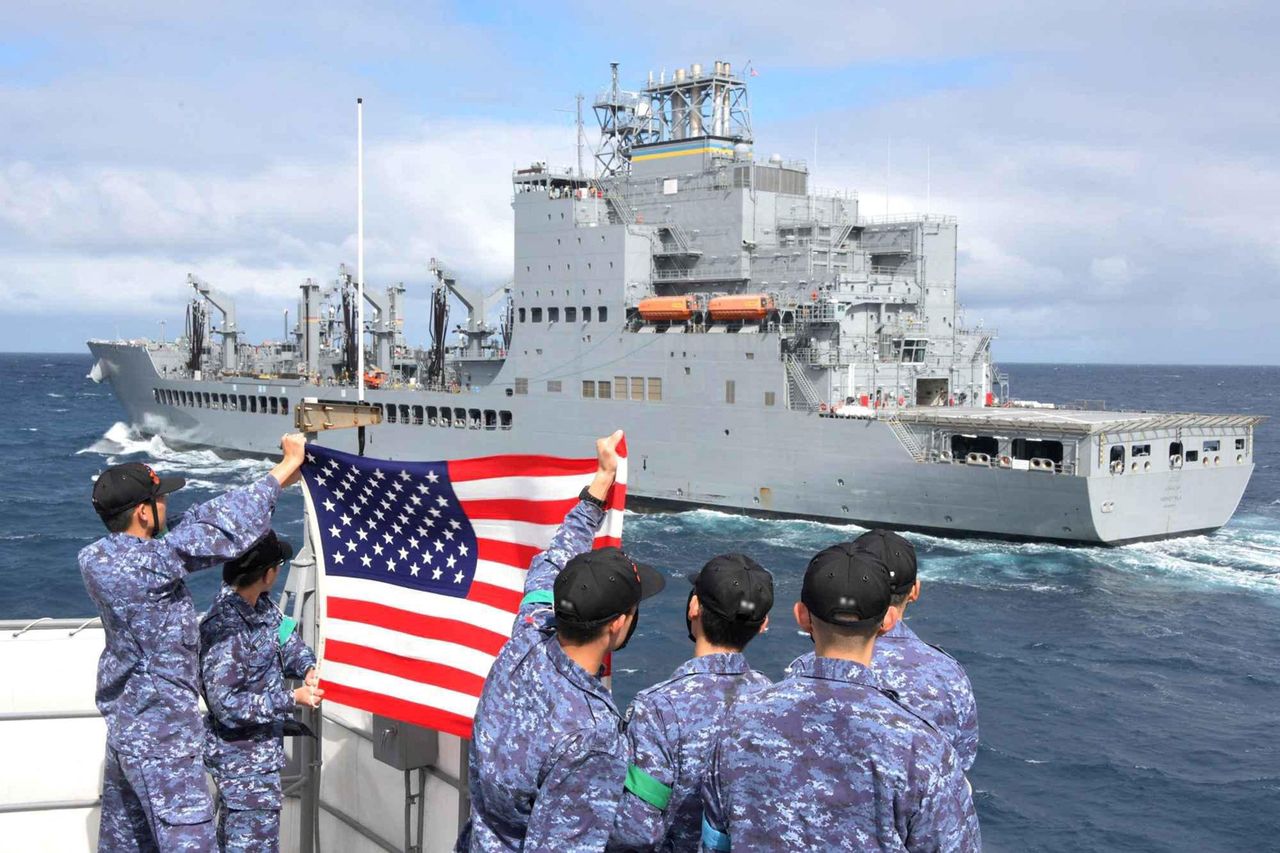
China's naval expansion rests on an industrial base that is difficult for the United States to match.
Chinese shipyards produced more than half (53 percent) of global commercial shipping output in 2025, growing from less than 5 percent in 2000. By contrast, the US has had only a marginal presence in the sector for decades, with its share falling to just 0.11 percent in 2024 and virtually zero in 2025.
China’s commercial capacity does not translate directly into military capability — advanced nuclear submarines and aircraft carriers require specialised facilities and technologies — but it gives Beijing a much larger ecosystem for producing ships, components and maritime equipment.
Washington is now trying to rebuild its own industrial base. The problem is that the weakness has developed over decades.
US government assessments have repeatedly identified delays and cost increases in naval shipbuilding. Major programmes, including the Littoral Combat Ship and Constellation-class frigate, have encountered serious problems.
Thomas described the situation as “extremely serious”.
“The surface combatant fleet is struggling,” he said, pointing to the failures surrounding the LCS and Constellation programmes.
He also highlighted pressure on submarine production, arguing that delivery of Virginia-class attack submarines and Arleigh Burke Flight III destroyers would be crucial to the US Navy's ability to counter China.
For Mehmet Ozkan, professor of international relations at the Joint War Institute of Türkiye's National Defence University, the problem goes beyond individual programmes.
“Increases in the budget will not suffice to resolve these severe concerns,” he told TRT World.
“The fundamental problem is industrial capacity,” including shipyards, skilled labour, supply chains, procurement procedures and maintenance backlogs.”
“Although money is beneficial,” Ozkan said, “the process of reestablishing industrial capacity necessitates years.”
That creates a difficult mismatch for Washington. The strategic competition with China is accelerating now, while the industrial capacity required to respond may take years to rebuild.
How much does China's advantage matter?
China's larger fleet and shipbuilding capacity could become especially important in a prolonged conflict.
Ozkan believes industrial depth could eventually offset some of America's technological advantages. “The United States maintains substantial qualitative advantages, particularly in the areas of technology, alliances, nuclear submarines, carrier aviation, and operational experience,” he said.
“Nevertheless, China's extensive naval and commercial shipbuilding base provides an equally critical advantage in the event of a protracted conflict.”








His preferred measure of naval strength is therefore not simply fleet size but what he calls “sustainable deployable combat power” — the ability to deploy ships, fight them, maintain them and return them to service on time.
That distinction matters because a large fleet is of limited value if vessels spend extended periods waiting for repairs or replacements. Yet whether China would actually get to exploit its industrial advantage remains contested.
Thomas believes a US-China war would be unlikely to resemble a long conventional war of attrition. “A high-intensity conflict between the US and China would be catastrophic,” he said. “Any conflict would be extremely short, extremely violent, and devastate the global economy.”
China's advantage in sustainment is therefore real but could remain largely theoretical if a conflict ended before replacement capacity became decisive.
Josef Gregory Mahoney, professor of politics and international relations at Shanghai-based East China Normal University, questions whether the conventional comparison of shipbuilding capacity is even the right framework.
China's industrial advantage would matter in a prolonged conflict, he said, but the premise of a long surface war fought close to the Chinese mainland is questionable.
China has invested heavily in anti-ship missiles, submarines and other anti-access and area-denial capabilities intended to make large-scale US naval operations near its coastline increasingly difficult, he added.
“In a prolonged attrition scenario this would be a significant material factor,” Mahoney explained. “However, the premise of a long, high-intensity surface war fought close to the Chinese mainland is itself open to serious doubt.”
The cost of global ambitions
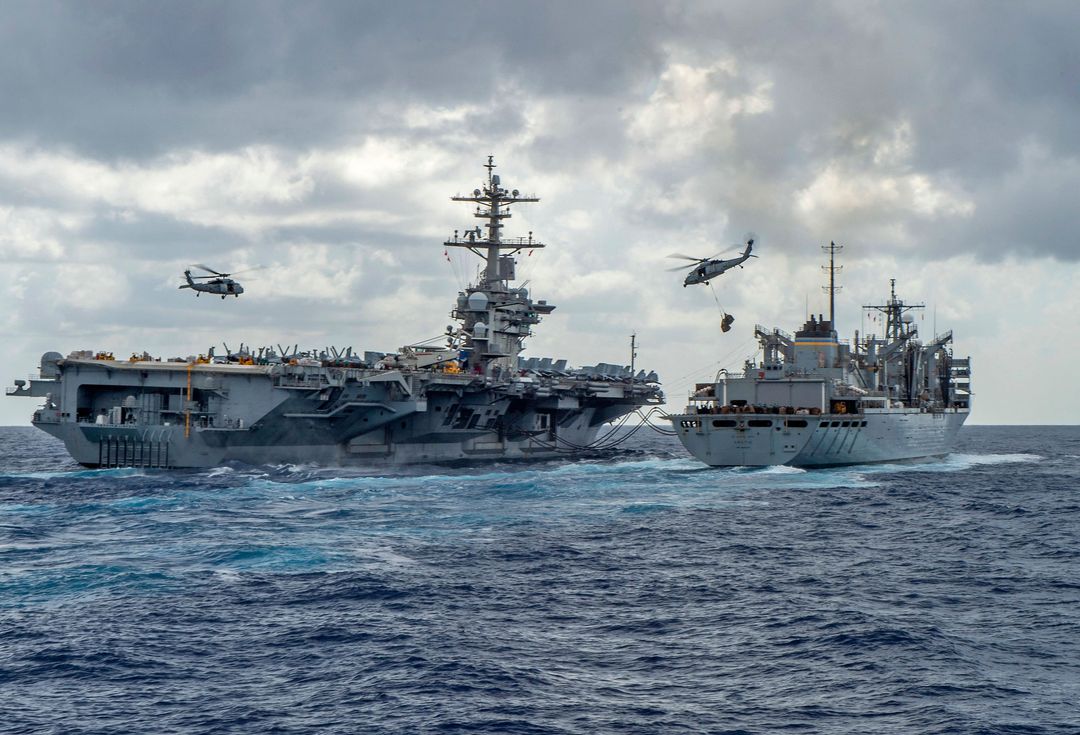
The challenge is further complicated by the fact that the US Navy is not preparing for China alone. The fleet is expected to maintain a presence in the Indo-Pacific while supporting commitments in Europe and the Middle East.
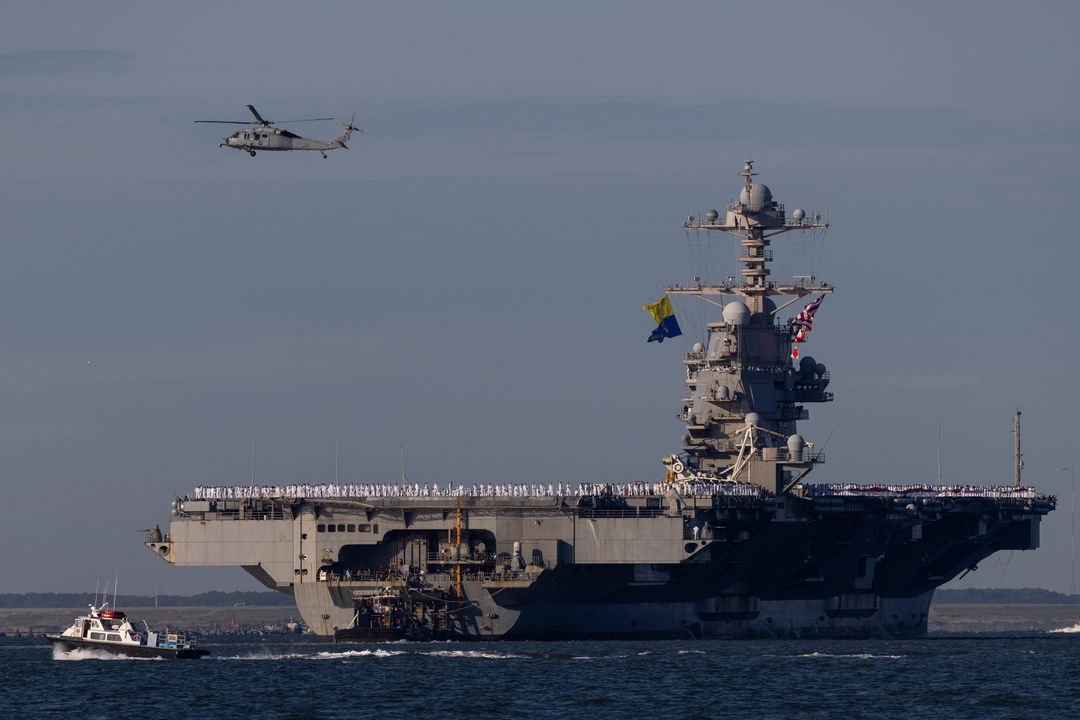
The US war on Iran has provided a recent illustration of the problem. The USS Abraham Lincoln spent 274 days deployed before leaving the region, while the USS George Washington was moved from the Pacific to replace it.
The deployment did not create the US Navy's industrial problems, but it showed how quickly a crisis in one region can consume assets needed elsewhere.
For Mahoney, the episode exposed a broader tension between Washington's strategic ambitions and its available resources. “The recent redirection of assets towards West Asia has further illustrated the difficulty of sustaining multiple high-priority theatres simultaneously,” he said.
He questions whether the US strategy of continuous forward presence can be maintained indefinitely.
“If the prevailing strategy of continuous forward presence and island-chain containment is itself difficult to sustain with the existing force and industrial base, then the central problem is not simply insufficient shipyards,” he contended.
Allies can buy time, not solve the problem
The United States has one major advantage, according to analysts, that China may not easily replicate: its network of highly capable allies. Japan and Australia are expanding their own maritime capabilities, while other partners contribute bases, logistics and military assets.
Thomas said the two Indo-Pacific allies could become an important “differentiator in the near-term,” giving Washington time to revitalise its industrial base.
But analysts also agree that alliances cannot entirely compensate for deficiencies in US capacity. The US Navy still needs enough ships to maintain deployments, enough crews to operate them and enough shipyards to repair and replace them.
For Ozkan, that makes readiness a more meaningful measure than headline fleet numbers. “The most enlightening metric is sustainable deployable combat power,” he said.
That may ultimately be the real test of the US-China naval competition. Washington does not necessarily need to match China ship for ship, but it must be able to keep enough of its fleet operational, supplied and replaceable to sustain its commitments over time.
The decision to open the door to foreign-built warships underlines how difficult that task has become.