 Murat Sofuoglu
Even before Iran's threats to block the Strait of Hormuz and the escalation of US-Iran tensions, American policymakers had increasingly prioritised a strategic pivot to the Asia-Pacific.
The shift was driven by China's growing global influence and its challenge to US commercial and security interests, prompting Washington to focus beyond its traditional Atlantic-Mediterranean theatre, where it had long sought to contain Russian power.
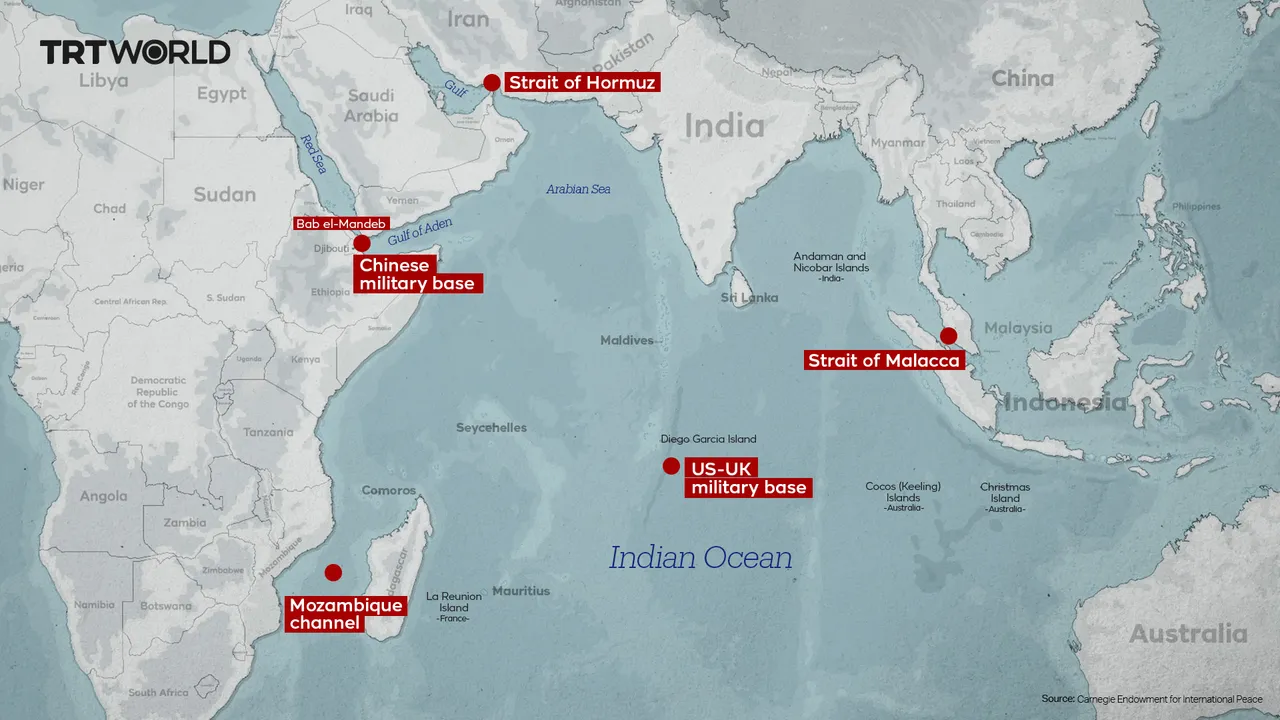
The war on Iran, however, has introduced a new layer of complexity. Tehran’s ability to disrupt shipping through the Strait of Hormuz has highlighted vulnerabilities that extend beyond the Pacific. Washington now faces growing concerns across the Indian Ocean, a region that handles about 50 percent of global container traffic and 80 percent of seaborne oil shipments.
Despite NATO remaining the world’s most powerful military alliance and the US continuing to view the Pacific as its primary strategic theatre, experts argue that competition in the Indian Ocean region could have a more decisive impact on the future balance of global power.
“It should be recognisable that the Indian Ocean is the most important body on earth along with the Mediterranean Sea. You have the Hormuz Strait and Malacca Strait along the South China Sea just off the Indian Ocean as the Red Sea is all on or adjacent to the Indian Ocean,” Victor Bruno, a geopolitical analyst, tells TRT World.
According to Bruno, the Indian Ocean's strategic significance will continue to grow not only because of tensions around the Strait of Hormuz, but also because of the geography of Asia itself.
For centuries, the region has served as the world's principal maritime highway for trade and commerce.
As global politics enter the new era of great-power competition between the US and China, control over the Indian Ocean has become increasingly important for projecting power across Asia, Bruno tells TRT World. The dynamics bear striking similarities to earlier geopolitical rivalries like ‘The Great Game’ that shaped Asia and the Indian Ocean region for centuries.
Yet emerging trends suggest that no single power will likely dominate the region entirely, a reality that could lead to greater instability in the years ahead, he adds.
The term "The Great Game" refers to a 19th-century rivalry between the Russian and British empires for control of vast Asian territories from Iran to Central Asia and Afghanistan.
British control of India—the so-called "Jewel in the Crown" and its access to the Indian Ocean helped London gain the upper hand, limiting Russian expansion across the subcontinent.
China-US competition
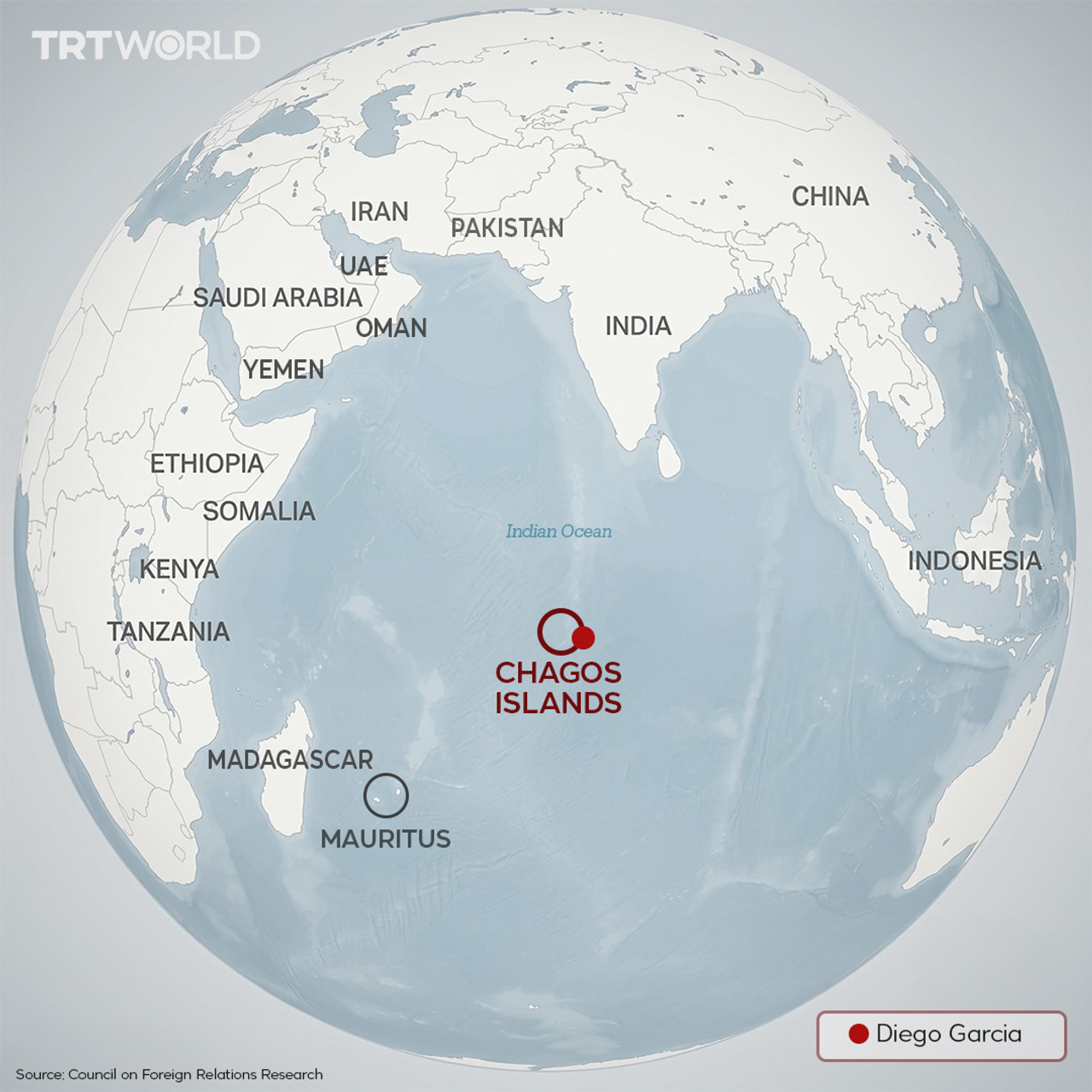
While the Trump administration has renewed its interest in acquiring the Chagos Islands, home to the joint US-UK Diego Garcia military base located in the middle of the Indian Ocean, China has already established a military presence in Djibouti, a small eastern African nation located on the southern edge of the Red Sea.
Beijing has also expanded its footprint across the region through the Belt and Road initiative, operating Pakistan’s Gwadar port and Sri Lanka’s Hambantota port in the Indian Ocean.
Frederiz Grare, a senior fellow at the Australian National University's National Security College, co-authored The Indian Ocean as a New Political and Security Region with Middle East expert Jean-Loup Samaan.
The book examines what the authors describe as the growing geostrategic importance of a region that was long viewed as a strategic vacuum.
“We looked at the Indian Ocean primarily through the prism of the Indo-Pacific concept. Of key importance for us was the growing presence of China and its strategic consequences, in particular for other coastal states of the Indian Ocean such as India,” Grare tells TRT World.
India, which has longstanding strategic disputes with China, possesses one of the region's most capable naval forces, alongside those of France and Australia.
New Delhi has also deepened its engagement with small island nations such as Mauritius, whose strategic location has made them increasingly important in the competition for influence between major powers, including China and the United States.
"The Indian Ocean was no longer only about Sea Lines of Communication (SLOC)," says Grare, referring to the maritime routes that underpin global trade, logistics and naval operations.
These waterways are essential for the movement of commercial and military vessels through key chokepoints stretching from Gibraltar to Hormuz and Malacca.
With China's Belt and Road Initiative, the Indian Ocean “had become a strategic stake in itself”, says Grare. “Most countries woke up to this reality when China opened its base in Djibouti.”
While China has steadily expanded its regional presence, the United States has sought to shift its strategic focus toward the Pacific, despite Trump's interest in Diego Garcia, according to Grare.
However, Washington's Indo-Pacific strategy can succeed only if regional partners such as India and other allies are able "to guarantee" stability across the Indian Ocean.
“This quest for greater burden sharing has only partial success so far while the war with Iran has raised doubts regarding the capacity and the willingness of the US to continue to be the stabilising force it had been for decades,” he adds.
“There is currently no reason to believe that stability will come back any time soon. Insecurity has, and will continue to, push countries towards re-armament, creating new security dilemmas, while the uncertainties regarding the US role are yet another source of volatility.”
Escalating tensions
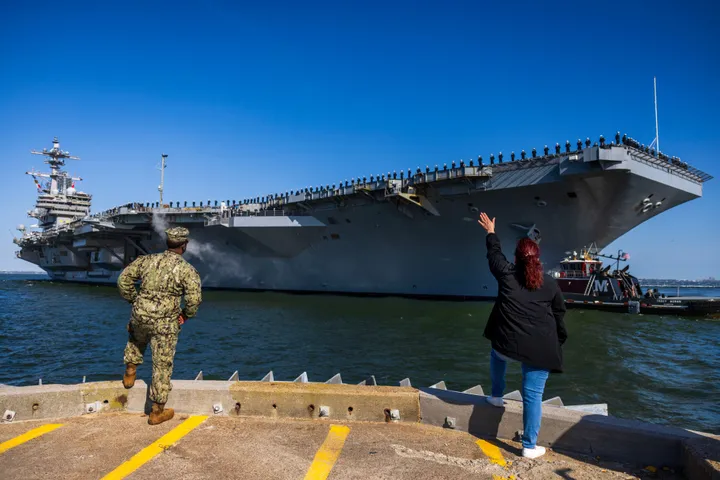
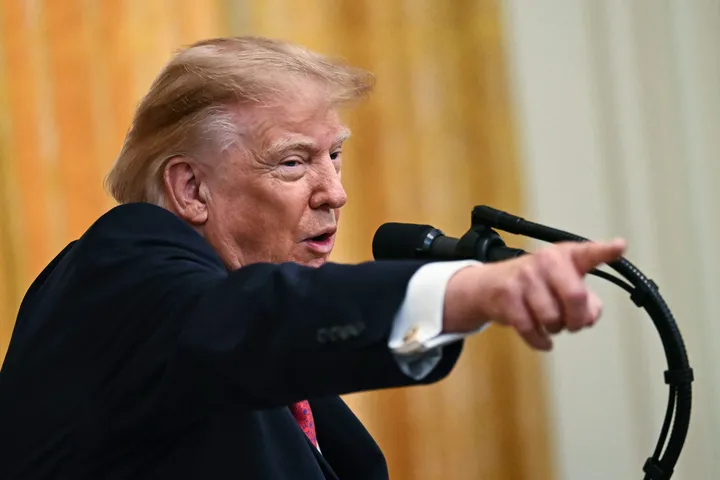


Beyond the growing competition between the United States and China, a range of overlapping tensions is emerging across the region, underscoring how contested and complex the future of the Indian Ocean is likely to be.
Yemen's Houthis, an Iran-aligned group, have repeatedly threatened to disrupt shipping through the Bab al Mandeb Strait in response to Israel's war on Gaza and the US-Israeli confrontation with Iran. The waterway, which links the Red Sea to the Indian Ocean, carries 10 to 14 percent of global maritime trade.
Elsewhere, tensions have surfaced between Somalia and Israel over the latter's support for closer ties with Somaliland, the self-declared breakaway region that Somalia considers part of its sovereign territory.
Somaliland occupies a strategic stretch of coastline in the Horn of Africa near the Red Sea, making it geopolitically significant.
Türkiye, a close ally of Somalia, has strongly backed Mogadishu's territorial integrity and opposed what it views as policies that could further fragment the region.
In February, Ankara and Mogadishu signed a major defence and economic agreement aimed at deepening cooperation in areas ranging from security and military affairs to trade and investment.
“There are so many players now – not just the US and China, but also India, regional Arab powers, and even Türkiye are expanding their footprint,” Abdinor Dahir, a Somali political analyst, tells TRT World.
“All these are happening at the backdrop of a shifting global order characterised by multipolar fragmentation and a shift from free-trade globalisation to strategic nationalism. The complex competition in the Indian Ocean basically means it's a fragmented and fragile security landscape where no single power dominates,” says Dahir.
Dahir also notes that this changing environment is prompting smaller Indian Ocean states, including Seychelles, the Maldives and Mauritius, to diversify their security partnerships and diplomatic relationships.
These countries are members of the Indian Ocean Rim Association (IORA), a regional organisation that promotes economic cooperation among littoral states.
Its membership spans countries with widely differing geopolitical interests, including Iran, the UAE, Australia, Kenya, France and India, reflecting both the diversity and strategic importance of the region.
Historical context
Five centuries ago, the Indian Ocean was the scene of an intense geopolitical rivalry between the Ottoman Empire, a major Muslim naval power, and Portugal, the leading European maritime force of the era.
Their struggle for influence produced a series of battles, shifting alliances and campaigns aimed at controlling key straits and maritime trade routes—what modern strategic thinkers refer to as Sea Lines of Communication (SLOC).
“Throughout centuries, many confrontations between European and Muslim states have taken place from the Strait of Hormuz to the Bab-el-Mandeb, the Gulf of Aden and the Gulf that form the historical foundations of the modern strategic concept known today as SLOC,” says Gulizar Manav Uludag, a researcher on the 16th-century Ottoman-Portuguese rivalry in the Indian Ocean.
According to Uludag, the geopolitical importance of the Indian Ocean has not diminished over nearly 500 years.
Rather, globalisation has amplified its significance, turning the region into one of the world's most important maritime spaces for international trade and energy security.
Andrew Peacock, a historian at the University of St Andrews who has studied pre-modern Indian Ocean politics, from the Ottoman-Portuguese rivalry to other regional power struggles, agrees that the region has long occupied a central place in global affairs.
“Much of the famous 'silk roads' of history were actually maritime routes that went across the Indian Ocean, linking China to the Middle East and ultimately Europe. This has made the Indian Ocean a zone of intense competition between outside forces, but also a place where local states and actors have been able to challenge the great powers of history,” Peacock says.
“We can see these dynamics continuing today in various forms, not least in the current competition both between China and America, and Iran and America. The global significance of these routes remains as crucial as ever, even if the goods transported have changed,” the professor tells TRT World.
Strategists in the region note that small littoral states like Djibouti or island-nations like Mauritius might play a bigger role than their size or power, as great powers like China and the US have recently tried to exert their influence over them.
Peacock says this also has a historical precedent in the Indian Ocean’s centuries-old conflicts, noting that, because of the region’s vast expanse, outside powers have sought to dominate it by occupying a few strategically important locations, such as Hormuz, which Iran’s Safavid ruler Shah Abbas I seized from the Portuguese in 1622.
“In the 16th century, the Portuguese tried to seize key ports from Mombasa in what is now Kenya to Melaka on the Malay peninsula. So the current competition over the Chagos Islands is a continuation of this strategy in many ways,” Peacock says.
“Even the idea of closing down the ocean to all but favoured shipping, as attempted by both the Houthis and Iran, is something with plenty of historical precedents—the Portuguese similarly tried to monopolise trade across the Indian Ocean back in the days,” he adds.
Obviously, in the current context, modern weapons make it much easier and more effective for countries to conduct blockades across critical choke points like Hormuz than old-fashioned blockades of the past.
In the contemporary international system, different actors have replaced the 16th-century Ottoman-Portuguese rivalry, according to Uludag.
“Chinese projects across the Horn of Africa under the Belt and Road Initiative—alongside India's maritime strategy centered on the Andaman and Nicobar Islands and its security partnerships with the US, Japan, and Australia, demonstrate that a new power rivalry is unfolding in the Indian Ocean,” she tells TRT World.
“The region has evolved into a theater of multidimensional geopolitical struggle shaped not merely by military supremacy, but by port investments, energy corridors, maritime transport routes, logistics hubs, and supply chains.”