 Kazim Alam
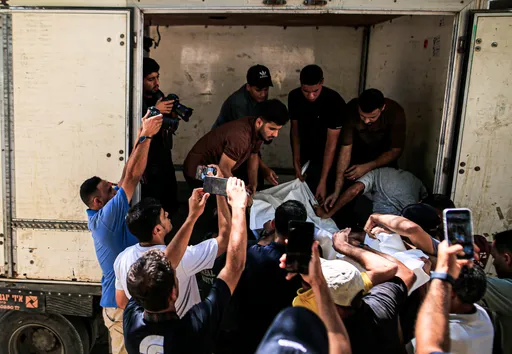
The assassination of Iran’s Supreme Leader Ali Khamenei in a US-Israeli strike on February 28 has thrust Mojtaba Khamenei, the 56-year-old son of the slain leader, into the country’s most powerful position at a moment of national crisis.
Mojtaba never held a public office and worked behind the scenes during his father’s 37-year-long stint as Iran’s supreme leader.
In his new position that combines the roles of a head of state and a religious authority with influence extending beyond national borders, Mojtaba inherits a country caught up in a full-blown war against the US and Israel, battered by years of sanctions, and still recovering from waves of domestic protests.
Analysts say that Mojtaba’s background differs in important ways from that of his slain father – a fact that may have a wide-ranging impact on Iran’s domestic and foreign policies.
For example, the senior Khamenei was already a public figure known for his sermons and activism long before becoming Iran’s supreme leader in 1989, according to Rahim Farzam, a foreign policy analyst at the Ankara-based Centre for Iranian Studies (IRAM).
In contrast, Mojtaba spent most of his career operating within the informal power structures surrounding the Office of the Supreme Leader, Farzam tells TRT World.
“(Mojtaba) rarely appeared in public… (and) cultivated influence through networks within the security apparatus, particularly the Revolutionary Guard (IRGC),” he says, while referring to a powerful branch of the Iranian armed forces that directly answers to the supreme leader.
The supreme leader in Iran has absolute authority over all matters of state, including the nuclear programme and the operation of proxy networks in foreign lands.
Mojtaba is known to have established strong links with the IRGC and its volunteer Basij force, which is known for being tasked with managing pockets of dissent within Iranian society.
Reports say he also worked with commanders of the Quds Force, a branch of the armed forces that provides support to non-state actors or proxies in the wider region, from Lebanon to Syria.
These connections with the military establishment turned Mojtaba into an influential voice in national security decisions, even though his public profile remains limited.
Farzam argues that this shadow existence leaves Mojtaba with little personal political capital.
“Mojtaba enters the position with far less public political experience and a more ambiguous religious standing,” he says.
As a consequence, his rule is likely to lean heavily on coalition-building inside the Iranian government’s most powerful institutions.
“His authority may rely more heavily on elite coalitions, especially within the security establishment,” Farzam says, predicting a more security-centred mode of governance.
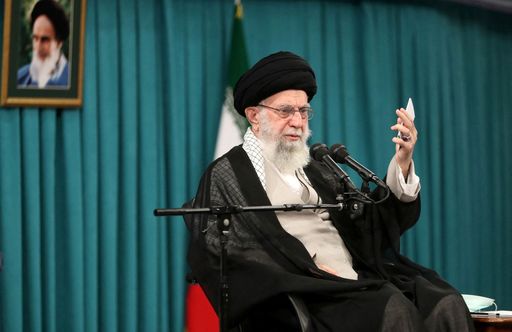
Mustafa Caner, assistant professor at Sakarya University’s Middle East Institute, describes Mojtaba as a “black box” because of “a total absence” of recorded interviews or public statements that could shed light on his views about critical policy issues.
“Mojtaba’s public profile and rhetoric remain remarkably opaque,” he tells TRT World.
The new leader also faces a deficit in clerical seniority.
A lack of established religious standing is a point of vulnerability within the traditional clerical hierarchy, Caner says.
“By moving towards what critics perceive as a hereditary transfer of power, he risks framing the revolutionary republic as a neo-monarchical system,” he says.
Caner frames Mojtaba’s immediate challenges as a “tripartite litmus test”: managing security in the face of existential threats, exercising wartime governance, and eventually mastering the diplomatic “exit strategy” needed to end hostilities on terms the Iranian state can survive.
Domestic challenges abound
Domestic policy under the new supreme leader is likely to reflect the same tension between consolidation and cautious adaptation, analysts say.
Farzam expects a near-term tightening of control.
“Iran has faced repeated waves of domestic unrest over the past decade, driven by economic difficulties, social grievances, and growing dissatisfaction among younger generations,” he says.
Against that backdrop, the leadership’s immediate priority will likely be maintaining political stability.
This may result in a stronger role for security institutions in domestic governance coupled with a “more assertive response to dissent”.
In the short term, a more security-oriented approach is probable, Farzam says.
But further into the future, Farzam anticipates a narrow window for pragmatism.
Mojtaba’s close IRGC ties might give him the political leverage required for implementing limited changes without threatening the government’s stability.
Modest economic reforms, selective social relaxation, or carefully calibrated political openings can help rebuild legitimacy among younger Iranians, who feel increasingly alienated, Farzam says.
But such optimism is not without limits.
“The structural foundations of the Islamic Republic – especially the central role of security institutions – make sweeping liberal reforms unlikely,” he says.
The more realistic scenario is “selective adaptation”, which means small policy adjustments designed to manage social pressures, while preserving the overall system.
Caner adopts an agnostic stance on Mojtaba’s ideological orientation.
“It is currently difficult to categorise Mojtaba within the traditional reformist-conservative binary,” he says, citing a complete lack of public statements.
Mojtaba’s documented proximity to the IRGC and friction with reformist currents point towards his hardline instincts.
Yet, Caner warns against drawing any premature conclusions.
“Political office often reshapes the actor,” he says, pointing out that several prominent reformists of today were among the most uncompromising revolutionaries of the 1980s.
“The exigencies of power may yet dictate his ideological evolution,” Caner says.
Trials beyond borders
On foreign policy, analysts predict strong continuity rooted in the administration’s core strategic calculus.
Farzam describes Iran’s approach under Mojtaba as fundamentally shaped by the same strategic logic that has guided the country for decades: deterrence and resistance to external pressure.
Given his IRGC connections, continuity rather than abrupt change is the most probable outcome, he says.
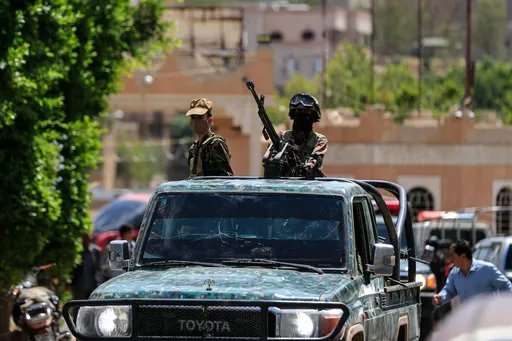
Tehran will try to retain its reliance on “asymmetric capabilities” – ballistic missiles, drones, and proxy networks, from Lebanon to Yemen – as instruments of influence and deterrence.
Recent direct clashes with Israel are likely to reinforce this posture: Iran will likely “double down” on strengthening its deterrence, while maintaining its regional proxy networks as instruments of strategic leverage, Farzam adds.
He does not rule out diplomatic flexibility though.
Iran has a long history of tactical pragmatism when survival is at stake. If sanctions bite harder or battlefield losses mount, Mojtaba may authorise limited engagement with Western capitals, Farzam says.
But such moves will be “narrowly focused on managing crises or reducing economic pressure” rather than signalling a fundamental shift in Iran’s ideological posture, he adds.
The overall outlook under Mojtaba will be of “continuity with incremental adjustments”, instead of any grand reorientation.
Caner expects Iran may see a potential intensification of the military-political nexus under Mojtaba given his strong ties with the IRGC.
This can translate into “a more aggressive, non-compromising posture on the international stage”, he says.