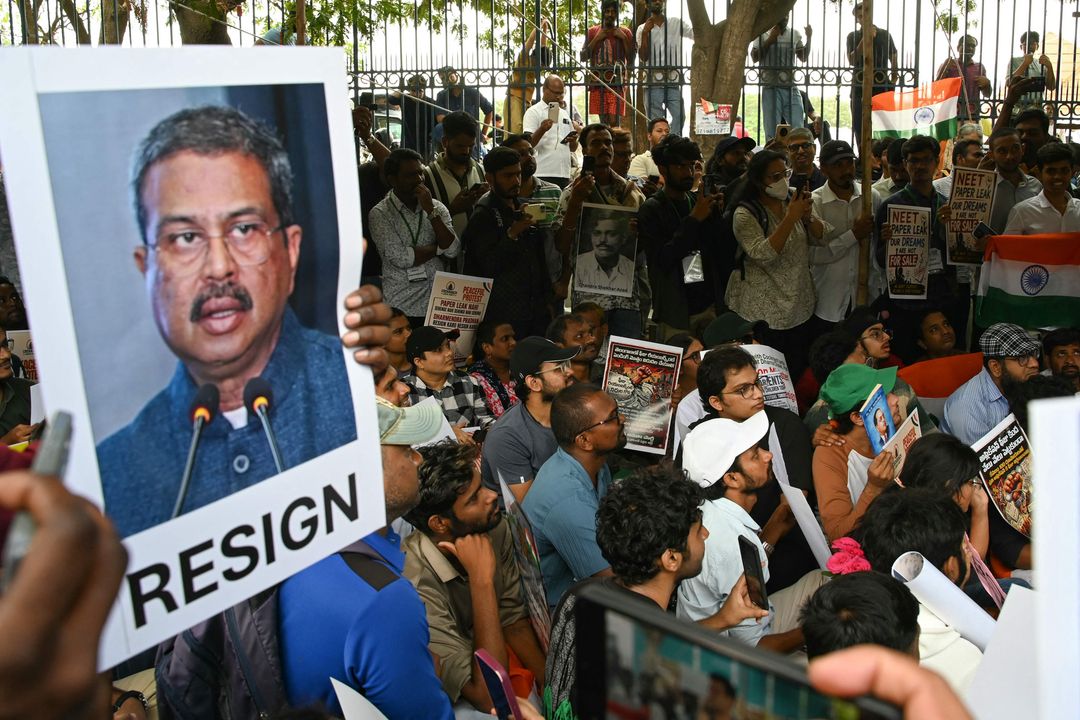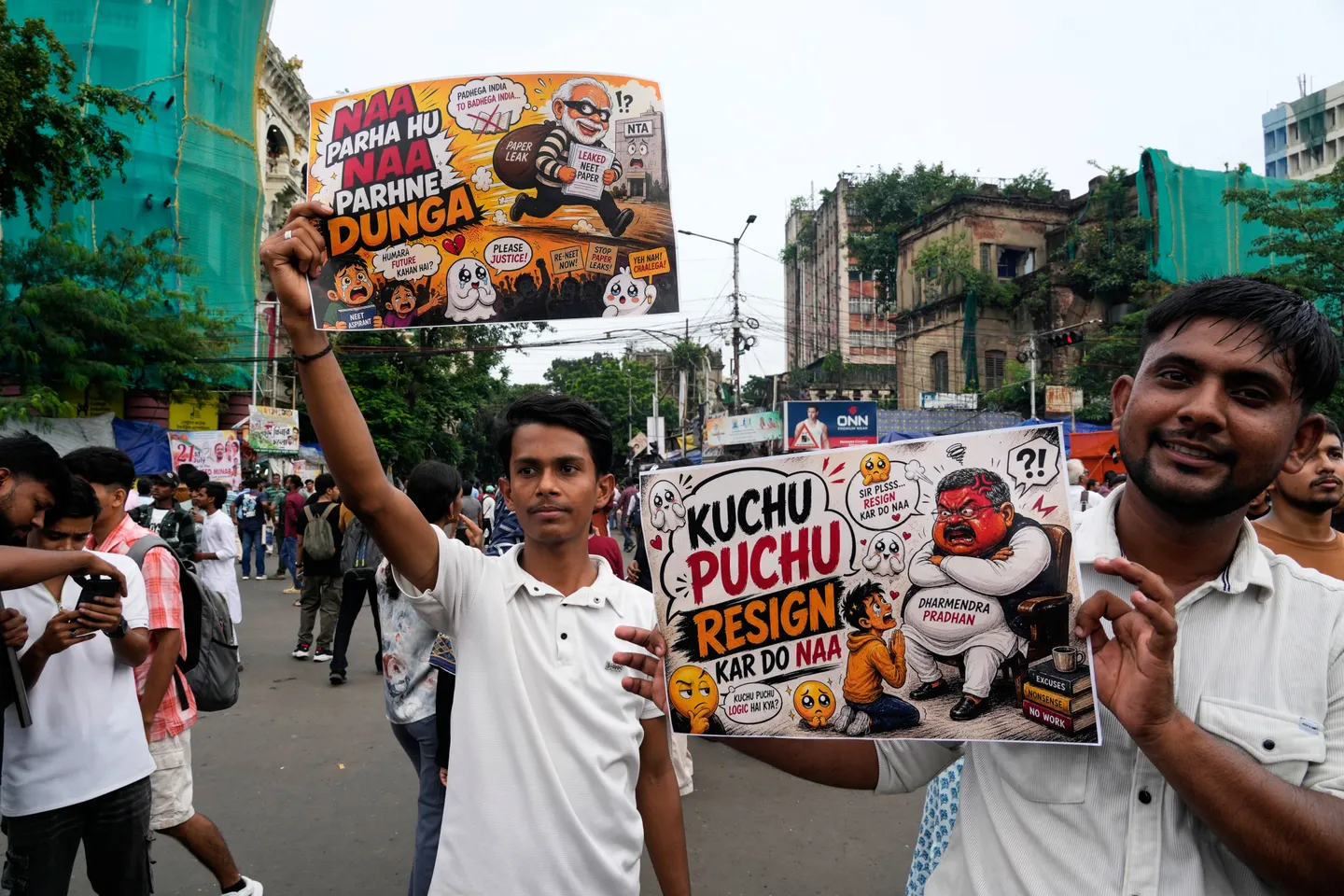
Celebrations erupted in Delhi after India's Education Minister Dharmendra Pradhan quit after days of sustained youth-led protests demanding his resignation for examination paper leaks in May that affected about 2 million students.
The resignation marks a rare but significant blow to Prime Minister Narendra Modi’s image of invincibility.
For a prime minister who built his authority on the image of unshakeable control and whose political brand rests as much on Hindu nationalist fervour as on the perception that no street protest can move him, analysts say resignation is a rare and stinging defeat.
The founder of the Cockroach Janta Party (CJP), Abhijeet Dipke, taking a dig at Modi’s BJP, said on Saturday, "We all made this happen together. What did these people use to say? That resignations do not happen under this government. What did they say? Resignations do not happen under this government.”
As tens of thousands of students camped at Jantar Mantar, as police fired tear gas at protesters marching toward Parliament last week, and as chants of "Down with Modi" echoed, India's “most powerful” prime minister in decades remained silent.
Modi finally broke his silence late on July 23 via a video message, said general secretary of India’s main opposition party Congress, Jairam Ramesh, pointedly noting that Modi had failed to even mention the student protests or the police brutality used against them.
The Quint's political analyst Aditya Menon noted that the focus of the protest had visibly shifted, from Dharmendra Pradhan to Modi himself. From the government's point of view, sacking Pradhan would be a major departure from its policy to never accept blame.
The government had previously taken a U-turn on the farm laws in 2020 after a protest that lasted nearly 18 months.
But this time, the government moved faster. And the political cost may prove deeper.
The silence
Modi's silence was itself a strategy, and it failed.




The Print noted that the Modi government had refused to even acknowledge the protests, but the calculation was that the street could not be allowed to dictate his government; it has, however, created “cracks in PM Modi’s image".
Even the Rashtriya Swayamsevak Sangh (RSS), mother organisation of Modi’s ruling BJP affiliate, Ratan Sharda, publicly criticised the party's own media and communications team on X, accusing them of "spectacular failure" and total inability to counter the protest narrative.
The most telling sign of what has changed may not be the resignation itself, but the words spoken in the streets before it. Twelve years, one month and 24 days after Narendra Modi was sworn in, the words "Modi must resign" were uttered full-throatedly for the first time without fear, in front of witnesses and cameras, on the streets of the national capital, Al Jazeera noted.
The fear, the outlet concluded, had switched sides. It was no longer the protesters who were afraid of the government. It was the government that had begun to fear the protesters.
Rahul Gandhi, the leader of the opposition Congress, who was briefly detained while leading a march toward Modi's residence last week, issued a direct challenge after Pradhan's resignation: those who ordered police to beat students "have to be held accountable", and Modi must personally apologise.
No apology has come yet.
The minister is gone.
But something has shifted in the political atmosphere of India that cannot easily be reversed.
A generation that grew up being told that Modi does not yield has now watched him yield.