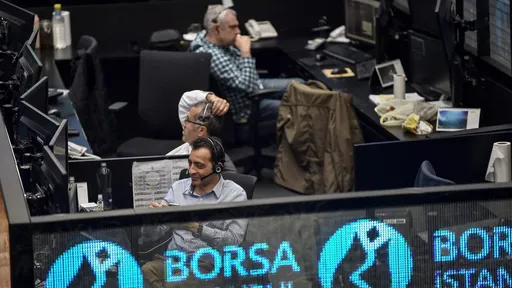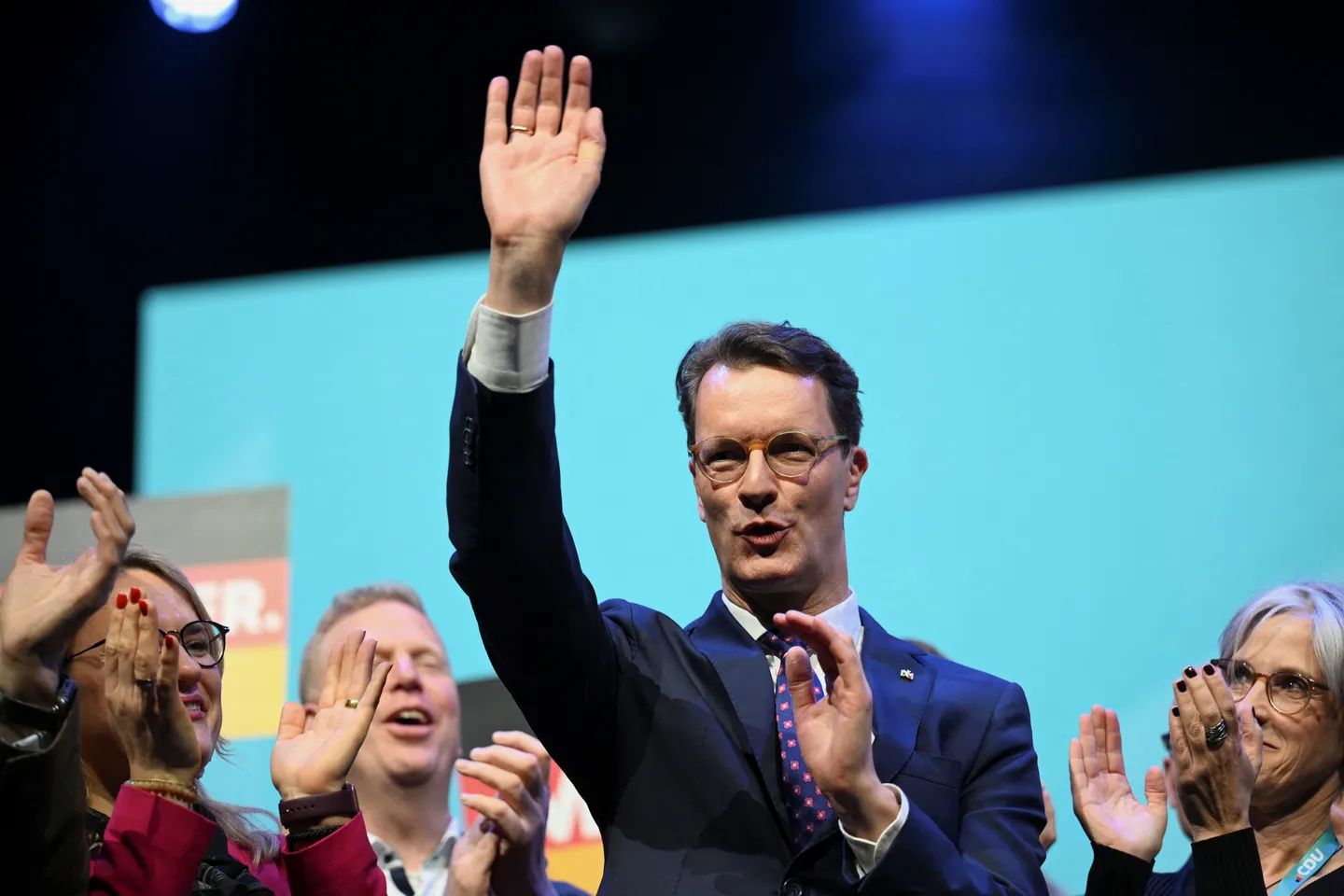
The prime minister of Germany’s North Rhine-Westphalia state has vowed to build on longstanding economic ties with Türkiye and further strengthen cooperation.
Hendrik Wust made the remarks at the Türkiye-North Rhine-Westphalia Business Forum in Istanbul on Wednesday.
The event was jointly organised by Türkiye’s Foreign Economic Relations Board (DEIK) and Germany’s trade agency NRW.Global Business.
“For decades now, people, ideas, and investment have moved in both directions. Especially now, as international trade barriers increase and supply chains are under pressure, reliable connections are more valuable than ever.
“Our aim is to build on these strong ties and strengthen our cooperation even further.”
He said the state government had agreed on a fast-track visa process for Turkish businesspeople to overcome lengthy processing times that hinder essential face-to-face cooperation.
Wust backed efforts to modernise the 30-year-old European Customs Union and update EU industrial policy to reflect the current structure of global supply chains.
He described the Turkish economy as an indispensable part of the European value chain.
He noted that Türkiye stood out as a top player in foreign direct investment and ranked as the state’s third-largest trading partner.
More than one in three Turkish-owned companies in Germany are based in North Rhine-Westphalia, totalling about 1,300 businesses, he said.
Wust also highlighted Türkiye’s large onshore wind market and investment in power generation and transmission infrastructure, saying energy prices and security were crucial to North Rhine-Westphalia’s heavy and energy-intensive industry.



“We see that Türkiye has one of Europe’s largest onshore wind markets,” he said.
He said new memorandums of understanding signed at the forum could create future partnerships and further strengthen economic and geopolitical ties.
Focus on implementing agreements
Serap Guler, a state minister at the German Federal Foreign Office, reaffirmed Berlin’s commitment to expanding economic cooperation with Türkiye and integrating Turkish industry into European supply chains.
Guler highlighted that around 8,600 German companies currently operate in Türkiye, creating more than 100,000 direct jobs.
She noted that geopolitical tensions and supply chain risks threaten competitiveness, emphasising that both nations must focus on implementing agreements reached during the German-Turkish Foreign Ministers’ Strategic Dialogue held in May.
Unlocking the full economic potential of nearly 540 million people across the EU and Türkiye requires modernising the Customs Union, the minister said.
She stressed the need to remove tariff and non-tariff trade barriers, rely on rule-of-law instruments, and ensure Türkiye applies the agreement to all EU member states.
Guler stated that Germany strongly advocates in Brussels for a “Made with Europe” approach under the EU Industrial Accelerator Act to include key partners like Türkiye.