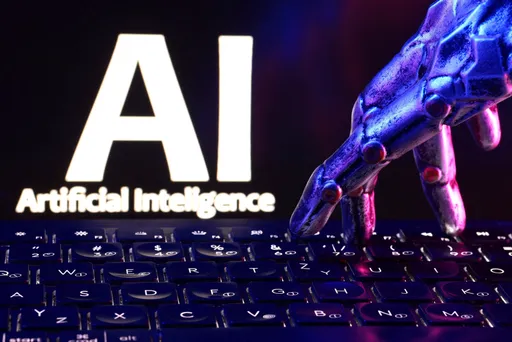
Frontier AI developer Anthropic has priced its landmark initial public offering at $83 a share, surpassing its targeted range of $70 to $78 in one of the largest stock market debuts on record.
The total size of the offering has expanded beyond the 825 million shares initially registered.
The sale represents the second artificial intelligence mega-IPO this year following SpaceX's flotation in June, marking the first public listing by a major frontier model developer.
The pricing follows an extensive roadshow that generated overwhelming investor demand.
Shares are scheduled to begin trading on the Nasdaq on Thursday under the ticker symbol ANT, led by underwriters Goldman Sachs and Morgan Stanley.
Explosive revenue
Anthropic's commercial expansion has accelerated on surging enterprise demand for its Claude models, particularly its automated coding agent Claude Code.
According to regulatory filings, annualised revenue run rate reached $81 billion as of October 31, increasing by $10 billion within a single month.
The company counted 11,900 enterprise customers generating at least $100,000 annually by September 30, compared with 1,500 at the end of last year.
Third-quarter revenue rose 47 percent to $16.96 billion.
However, rapid expansion has required unprecedented capital expenditure.
Anthropic spent nearly $9 billion on computing power during the first half of 2026 and an additional $5 billion in the third quarter, reporting a quarterly operating loss of $567 million.





The company has entered into nearly $900 billion in computing commitments with cloud partners, including Amazon and Alphabet's Google, to train and deploy advanced foundation models.
Anthropic warned investors in its prospectus that partner dependencies carry acute financial contagion risks: "If such financing or support becomes unavailable or more costly, contracted capacity may be delayed, repriced, reduced, or not delivered."
The listing also unfolds as Chief Executive Dario Amodei advocates for industry caution, warning that rapid artificial intelligence advances could outpace institutional safeguards.
Rival developer OpenAI is expected to consider a public listing next year.
Thousands of millionaires
Anthropic's initial public offering is poised to create thousands of paper millionaires among current and former employees, in what could rank among the largest employee wealth windfalls in Silicon Valley history.
The offering is expected to unleash a wave of new wealth across the AI sector, rewarding everyone from early researchers and engineers to administrative staff who received stock grants as the Claude maker raced from startup to one of the world's most valuable companies.
The IPO filing shows the amount of wealth embedded in employee stock awards, but not how that wealth is distributed among workers. As a result, outside estimates vary widely.
Hill, a San Francisco marketplace for private-company shares, estimates 598 non-founder employees will hold at least $100 million in equity after the initial public offering.
Private-markets research firm Sacra estimates that roughly 2,800 current and former Anthropic employees could hold at least $1 million of pretax vested equity at a $1.35 trillion valuation, the middle of the price range.
'Catastrophic risks'
Anthropic's IPO filing gives extensive detail to the risks of the technology, reflecting the company’s focus on safety even as it builds ever more powerful models.
US Democratic Senator Elizabeth Warren criticized the listing on X, saying the company "fails to answer for the potential threats to Americans’ retirements and the entire financial system if this IPO goes awry."
The filing also warns that advanced AI systems "could pose catastrophic or existential risks to society if not developed and deployed responsibly."
It also says the company's public positions on AI regulation and safety could expose it to political backlash.
The warning refers to Anthropic’s feud with the Trump administration, which ordered federal agencies to stop using its technology and labeled it a supply-chain risk after the company refused to let the Pentagon use Claude for domestic mass surveillance or lethal autonomous weapons.