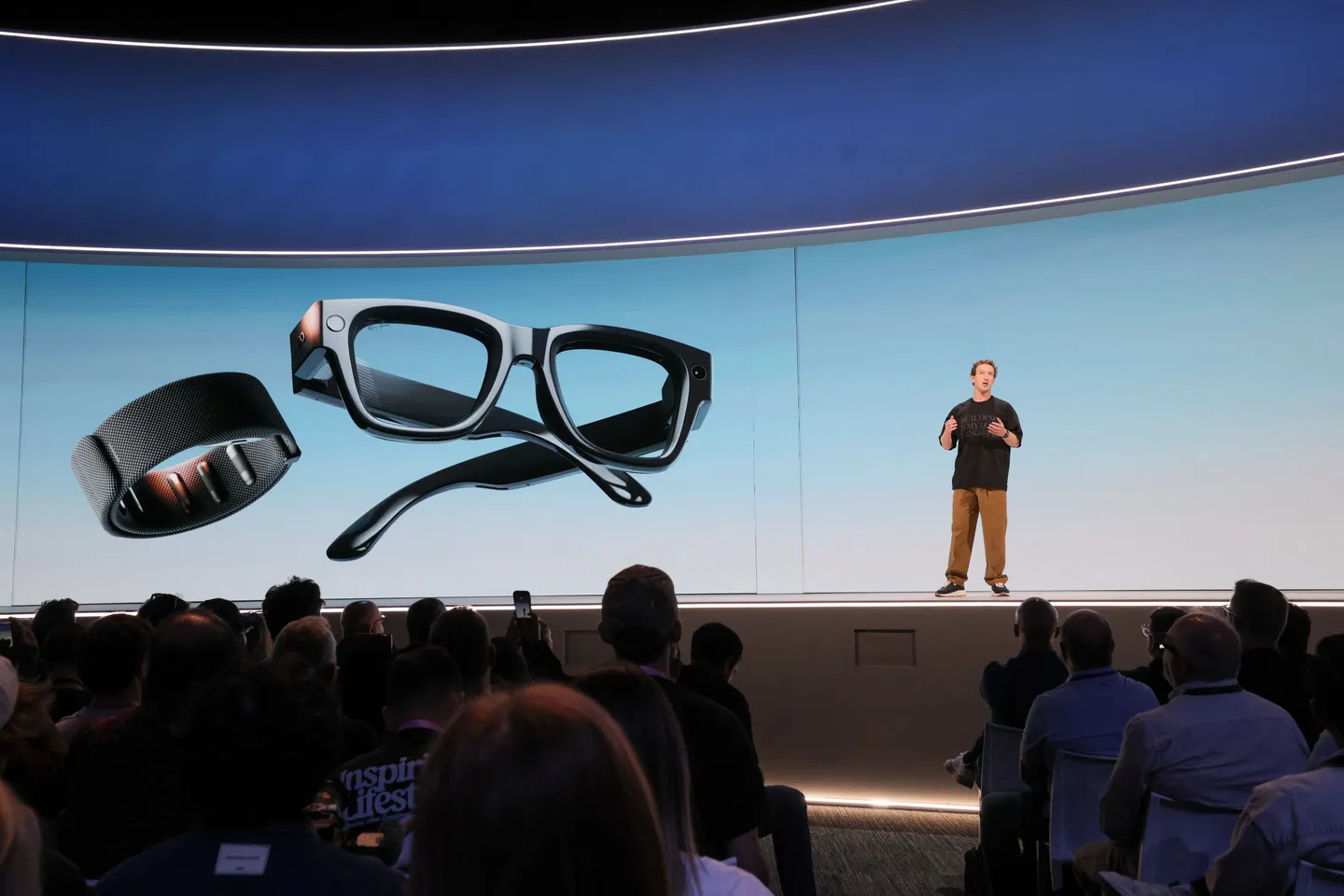
Meta unveiled several new wearables powered by its AI models on Wednesday, including an audio-only, camera-free version of its smart glasses, amid global concerns about privacy and the filming of women and girls without their consent.
CEO Mark Zuckerberg announced the new lineup of glasses at the social media giant's annual Connect conference at its Menlo Park headquarters, where he also touted the company's new personal artificial intelligence assistant, Muse.
"There are almost 2 billion people in the world who wear glasses today... and we think that in the coming years, most of these are going to get upgraded to AI glasses," Zuckerberg told the audience of developers and executives.
Muse will be "the centrepiece of our vision," Zuckerberg said.
The audio-only glasses will ship on October 13 and start at $349.
They arrive amid growing questions worldwide about privacy violations from tiny cameras on glasses and other wearables, which critics have dubbed "pervert" glasses.
Smart glasses let wearers take photos, film videos, listen to music, make phone calls, translate text or interact with an AI assistant.
The audio-only versions will complement the release of dozens of new smart glasses models that keep photo and video-recording options.
Building in privacy features such as a recording indicator light is "really important," Meta's vice president of AI product, Vishal Shah, told AFP on Wednesday.
"We wanted people to clearly understand that this was something that was recording, and we've only made that light more explicit over time," Shah said.
"We said a lot about that when the glasses first launched, and I think we probably need to keep repeating that more than we have been more recently because none of that's changed," he added.
With nearly four billion monthly active users across its ecosystem, Meta is betting that wearables like smart glasses can become an easy entry point for people to use its AI software.








Meta glasses
Meta launched its first smart glasses in 2021, and last year unveiled "display" glasses that project images onto the lens.
Earlier this year, the company released its own Meta-branded AI glasses, separate from its partnership with eyewear maker EssilorLuxottica, which produces several Ray-Ban and Oakley Meta models.
Meta also announced several new styles of its flagship Meta Ray-Ban glasses.
The display version, priced from $799, will soon be available in new markets including Britain, France, Italy, Germany and Canada.
The company will also soon launch mixed reality glasses that are much lighter than its earlier Quest VR headsets.
Called Meta VR Glasses, they are powered by an external battery and memory pack tethered by a cord, allowing the headset itself to be lighter.
Zuckerberg said the glasses weigh about as much as a deck of cards.
They have no external controls, relying instead on hand gestures and voice commands.
The VR Glasses will launch in spring 2027 for $1,299.