
 Ensar Kivrak
One of the most important indicators of a strong democracy is that the internal operations of political parties conform to democratic principles and that there are legal consequences when they fail to do so.
In modern democracies, political parties are public organisations operating under constitutional safeguards and oversight, serving as intermediaries in the exercise of sovereignty on behalf of the people.
Because of this role, parties bear a democratic responsibility: they are obliged to comply not only with their own internal rules but also with the constitution, the law, and public order.
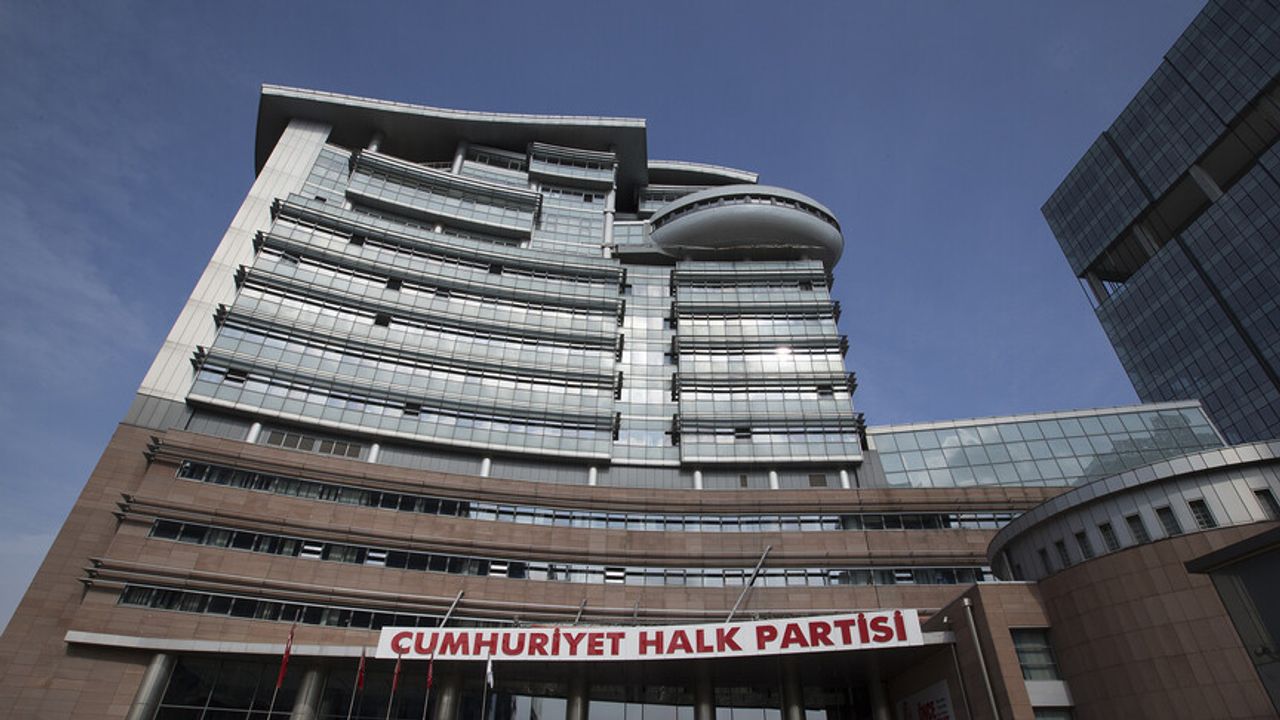
The decision of the 36th Civil Chamber of the Ankara Regional Court of Appeal declaring the 38th Ordinary Elective Congress of the Republican People’s Party (CHP), held on November 4–5, 2023, and the Istanbul Provincial Congress of October 8, 2023—which served as the basis for that congress—absolutely null and void has taken centre stage on Türkiye’s political agenda.
However, public reactions to the decision largely overlook the legal basis of this historic ruling.
While some circles have deliberately characterised the decision as judicial interference in politics, others have sought to discredit it by labelling it political engineering.
In reality, this judicial decision is a concrete example of the rule of law functioning exactly as expected.
Political autonomy and legal boundaries
In democratic theory, political parties are widely recognised as having the freedom to organise their internal operations.
Articles 68 and 69 of the Constitution of the Republic of Türkiye and the Political Parties Act recognise parties as indispensable to democratic life and provide them with legal safeguards. However, this autonomy can never be construed as a legal shield of immunity.
In the hierarchy of norms of a rule of law, a political party’s charter and decisions based on that charter occupy the lowest ranks. Constitutional mandatory provisions and the mandatory provisions of laws, however, always take precedence.
Consequently, even the party’s highest decision-making body cannot adopt measures that conflict with constitutional norms or the mandatory provisions of the law.
In Türkiye as well, as expected of a rule of law, Article 69 of the Turkish Constitution and Articles 4 and 93 of the Political Parties Act explicitly require that the internal operations, organ elections, and decisions of political parties comply with “the principles of democracy”.
In this context, the phrase “principles of democracy” encompasses a declaration of will that is fair, equal, transparent, and free from any unlawful influence.
Article 27 of the Turkish Code of Obligations, which applies directly to political party proceedings, provides that legal acts contrary to the mandatory provisions of the law, public order, or general morality are “absolutely void”.
The conclusion is clear: Judicial intervention is not an external attack on politics; it is the activation of a constitutional check-and-balance mechanism to enforce the rules of the game.
The most concrete and decisive legal basis for the court’s ruling of “absolute nullity” is the structural and systemic defect of consent identified during the convention process.
Under private law doctrine, the validity of a legal transaction depends on the parties' free and sound consent. The presence of any one of the elements of mistake, fraud, or duress renders the legal transaction voidable.
However, when organised structural corruption that constitutes a crime is involved, the severity of the defect transcends the “voidability” threshold and becomes an absolute nullity.
The Court has legally established, in light of concrete evidence, physical findings, and testimonies summoned from criminal and civil courts, that the will of the delegates at the CHP’s 38th Ordinary Congress was directly nullified through “financial transactions”.
Accordingly, it has been judicially established that benefits were provided to delegates and their relatives in the form of foreign currency, cash, high-value technological products (mobile phones, tablets, etc.), and promises of real estate.
Furthermore, it has been documented that local government and party resources held at the time—primarily those of the Istanbul Metropolitan Municipality and its affiliates—were distributed to delegates in the form of job placements and employment commitments.
This situation cannot be reduced to a “procedural error” or a “formal defect” in legal terminology.
What we are facing is organised, structural corruption that simultaneously violates the Political Parties Act, the Turkish Penal Code, and the Election Act, and constitutes a crime under criminal law.
The act of buying votes in exchange for material gain directly undermines the very essence of the right to vote and to be elected.








In a scenario where actors with financial power or control over public resources can use these means to buy the will of delegates, it is impossible to speak of a democratic election or a convention worthy of legal protection.
The judiciary has refused to cloak a will shaped by bribery in a “mantle of validity” by legally recognising this organised corruption. It has safeguarded both public order and the integrity of the democratic process.
Judicial review: An institutional continuum
In Türkiye, whenever internal disputes within a political party are brought before the courts, criticism of judicial activism or the judicialisation of politics tends to arise, regardless of the decision's content.
However, an objective examination of Turkish political history reveals that the courts’ intervention in serious legal violations within the internal operations of political parties has been an institutional continuity.
In this context, two historical precedents are noteworthy. The first is the 2010 Saadet Party crisis, in which the Ankara 10th Civil Court of First Instance determined that the party’s bylaws and delegates’ rights had been violated during the congress process and temporarily transferred party leadership to a three-member convening committee.
The second is the 2016 MHP extraordinary congress crisis, in which the Ankara 3rd Civil Court of First Instance annulled the decisions made at the convened congress on grounds of procedural irregularities and abuse of authority.
In both cases, the judiciary intervened as an inevitable legal consequence of the parties’ failure to comply with their own bylaws and the Political Parties Act.
In a rule-of-law state, an independent judiciary is the sole institutional safeguard of both the minority's rights against the tyranny of the majority and the delegates' will against the oligarchy of the central headquarters.
However, what distinguishes the current CHP decision from past cases is the nature of the defect.
While the crises involving the Felicity Party and the MHP stemmed largely from technical-legal disputes—such as the interpretation of the party charter, the number of signatures required, and the authority to convene a convention—the court in the CHP congress decision identified serious criminal acts—such as organised bribery and corruption—that directly concern “political ethics, criminal law, and public order” as grounds for absolute nullity.
In this regard, the decision goes beyond a mere procedural intervention; it represents a structural legal intervention aimed at preventing political actors from using financial power to disrupt public order.
The concept of public order is one of the most comprehensive yet protective principles of law. It encompasses the minimum norms indispensable for the security and peace of society and for the continued functioning of democratic mechanisms.

In democracies, political parties are key components of public order, serving as institutions that seek to exercise public power at the national or local level.
If a party’s top leadership is shaped by foreign currency carried in suitcases, high-value gifts, and the distribution of municipal positions through nepotism, the question of how this structure will establish public order when it eventually takes over the state apparatus becomes a serious public concern.
The court’s decision to provisionally remove the congress bodies from office and temporarily restore their previous legal status through a “null and void” ruling is the natural consequence of the legal principle of “restitutio in integrum” (restoration to the original state).
Valid consequences cannot be derived from a legal act that never came into existence.
Consequently, decisions made after the congress are also rendered void in a chain reaction. This radical legal cleanup is a necessary measure to re-establish the political arena on a legitimate, legal foundation.
Ballot box legitimacy
Views such as “The ballot box decides everything” or “Voters are the only group that can hold politicians accountable” may seem appealing at first glance, but they run counter to the fundamental principles of a constitutional state based on the rule of law.
The ballot box generates legitimacy only when it operates within the framework of the law’s binding provisions, fair competition, and the principle of transparency.
A convention process shaped by bribery, organised corruption, and financial interests is not the product of a democratic will but of an oligarchic transfer of power.
Therefore, this decision is not an intervention by the judiciary based on a political preference or ideological orientation, but rather the institutional manifestation of the mandatory norms of positive law and universal democratic principles.
The rule of law entails granting no extralegal sphere of privilege to any institution or individual. Politics is not a sphere of sovereignty that stands above laws and moral principles.