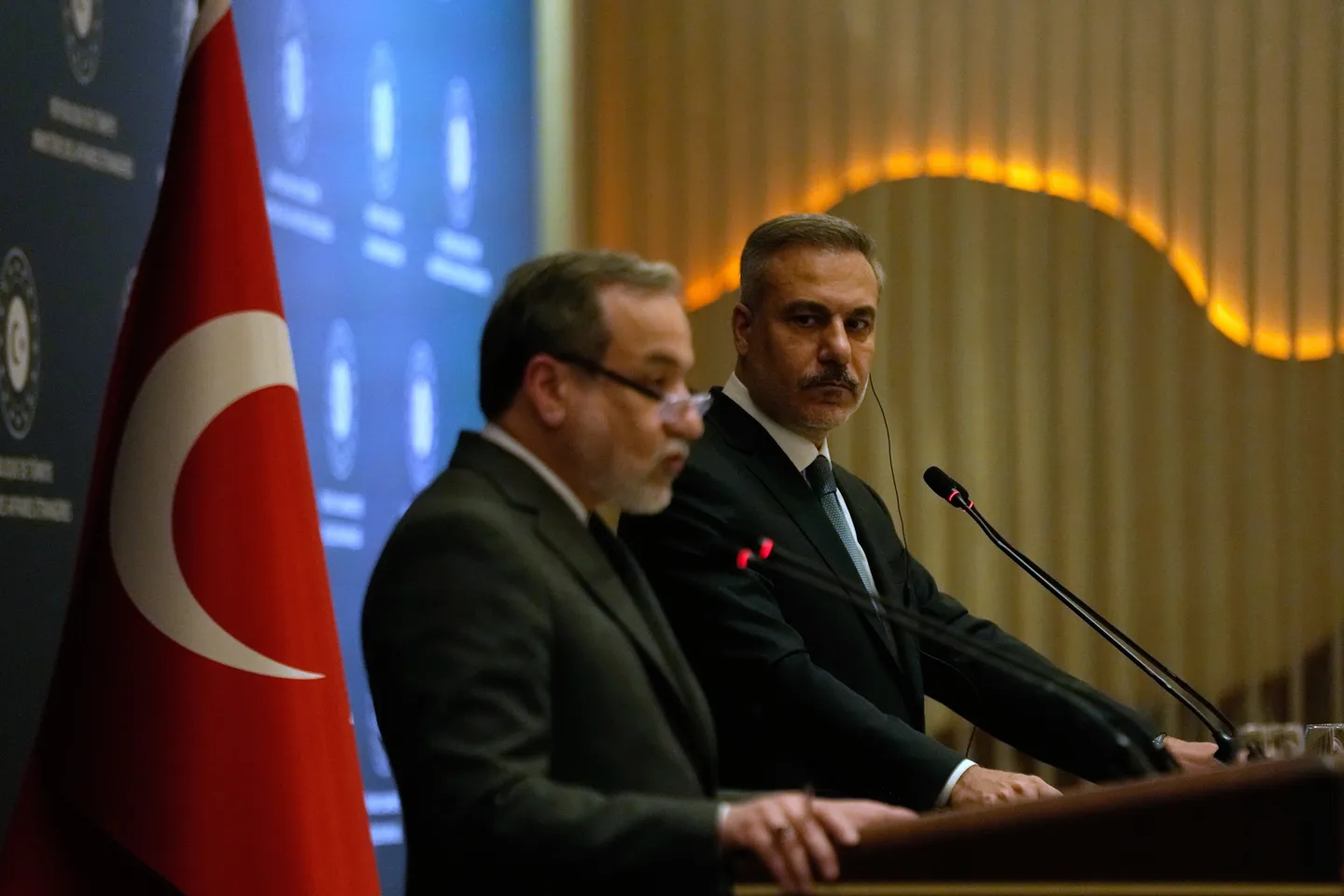
Turkish Foreign Minister Hakan Fidan and his Iranian counterpart Abbas Araghchi have spoken by phone about the regional security situation, Turkish diplomatic sources said.
During the call on Thursday, the two discussed ongoing negotiations between Tehran and Washington, as the Iran war is now in its eighth month.
They also exchanged views on other regional developments, according to the sources.
Türkiye-Qatar
Fidan also met with Qatari Deputy Prime Minister and Minister of State for Defence Affairs Sheikh Saud bin Abdulrahman Al Thani in Ankara, according to Turkish diplomatic sources.
Separately, Turkish National Defence Minister Yasar Guler and his Qatari counterpart chaired interdelegation talks following a bilateral meeting.
Guler welcomed Al Thani, who is visiting Türkiye at Ankara's invitation, at the National Defence Ministry's headquarters.
Chief of General Staff Selcuk Bayraktaroglu also attended the meetings.
Araghchi’s call with Omani counterpart
Meanwhile, Araghchi also held separate phone calls with several regional counterparts to discuss developments and diplomatic efforts to promote peace and stability in the Middle East, according to official statements.
The talks came amid escalating tensions over a US naval blockade and maritime security in the Strait of Hormuz, as Qatar continued mediating between Washington and Tehran.
The Iranian government said in a statement through X that Araghchi and his Omani counterpart Badr Albusaidi discussed “the latest regional developments and diplomatic efforts to achieve peace and stability in the region.”
The Oman News Agency also reported that Araghchi and Albusaidi stressed the need to move beyond de-escalation toward lasting agreements based on practical arrangements.
They said such measures should ensure the safety of maritime routes, bring the state of war to an end, and prevent renewed hostilities in the region.
The strait, located between Iran and Oman, is one of the world’s most strategically important waterways, carrying large volumes of oil and gas exports from Gulf countries to international markets.
Iran-Qatar-Saudi Arabia







Later Thursday, Araghchi held other separate phone calls with Saudi Foreign Minister Prince Faisal bin Farhan and Qatari Prime Minister and Foreign Minister Sheikh Mohammed bin Abdulrahman Al Thani, according to the Iranian foreign ministry.
The ministry said on Telegram that the discussions focused on regional developments and the latest diplomatic efforts aimed at establishing stability in the region.
Araghchi also spoke with Jordanian Deputy Prime Minister and Foreign Minister Ayman Safadi over the phone, the ministry said in a separate statement.
During the conversation, Araghchi offered condolences over the death of Safadi’s mother, and the two ministers exchanged views on recent regional developments.
Khamenei’s message to Putin
Iran’s Supreme National Security Council Secretary Mohsen Rezaei delivered a message from Supreme Leader Mojtaba Khamenei to Russian President Vladimir Putin during a meeting in Moscow, Iranian state broadcaster IRIB reported.
Rezaei, who also serves as the supreme leader’s representative, met Putin at the Kremlin.
The message's contents were not disclosed. Earlier, Putin received Rezaei at the Kremlin.
“Vladimir Putin received Mohsen Rezaei, secretary of Iran’s Supreme National Security Council, who is currently in Moscow,” the Kremlin said in a statement.
Oman-Pakistan
Separately, Albusaidi and Pakistani Foreign Minister Ishaq Dar discussed recent regional and international developments in a phone call, according to a statement by the Pakistani foreign ministry.
They emphasised the importance of continued dialogue and diplomatic engagement to promote regional peace and stability, the statement said.
Iran said Monday it was still exchanging messages with the US through mediators and that reopening the waterway depended on Washington ending the blockade.
The US and Israel launched attacks against Iran on February 28, prompting Tehran to retaliate against Israel and US assets in the region before a ceasefire was reached in April.
Washington and Tehran signed a memorandum of understanding on freedom of navigation in the Strait of Hormuz on June 18, but its implementation stalled over disagreements concerning security arrangements.