 Sadiq S Bhat
Washington, DC, — First, the emails stopped working. Then aircraft were grounded. Bank customers struggled to access their money. A major airline lost access to critical systems. Even America's top electronic intelligence agency experienced problems with its classified network.
Within six days, a succession of technology failures had disrupted some of the world's most sophisticated companies and sensitive government systems.
The extraordinary sequence raised an unsettling question: Was someone attacking America's digital infrastructure?
So far, the evidence suggests otherwise.
From Microsoft and JPMorgan Chase to United Airlines, Apple and the National Security Agency (NSA), the organisations affected have pointed to software faults, maintenance problems or unsuccessful system upgrades.
But experts say the failures expose deeper problems involving ageing infrastructure, increasingly interconnected networks and institutions struggling to keep pace with technological change.
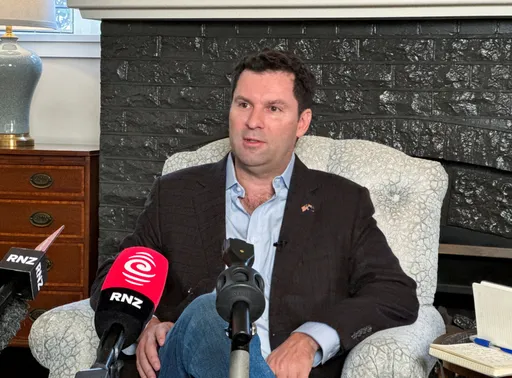
Marc Scribner, a senior transportation policy analyst based in Washington, DC, told TRT World that the nationwide aviation shutdown illustrates how outdated systems and institutional weaknesses can turn technical problems into major disruptions.
"Unfortunately, the FAA's obsolete air traffic control system is prone to failure, and the lack of resilience likely cannot be resolved under the status quo institutional model," he said.
Scribner, who has testified before the US Congress on air traffic reforms, argued that the Federal Aviation Administration (FAA) lacks the internal technical expertise needed to plan and implement modernisation effectively.
"Under the current structure, giving more money to the FAA won't improve or modernise air traffic control in the ways being claimed," he told TRT World.
His assessment points to a problem beyond aviation: ensuring the institutions responsible can manage increasingly complex systems.
Six days of disruption
The problems began on November 12, when a major Microsoft 365 outage left users worldwide unable to access Outlook, Teams and other workplace services.
The disruption affected businesses, hospitals, schools and public agencies that depend on Microsoft's systems.
Microsoft traced the failure to a combination of software problems and ruled out malicious activity.
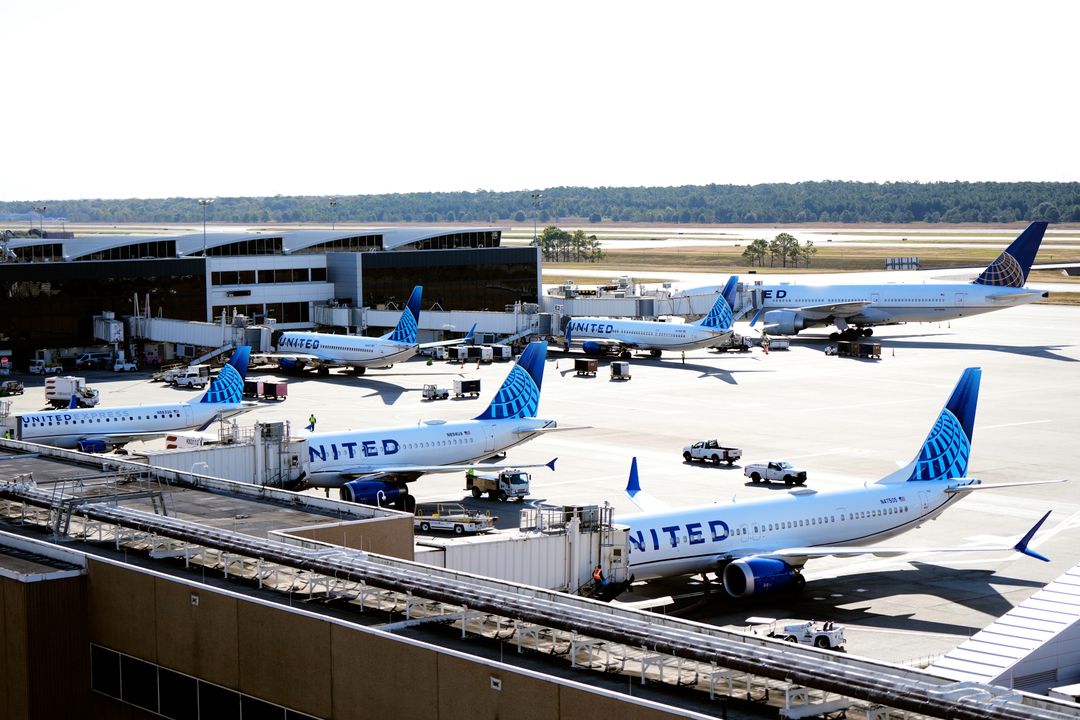
A day later, the FAA ordered a US-wide ground stop after a network malfunction disrupted air traffic control communications.
Thousands of flights were cancelled or delayed, leaving passengers stranded across the United States. (12,462 flight cancellations on November 13, including more than 9,000 by major airlines, according to the FAA, with further cancellations and delays on Saturday).
The trouble emerged during efforts to upgrade ageing telecommunications infrastructure.
On November 16, customers of Chase and several other top banks reported difficulties accessing services and completing transactions.
JPMorgan Chase blamed a software bug in its internal hardware systems, insisting the problem was not caused by hackers.
United Airlines suffered a separate technology failure the same day, delaying hundreds of flights after systems used by flight crews stopped working.
Then came November 17.
The NSA reported problems with its classified internal communications network during scheduled maintenance. Officials said critical national security operations remained functional.
Apple also experienced disruptions affecting iCloud, account sign-ins and other services, which the company attributed to an internal software update.
The sheer concentration of incidents was unusual. Their causes, however, appeared largely unrelated.
US Director of National Intelligence Jay Clayton told a House Homeland Security Committee hearing on Wednesday that there was no indication the outages were connected.
But he warned that rapidly advancing technology was placing growing pressure on ageing infrastructure.
As the speed and capabilities of modern computer systems increase "substantially", Clayton said, older systems and equipment are becoming obsolete at an accelerating pace.
The main weakness, experts argue, is the modern economies' dependence on complex systems that are difficult to repair without disrupting something else.
Kimberly Simon, chief executive of Growth Office Partners, noted that the incidents appeared to be separate technical failures rather than a coordinated cyberattack.
"One problem inside a major system can disrupt thousands of businesses and potentially millions of people," she said.
A software change that once affected a single office can now interfere with transactions, flights and communications across continents.
Businesses increasingly entrust their communications and data to a handful of major technology providers.
A fault in one component can spread far beyond the organisation where it begins.







Money cannot fix everything
The FAA shutdown has also revived questions about Washington's ability to modernise infrastructure without repeating costly mistakes.
Scribner argues that the problem is not simply a shortage of money.
The current arrangement, he argues, creates an institutional conflict that complicates modernisation.
He points to Canada, which transferred air traffic control operations to Nav Canada, an independent nonprofit organisation, in 1996.
"Canada is decades ahead of the US and has led the development of new technologies that the FAA has yet to even consider adopting," Scribner said.
He believes a similar restructuring in the United States could take several years but would allow significant improvements once the transition was completed.
Scribner has also made the case for institutional reform in an opinion article in The Wall Street Journal.
His proposal concerns aviation rather than the separate technology failures affecting banks and software companies.
Nevertheless, the FAA shutdown illustrates the risks involved when ageing infrastructure undergoes complex upgrades.
AI adds pressure
Artificial intelligence has introduced another complication.
The technology is becoming increasingly effective at discovering vulnerabilities in software, including weaknesses that may have remained undetected for years.
According to cybersecurity expert Tal Be'ery, AI was placing additional strain on already fragile infrastructure.
"Our IT infrastructure is brittle," he said, pointing to the pressure created by AI-related upgrades and the rapid deployment of security patches.
The problem is not that AI caused all the recent outages. There is no evidence to support that conclusion.
Rather, its growing ability to uncover vulnerabilities is accelerating the pace at which organisations must modify systems that were often built long before AI became a central concern.
According to The Wall Street Journal, Microsoft issued patches for approximately 1,400 security flaws in October, compared with around 170 a year earlier.
That represents a substantial increase in the work facing technology administrators.
Washington rejects fears
Trump administration has sought to dispel speculation that the outages are part of a coordinated cyber campaign.
US Secretary of State Marco Rubio said there was no evidence linking the incidents.
"We are not under systemic attack," he said.
Rubio said the individual failures were unrelated and that investigators had found no indication of a common malicious actor.
President Donald Trump also played down concerns.
"It's life," he told reporters during a visit to the Philippines on Tuesday.
Vice President JD Vance, meanwhile, said the administration was preparing for possible emergencies but did not anticipate an imminent crisis.
However, not every incident has been accidental.
Security researcher Scott Helme identified malicious code inserted into software tools supplied by Optimizely, exposing visitors to nearly 200 major websites to potential theft and exploitation.
The company said it contained the attack and removed the compromised code.
The incident demonstrated that genuine cyber threats remain active even as unrelated technical failures dominate headlines.
And as AI accelerates both the discovery of security flaws and the race to fix them, keeping those systems running may become increasingly challenging.