 Murat Sofuoglu
While the Trump administration repeatedly suggested that the US war on Iran would end “pretty soon”, rising tensions between the two adversaries and recent tit-for-tat declarations from Washington and Tehran suggest they remain in a war of attrition.
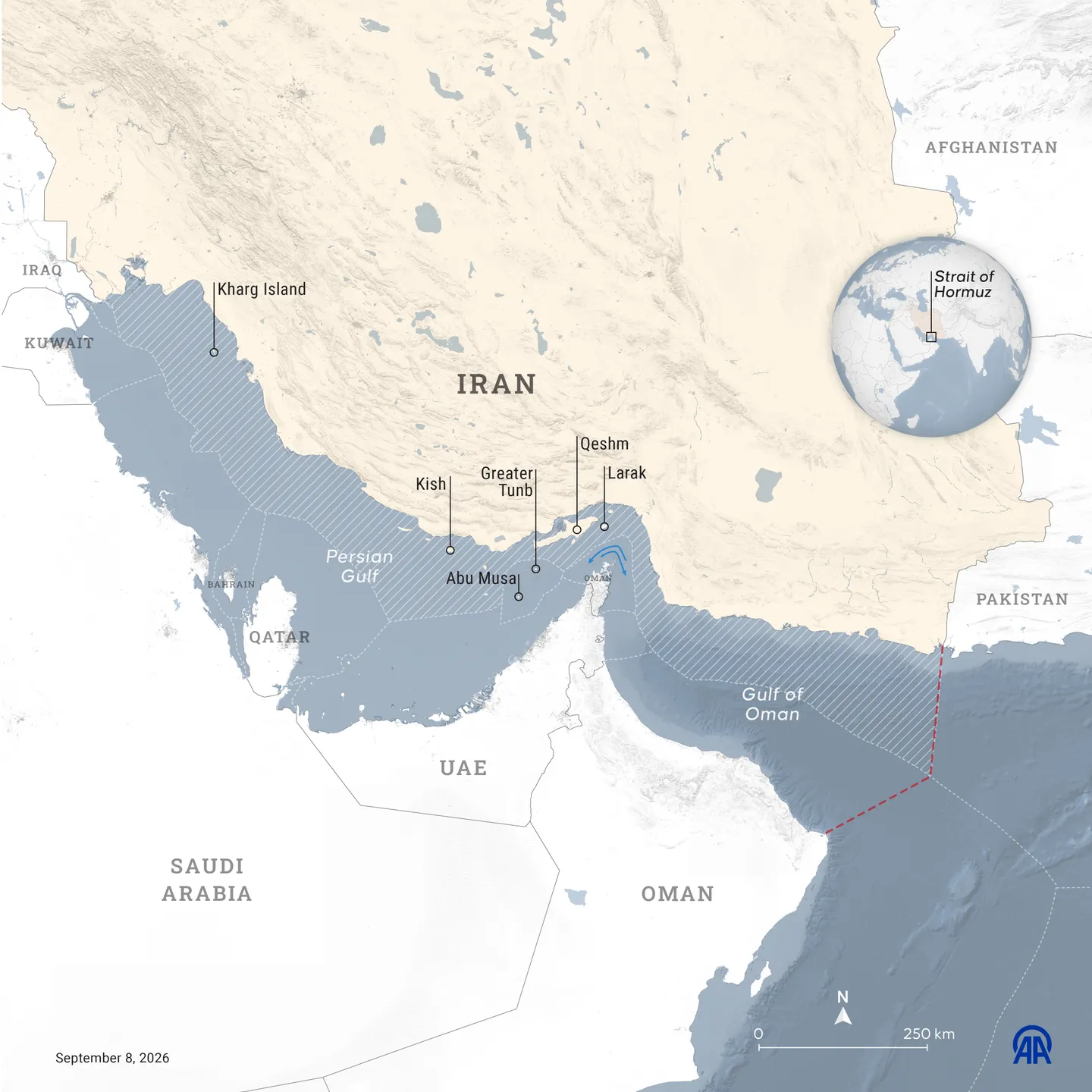
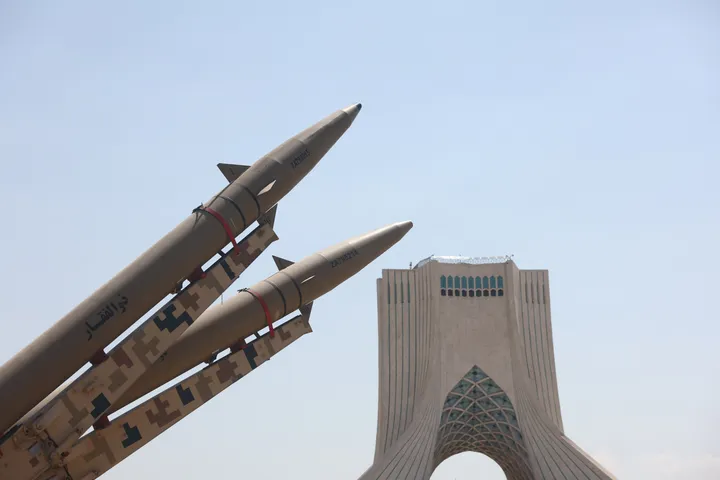
Most recently, Mohsen Rezaei, secretary of Iran's Supreme National Security Council, announced that Tehran would declare a maritime exclusion zone stretching from the US blockade line in the Arabian Sea to Gulf waters near the Strait of Hormuz, prohibiting foreign vessels from entering.
“Any ship entering this new zone will be placed on the sanctions list of Iran,” Rezaei said in a recent interview with Iranian state TV.
In another statement, he warned that US economic warfare on Iran “will be met by a maritime exclusion zone across the Persian Gulf to the blockade perimeter”.
Oral Toga, an Iran expert at the Ankara-based Center for Iranian Studies, sees Tehran’s description of the proposed zone as an attempt to formalise what Iran has sought to operate as “a permission-based transit regime throughout the war” by restricting access to the Strait for its adversaries.
“The zone as described begins at the US Navy's blockade line and extends into parts of the Gulf, which means Tehran is answering a naval blockade with a mirror image of one,” he tells TRT World.
“The stated penalty is not a strike but placement on an Iranian sanctions list, with consequences for a vessel's insurance and its future passage. That is Washington's own tool turned around, and it tells you Iran is trying to move the contest from the military domain, where it is losing, to the administrative and commercial one, where it still has a say,” he says.
Iran’s proposed maritime zone also signals an attempt to widen the perceived scope of the confrontation beyond the Strait of Hormuz.
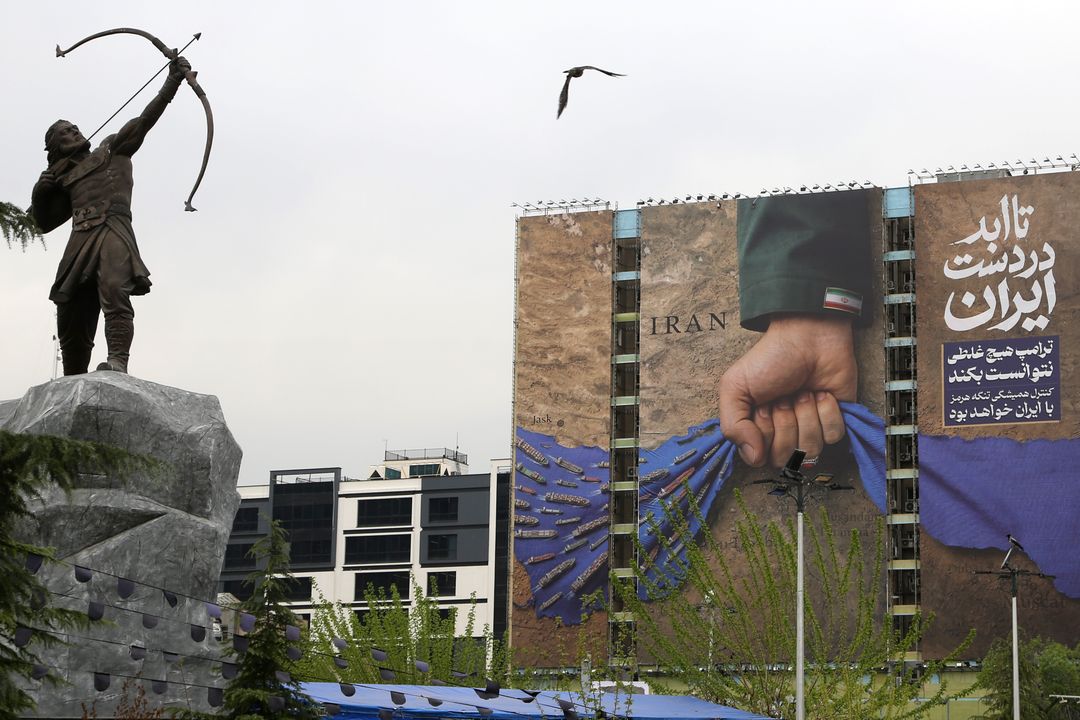
By threatening restrictions on vessels across waters stretching from the Gulf to the US blockade line in the Arabian Sea, Tehran is creating uncertainty over how far the maritime confrontation could extend, even as questions remain over its ability to enforce such a zone.
In the short term, however, Iran’s proposed zone “hardens the central dispute rather than creating a new one,” Toga says, referring to tensions over Hormuz.
“The question of who administers the strait is precisely what caused the 60-day deadline of the Islamabad agreement to expire on 17 August,” as both sides failed to reach common ground on how to manage traffic through Hormuz, according to Toga.
Iran’s proposed zone also restates Tehran’s “maximal position” on the Strait of Hormuz, while signalling that the country is moving “from a rhetoric of retaliation to one of offence”, Toga says. Tehran appears to be acting on the belief that it holds leverage over the Strait, he adds.
But Toga says Washington will not accept “an arrangement that legitimises an Iranian permission regime” for one of the world’s most important maritime arteries. As a result, Tehran’s proposed zone makes the prospect of a US-Iran settlement even “harder to finesse”, he adds.
‘More escalation than settlement’
The current deadlock, increasing attacks and competing claims over the Strait of Hormuz suggest that the conflict could enter a more escalatory phase, as both sides seek greater leverage before any potential settlement, according to experts.
By new exclusive zone declaration, Iran signals a hardening stance aiming to increase the costs of US naval blockade over the Trump administration, says Ali Akbar Dareini, a Tehran-based political analyst. This decision means Iran would do everything to stop vessel traffic across the Strait of Hormuz, Dareini tells TRT World.
Iran has “political will and means to do so,” he says, seeing an escalatory curve “in the days, weeks and months to come” aiming to persuade Trump that continuing war is much less advantageous for the US than bringing an end to it.
Iran’s “prohibited zone” should be seen “less as a tactical measure than as one of the conceptual expressions of Iran's new war strategy”, which focuses on pushing the US out of the region through further escalation, according to Theo Nencini, an expert on Iranian politics.
According to a recent CNN analysis, American military and intelligence officials are discussing reducing Washington’s military presence in the Middle East as the US seeks to recalibrate its post-9/11 regional strategy.
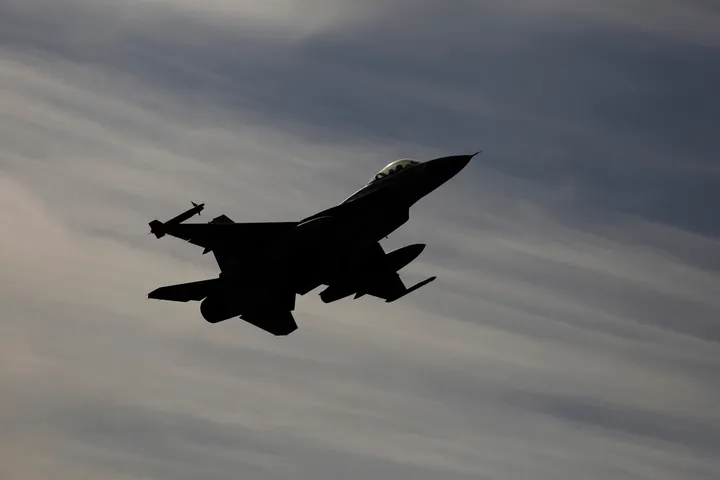

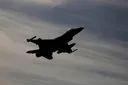
At its peak, the US presence reached an estimated 250,000 troops during the invasion of Iraq. Currently, the US has around 50,000 troops in the region.
By attacking American bases across the Middle East, Iran is seeking to create the perception among regional states that the US military presence cannot protect them and could instead expose them to greater instability and insecurity.
Its proposed “prohibited zone”, attacks on US bases across the region and targeting of commercial ships in the Strait of Hormuz form part of a broader Iranian strategy aimed at widening the costs and perceived risks of the conflict while ensuring the survival of its political system, Nencini says.
“Iranian leaders see that, weakened as the country is, the system is holding. That changes their calculation,” he says.
“They want an agreement with Washington, but they think they can play for time. They can afford to hold a hard line. And they can read the US calendar: the midterms are a test of strength for Trump, and Iran will want to make it an expensive one. So I would expect a harder phase of the conflict in the months ahead rather than a settlement.”
Other experts also see the conflict moving toward more escalation than a settlement.
“I don't see this ending anytime soon. Iran still has enough leverage to escalate tensions if it chooses to do so,” Fatemeh Karimkhan, an Iranian journalist, tells TRT World, referring to Tehran’s potential to widen regional tensions.
“Iran is unlikely to surrender under any circumstances. Iranian officials have repeatedly stated that if Iran is prevented from selling its oil, it will seek to ensure that others cannot do so freely either,” she says.
Toga also sees further escalation rather than resolution, but in the form of “managed instability”, with transits gradually increasing under a de facto toll system while negotiations remain frozen and both sides test each other’s endurance through periodic violent flare-ups.
How the conflict can de-escalate
Under current circumstances, with both sides claiming to be winning the war and asserting control over the Strait of Hormuz, experts see little prospect of an immediate settlement. But growing domestic pressure in both the US and Iran could eventually change political calculations on either side.
In the US, the war with Iran is proving unpopular, while tensions around Hormuz have contributed to higher fuel prices. A recent Reuters/Ipsos poll found that only a quarter of Americans believe the war with Iran has been “worthwhile”.
The war is polling badly ahead of November’s mid-term elections, while disruption around Hormuz has raised fuel costs for American consumers, adding to the political pressure on Washington, Toga says.
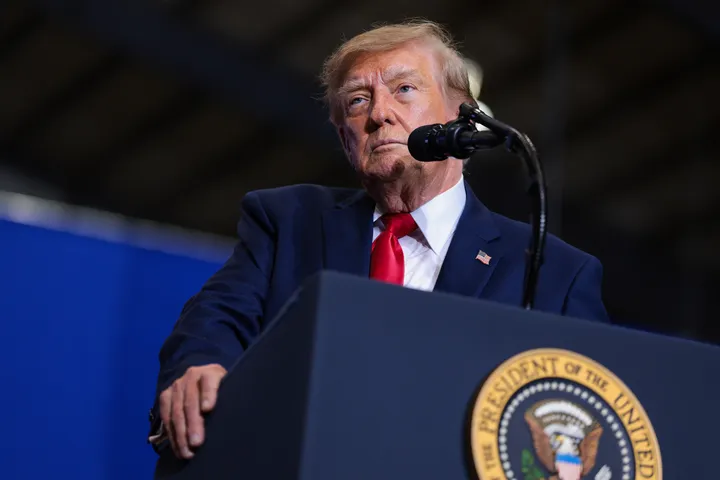
As the mid-terms approach, US top officials have sought to downplay the scale of the conflict as the president’s approval rating has fallen to a record low. In a recent statement, Trump called the war “small potatoes”.
Despite Trump’s efforts to downplay the Iran war, Tehran wants to maximise damage to Republicans in the mid-terms by escalating Hormuz tensions, according to Dareini.
Iran, meanwhile, is also under mounting pressure. Its navy, ports, oil installations and parts of its civilian infrastructure have been heavily damaged during the war, compounding economic pressure on ordinary Iranians already struggling under decades of sanctions.
“The unresolved question of the leadership in Tehran remains the single variable capable of invalidating every current calculation,” says Toga, referring to differences between supporters of reformist President Masoud Pezeshkian, who favour an agreement, and hardliners who oppose concessions to the US.
But a former senior Iranian diplomat, who asked to remain anonymous, sees those internal tensions differently.
He describes Rezaei, whom many Western analysts regard as a hardliner, as someone whose position combines pragmatism with what he calls the dignity of “not yielding to pressure”.
“If a little wisdom prevailed in Washington, they would announce full compliance with the Islamabad Agreement and stop repeating boring, provocative, contradictory statements every day,” the Iranian diplomat tells TRT World.
“They have to stop being under the illusion that Iranian people yield to pressure. Iran’s thousands-year-old civilisation will not disappear with US bombardment.”