 Agustín Gulman
Viviana Moreno, an Argentine biochemist who has led protests against mining in Esquel for two decades, says the community’s position has remained firm as foreign companies sought to establish gold, silver, and copper extraction projects in the small Patagonian town: “The line is clear: not with water.”
For 23 years, residents in Esquel resisted mining projects over fears of water contamination, successfully blocking them through referendums and local legislation.
Now, more than two decades later, Viviana Moreno and fellow members of the “No to the Mine” Neighbourhood Assembly are raising alarm over reforms to Argentina’s Glaciers Law approved by Congress, which would allow mining activities in areas that had previously been protected.
“It’s irrational to go against the glaciers,” Moreno told TRT Espanol. “They are water reserves. Discussing this in the context of a global water crisis is anachronistic,” he pointed out.
Glacier Law: A structural reform
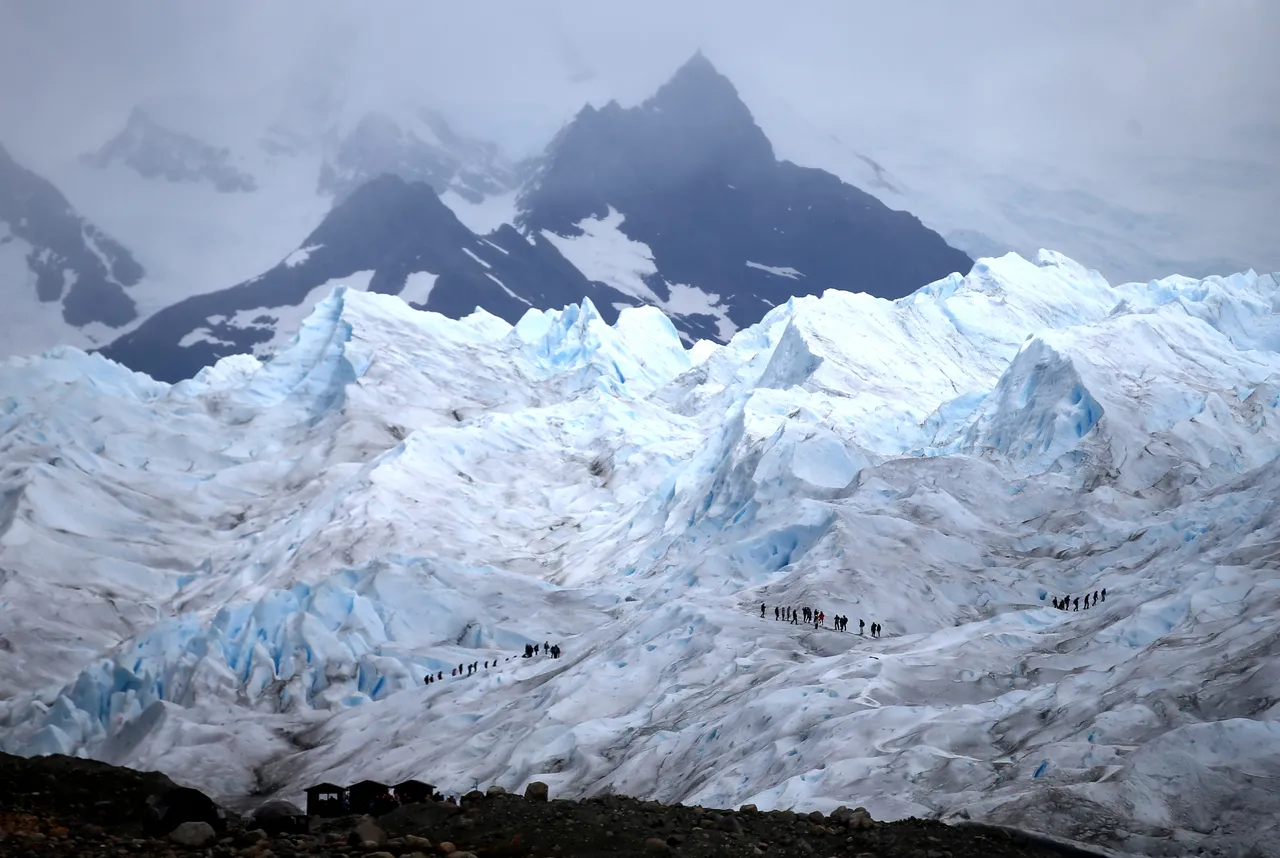
The original law, passed in 2010, was groundbreaking for establishing minimum protection standards and for prohibiting the exploitation of minerals and hydrocarbons in glaciers and periglacial environments, which are areas with frozen soils in high mountains and act as strategic reserves of fresh water.
Since then, the law has been challenged by international mining companies. However, in 2019, Argentina's Supreme Court upheld its validity and halted dozens of projects seeking to drill in those areas.
Argentina has 16,968 ice bodies larger than one hectare, including glaciers and debris-covered glaciers, most of them located in the Andes Mountains, according to an inventory by the Argentine Institute of Snow Science, Glaciology and Environmental Sciences.
In addition to helping mitigate droughts, they represent a strategic source of fresh water, supplying 40 percent of water basins and providing access to the resource for more than 7 million people, according to the Environment and Natural Resources Foundation.
But under changes introduced by the government of President Javier Milei at the end of 2025, protection will no longer apply equally to all glaciers, but only to those designated as strategic water reserves, as established in Article 1.
The regulations delegate to provincial authorities the power to determine whether these ecosystems serve as strategic water resource reserves or as “water providers for recharging river basins”, or whether mining or hydrocarbon projects can instead be established there.
To do so, provinces must “base their decisions on technical and scientific studies.”
Following the enactment, the Argentine Chamber of Mining Companies welcomed the reform, saying it would bring “increased regulatory predictability”, unlock investment, and “clarify” where productive activities can be carried out.
Glaciers: regional and geopolitical impact
However, the dispute is not exclusive to Argentina.
Glaciers have become a focal point of regional tension, particularly in Andean countries such as Chile, Bolivia, Peru, and Argentina.
In these regions, the expansion of mining often clashes with communities affected by water scarcity, which has worsened in recent years due to climate change, while local governments promote mining to attract investment.
At the global level, the geopolitical dimension is increasingly prominent due to rising demand for critical minerals needed for the energy transition, such as lithium and copper, which has boosted interest from countries like China and the United States in a region rich in these resources.
In fact, the so-called “lithium triangle” — made up of Argentina, Chile, and Bolivia — concentrates more than 50 percent of the world’s lithium reserves, while Chile and Peru produce almost 40 percent of global copper, according to data from the Economic Commission for Latin America and the Caribbean (ECLAC).
Since taking office in 2023, Milei has pushed for the repeal of laws that guaranteed the protection of natural resources and, according to his government, limited development.
These resources are estimated to generate more than $36 billion in revenue by 2035 through the export of copper, lithium, gold, and silver. He has also criticised what he calls “excessive regulations” and environmentalists.


“By eliminating ideological distortions and artificial obstacles that hindered progress, the project reaffirms that genuine environmental protection and economic growth are not enemies, but complementary drivers of a free and prosperous nation,” the president declared after the reform was passed.
He also said that “the environmentalists determined to prevent Argentina's progress lost again,” and that “the agendas that seek to prevent the progress of Argentinians have found their greatest enemy in this government.”
In March, Milei stated that if Argentina “did things like Chile does, the Andes would provide us with a million real jobs.” According to data from the National Labor Secretariat, mining employs fewer than 86,000 workers, a figure that has remained stable over the last decade.
A law that sparked outrage
However, environmentalists and experts fear that the new legislation will worsen the climate crisis, leave communities without water, and cause irreparable environmental damage.
Eight international glaciology specialists have expressed concern and, in a public letter, warned that leaving glaciers unprotected will lead to the loss of water reserves that sustain river flows during critical periods and will reduce water resilience.
Geologist Andrés Folguera, professor at the University of Buenos Aires and researcher at the National Scientific and Technical Research Council (Conicet), told TRT Espanol that the approved reform is “potentially dangerous”.
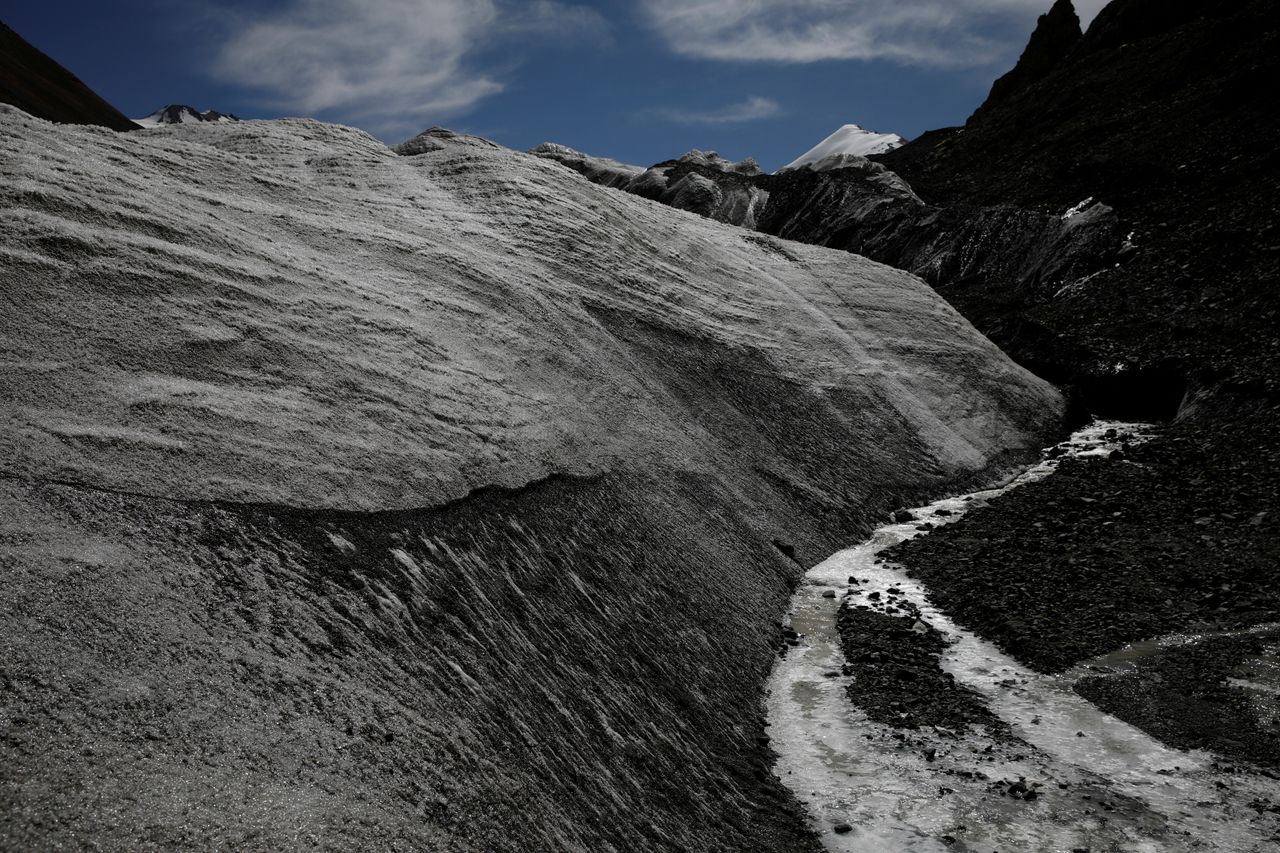
While acknowledging that the extent of the damage is difficult to quantify, he said mining operations will affect the water balance of the Andes Mountains. “Any disturbance will destroy the environment,” he added.
According to the geologist, this is because, to exploit mineral deposits, tons of ice with no regenerative capacity must be removed.
“We are experiencing a period of global warming; the main glacial tongues are retreating at a rapid pace. All that ice is in a critical, unstable, and fragile phase,” he said.
"Governments must rely on technical data to demonstrate to society that the water of the future will not be at risk," he added.
The president of the Association of Environmental Lawyers, Enrique Viale, told TRT Espanol that the reform represents an environmental regression.
“The destruction of a glacier is forever; there is no way to recover it,” he said.
“The new law goes against national and international legislation. Argentina signed the Escazú Agreement, which establishes that there can be no backsliding on environmental matters,” he added.
“It is a clearly unconstitutional law,” Viale said. Along with other organisations, the lawyer has filed a class-action lawsuit in a court in the province of La Pampa to halt the implementation of the legislation. He said it has more than 800,000 signatures and aims to protect water resources.
Recently, a court in the province of Santa Cruz ordered the suspension of the law, but the measure applies only within that jurisdiction.
Viale said the law was tailored to benefit international mining companies that have lobbied for years to overturn environmental protection rules. “They weaken the laws to do business, not out of conviction,” he said.
“There are very large projects from mining companies Lundin Mining and BHP with the Vicuña project; there are also Veladero and Los Azules, all three in the province of San Juan and located in areas with glacier inventories, and they could be authorised at any moment,” he added.
In Argentina, the discussion has revived a broader debate in the context of the climate crisis: how to balance water protection with the exploitation of strategic natural resources.
In Esquel, where the community halted mining projects two decades ago, the reform of the Glaciers Law has “awakened a very large demand,” according to activist Viviana Moreno.
“Fear of drought sparked strong opposition,” she says.
“Are we going to mortgage our glaciers for a group of multinational corporations? When people take action, they can put a stop to it?”