 Kazim Alam
Iran is set to receive a major economic boost after the peace agreement with the US that promises to lift decades of sanctions, unlock tens of billions in frozen assets, and establish a $300 billion reconstruction fund.
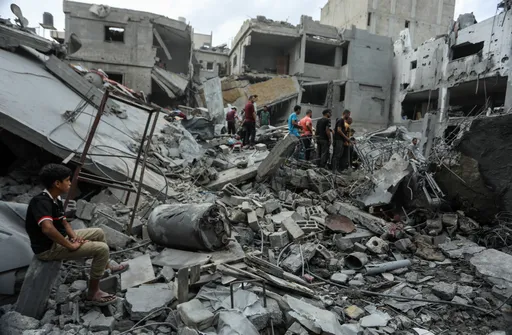
The agreement offers Tehran a chance to end its international isolation, export oil and gas without constraints, and bring in foreign investment to rebuild infrastructure bombed in the three and a half months of the US-Israeli war against Iran.
But experts caution that any short-term gains – albeit tangible – will likely be limited and conditional.
A full recovery from the effects of war and the decades of international alienation will require Iran to overcome deep structural, political, and regional obstacles, they say.
Oral Toga, a researcher at the Ankara-based Centre for Iranian Studies (IRAM), tells TRT World that the immediate economic impact of the peace deal is real, but narrow and reversible.
“Almost everything concrete – the lifting of sanctions, the release of frozen funds and the $300 billion reconstruction plan – is tied to a final deal that still has to be reached within 60 days,” he says.
Mustafa Caner, an Iran expert and assistant professor at Sakarya University’s Middle East Institute, tells TRT World that the lifting of sanctions and access to frozen funds will be Iran’s “single biggest gain”.
Sanctions limit a country’s ability to trade with the outside world. Once sanctioned, a business or bank can’t make transactions in major currencies or use SWIFT, the mainstay of the global payments network that banks rely on to process cross-border trade.
Since the 2010s, sanctions have been the principal factor crippling the Iranian economy, he says.
Their removal will allow Iran to sell oil without restrictions and gain access to technological innovation across sectors.
Under the agreement, the US will grant waivers to Iran for oil sales and related services, such as banking, insurance, and transportation, as the two sides hash out details of the peace deal during the 60-day negotiation window.
The US will terminate sanctions fully once Iran meets technical benchmarks.
As a result, Iran’s economy will rejoin the SWIFT system, easing cross-border trade.
Toga doubts claims that the US-Israeli bombing had crippled Iran’s oil infrastructure.
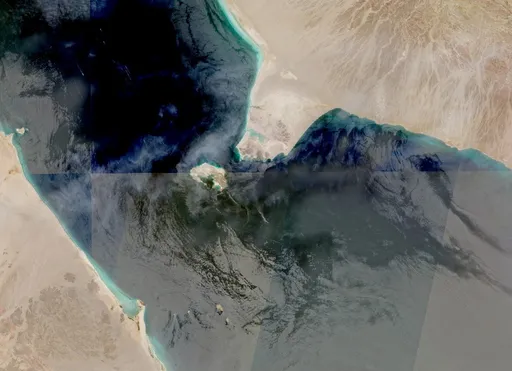
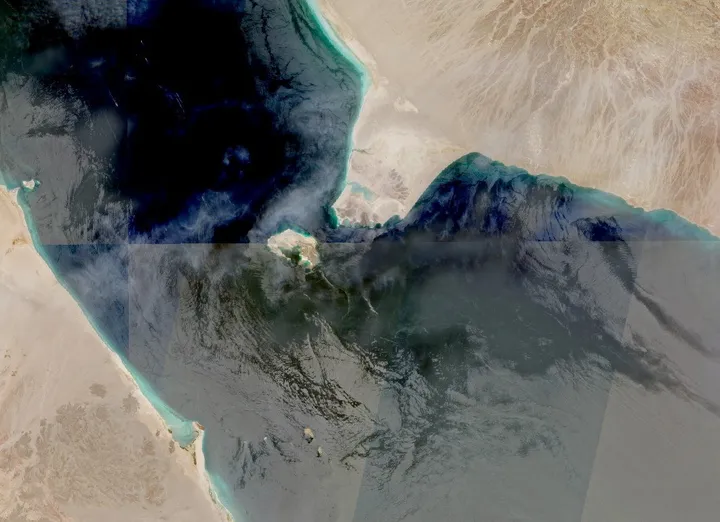
“The strikes on Kharg Island, which handles close to 90 percent of Iran’s crude, spared the oil terminal itself. The real constraint was the closure of Hormuz and the naval blockade, not lost capacity,” he says, while referring to the narrow waterway between Iran and Oman through which one-fifth of global energy supplies passed before the war.
Once the blockade is completely lifted, crude exports can return to pre-war levels of roughly 1.7 to 1.8 million barrels daily within weeks, he says.
Iran was still producing around 3.2 million barrels a day amid intense US-Israeli attacks during March.
Restarting the gas production process, however, will be slower because South Pars, the Iranian portion of the world's largest natural gas field, came under attack during the war, he says.
Broader economic damage to Iran has been steep: Tehran itself estimates losses of about $270 billion in the first 40 days of the war, with petrochemical and steel sectors having lost most of their capacity, he says.
“The oil can come back fast. The economy as a whole cannot,” Toga says.
The $300 billion jackpot?
The promise of a $300 billion reconstruction package rests on the premise that private businesses and investors from a number of countries – rather than the US government – will step in and invest in reconstruction projects in Iran on a commercial basis.
All the US will do is issue the necessary licences and waivers to enable private-sector investment, especially from the Gulf region.
Reports say preliminary pledges for more than $150 billion are already in from different countries.
This will be the first time in nearly five decades that Iran will meaningfully open its economy to substantial foreign direct investment.
Previously, foreign businesses shied away from investing in Iran because they feared losing the ability to conduct dollar-based transactions under secondary sanctions.
Caner notes that the sum is “almost equal to Iran’s annual GDP”.
But it will not be transferred to Iran in a single block. “Iran will be able to access it in line with a consensus reached, particularly with the Gulf states that contribute to it,” he says.


Over the next two to three years, assuming a final deal holds and sanctions are lifted rather than merely suspended, both experts foresee meaningful economic potential alongside clear obstacles.
Toga points to Iran’s resource base as an indicator of growth potential: roughly 10 percent of the world’s proven oil reserves and 15 percent of gas exist under Iranian ground.
However, he rejects the notion that Iran can quickly grow its economy to match its wealthy Gulf neighbours.
“The idea that Iran could stand on a par with the rich Gulf states in two or three years is not realistic, and the comparison confuses size with wealth,” he says.
Iran’s nominal GDP and per-capita income are significantly lower than Gulf levels.
On one hand, the Gulf nations combine small populations, large sovereign wealth funds, and decades of steady investment, Toga says.
On the other hand, Iran has had long periods of extremely high inflation, a collapsed currency, and poverty levels of nearly 40 percent.
“Reintegration would turn Iran into a recovering middle-income economy, not a Gulf-style success,” he says.
Caner also predicts Iran will not achieve rapid, full integration into the global economy in the immediate term.
“Within Iran, there are constituencies that benefit from the ‘closed economy’. It is likely these groups will resist full integration,” he says.
Caner points out that Iran’s economic structure differs from the classic Gulf model: the state plays a determining role in economic activity, and a tax system exists alongside a range of competing interest groups, including tax-exempt “revolutionary institutions”.
Transforming this framework “will take many years”, even though potential in oil, natural gas, and tourism remains considerable, he says.
Risks aren’t over yet
Toga identifies three main threats to Iran’s reintegration into the world economy.
Politically, the nuclear issue is still not settled, he says.
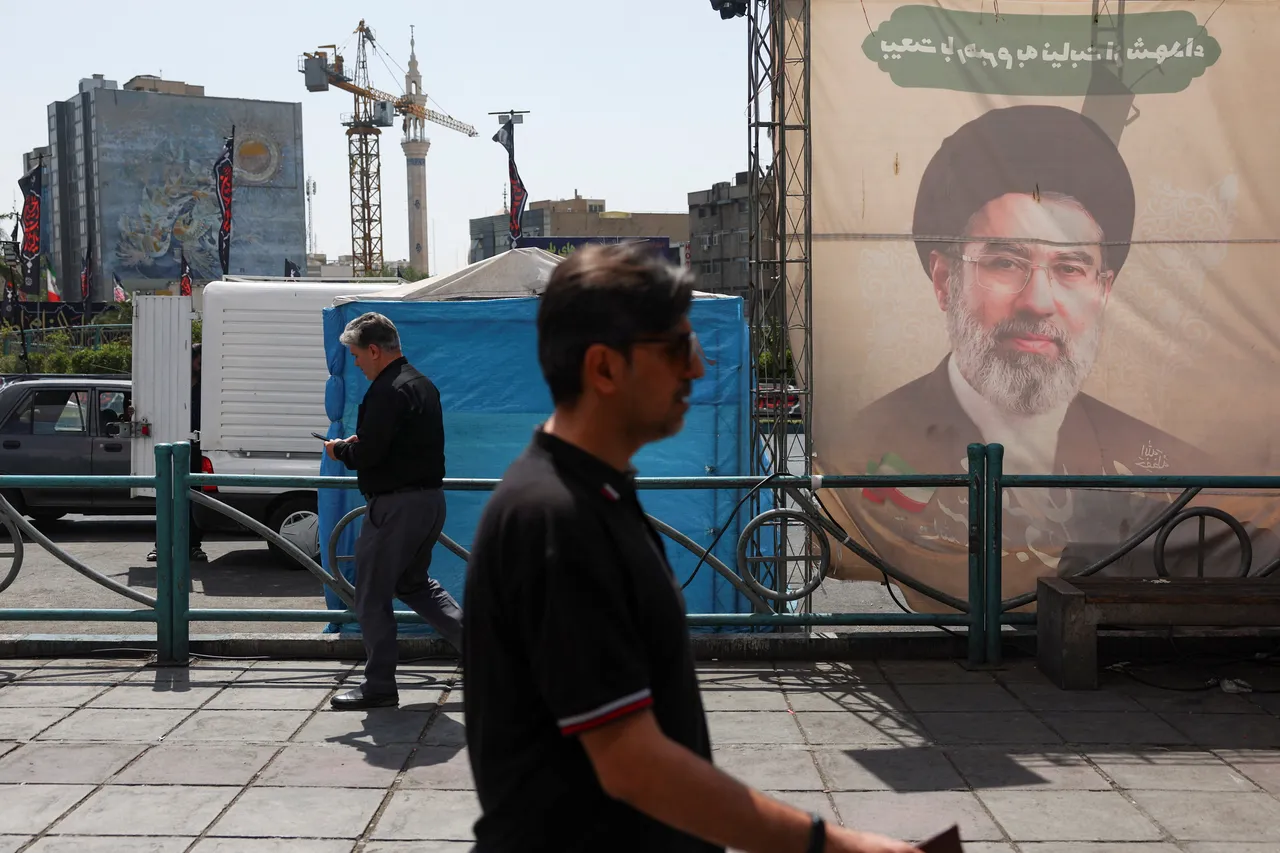
Iran continues to face an “unresolved leadership transition” after Iran’s top leader Ali Khamenei’s assassination and the subsequent installation of his son, Mojtaba Khamenei, reportedly under pressure from the powerful Revolutionary Guard.
This set of circumstances makes Iran a “very uncertain place to invest”.
Structurally, the deeper problem lies in the economy’s domination by bonyads, which are tax-exempt charitable trusts with a massive footprint nationwide.
He says reconstruction money channelled through conglomerates tied to the Revolutionary Guard risks reinforcing the existing rent-based system and sustaining the regime without reaching ordinary citizens.
Regionally, Lebanon represents “the most dangerous flashpoint”, where Israel has occupied vast territories in the name of fighting Hezbollah, an Iran-backed group.
“Israel intends to keep forces in the south, while Hezbollah has not stood down,” Toga says, adding that Israel also treats the unfreezing of Iranian funds as financing for its proxies.
“(Israel) is ready to act as a spoiler,” he says.
Caner also flags Israel’s “disruptive influence” as a real risk that “could derail this nascent structure through the kind of strikes it has carried out in Lebanon”.
He says Iran should repair trust with Gulf states, which were targets of Iranian attacks during the war.
“Repairing that loss is essential for regional economic stability,” he says.
“If Iran tries to convert its economic advantage into military and geopolitical superiority over the Gulf, new crises could emerge,” he adds.