 Murat Sofuoglu
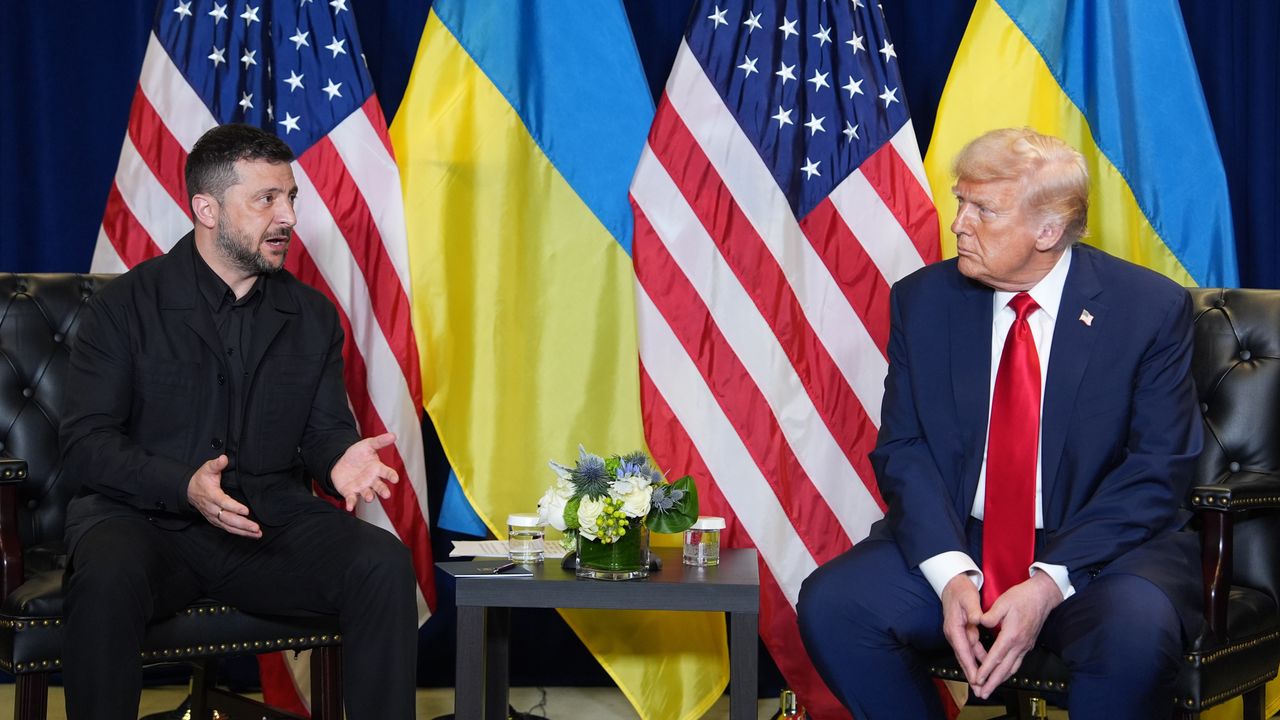
Growing tensions between Washington and Kiev are exposing differences that extend beyond the personal rivalry between US President Donald Trump and his Ukrainian counterpart, Volodymyr Zelenskyy, as the White House pursues closer ties with Moscow.
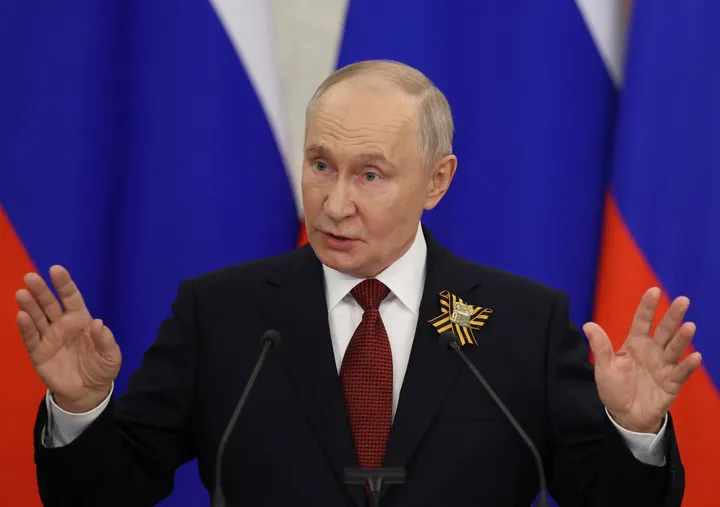
The latest signs of a US-Russia rapprochement emerged last week when US mediator Steve Witkoff met Russian President Vladimir Putin in Saint Petersburg, with both sides issuing positive statements about renewing peace talks and ending the war in Ukraine.
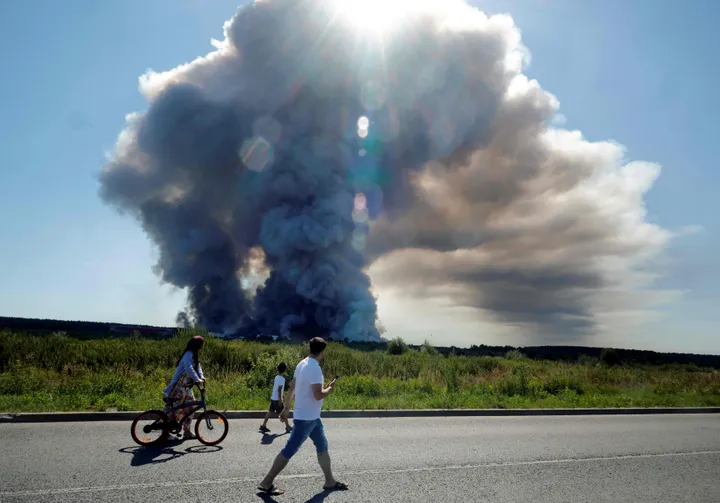
Yet just hours after the statements, Russia and Ukraine exchanged a deadly barrage of attacks, underscoring the challenges facing efforts to negotiate an end to the conflict.
The growing US-Russia rapprochement, marked by Washington brokering a diesel deal with the Kremlin and lifting most US sanctions on Moscow, has frustrated Zelenskyy, who has recently publicly opposed Washington's softer approach toward Moscow.

Trump has also demanded that Zelenskyy stop targeting Russian refineries.
The disagreements mark a further deterioration in relations that have remained strained since a heated White House meeting in March, when Trump and Zelenskyy engaged in a public shouting match.
Although Zelenskyy subsequently sought common ground with Trump through European mediation, their latest exchanges suggest that the divisions between Washington and Kiev run deeper than disagreements over how to end the war, reflecting increasingly divergent geopolitical priorities and international alignments.
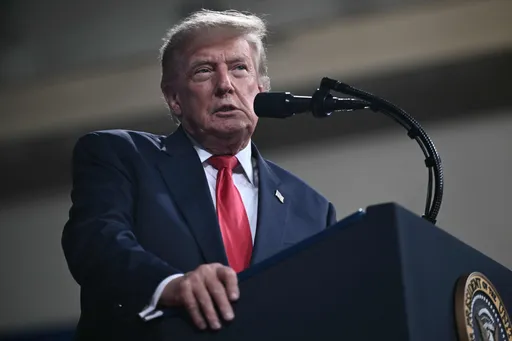
“I find Zelenskyy to be more difficult to deal with than Putin,” the US president said in a speech last week, underscoring his affinity for the Russian leader, who recently proposed a trilateral meeting with Chinese President Xi Jinping and Trump to address the war in Ukraine.
Meanwhile, Zelenskyy has shown less hesitation in confronting the US administration, which has long provided Ukraine with weapons, funding and essential intelligence in its war against Russia.
“How can Trump be friends with him? I think that it’s a mistake. It’s his choice again and again,” Zelenskyy said in a recent Financial Times interview, referring to the political rapprochement between Russia and the US.
Rapprochement disrupts Ukrainian resistance
Growing differences between Washington and Kiev, coupled with Trump's rapprochement with Putin, could strengthen Moscow's position both on the battlefield and at the negotiating table, according to experts.
The deepening tensions between the US and Ukraine are “exerting a disruptive influence on the dynamics of the war in Ukraine, affecting both military operations on the ground and the parameters of a potential peace settlement,” Ozgur Korpe, an academic at National Defence University, tells TRT World.
“On the battlefield, uncertainty regarding US aid—compounded by political conditionality—is compelling Ukraine to adopt a more defensive, resource-conserving strategy, while simultaneously granting Russia greater latitude to maintain its offensive tempo and intensify pressure,” he says.
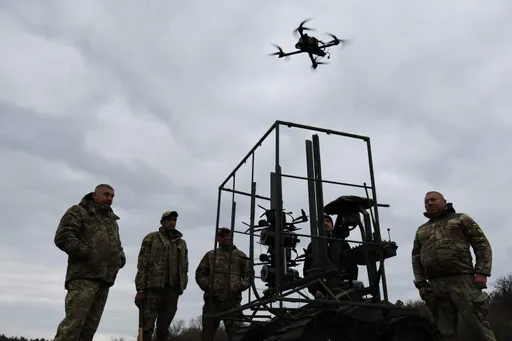
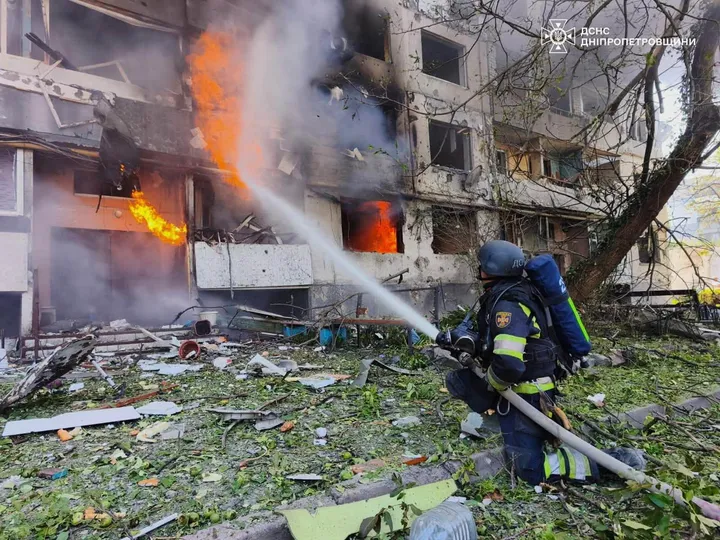
In recent weeks, Ukraine has faced disruptions to US intelligence sharing and Starlink satellite connections, which Kiev believes contributed to its vulnerability during recent deadly Russian missile attacks on the capital.
Shortages of missile interceptors, compounded by delays in US supplies, have further strained Ukraine's air defences.
According to Korpe, Ukraine's predicament reflects a well-documented phenomenon in international relations: when a weaker partner depends heavily on a stronger ally for security, declining support or growing uncertainty over assistance can undermine its willingness and ability to continue fighting.
Since the war began, Kiev has relied heavily on American political, economic, military and intelligence assistance.
Under the Trump administration, however, that support has declined, while the US president has increasingly portrayed Zelenskyy as an obstacle to a potential peace settlement.
Ukraine has sought to offset shortages of American weapons and disruptions to intelligence sharing with support from Europe.
But questions remain over whether countries such as France, the UK and Germany have the military capabilities to replace US assistance.
Domestic priorities
Trump and Zelenskyy have different pledges to their respective national audiences, making compromise increasingly difficult.
While Trump has long pledged to Americans to bring immediate peace to the Russia-Ukraine war, Zelenskyy aims to minimise any territorial concessions to Moscow to keep national support for his presidency strong.



The tensions between Washington and Kiev are “largely a product of US domestic political factors, with the Trump administration facing pressure due to rising energy costs amid prolonged wars in both the Middle East and the Russia/Ukraine conflict,” says Eugene Chausovsky, senior director of analytical development and training at the New Lines Institute.
With the US midterm elections approaching, Trump is seeking ways to ease economic pressures, particularly rising diesel prices and their wider impact on inflation.
“This frames the US agreement with Russia on allowing diesel shipments, as well as Trump’s frustration with Zelensky for Ukraine continuing to target Russian energy and refinery infrastructure at a politically sensitive time,” Chausovsky tells TRT World.
However, experts warn that the diesel deal is unlikely to immediately affect US fuel prices, as European countries continue to enforce their own sanctions on Russia.
Trump’s declaration of an energy ceasefire between Ukraine and Russia also failed, as both sides said they did not sign the agreement.
“Trump frames Ukraine not so much as a front line for the defence of liberal democratic norms, but rather as a costly foreign burden in the context of US domestic politics and a bargaining chip to be used at the negotiating table when striking a ‘grand deal’ with Russia,” Korpe says.
By contrast, Zelenskyy views Ukraine's struggle as existential and closely tied to the country's aspirations to join Western political and military institutions, according to Korpe.
Will Ukraine and the US break up?
Ukraine has long sought closer integration with Western political and military institutions, including NATO and the EU. But deteriorating relations with Washington have raised questions about whether Kiev can keep relying on American support.
Oleg Ignatov, a senior analyst on Russia at the International Crisis Group, says the Trump administration has recently changed its approach to negotiations aimed at ending the war.
“Previously, Washington tried to reach an understanding with Moscow first, then took its proposals to Ukraine and its allies, who rejected them.
“Now the United States is trying to secure support from Ukraine and its European allies first and find out what they are prepared to accept. It would then take those proposals to Putin,” Ignatov tells TRT World.
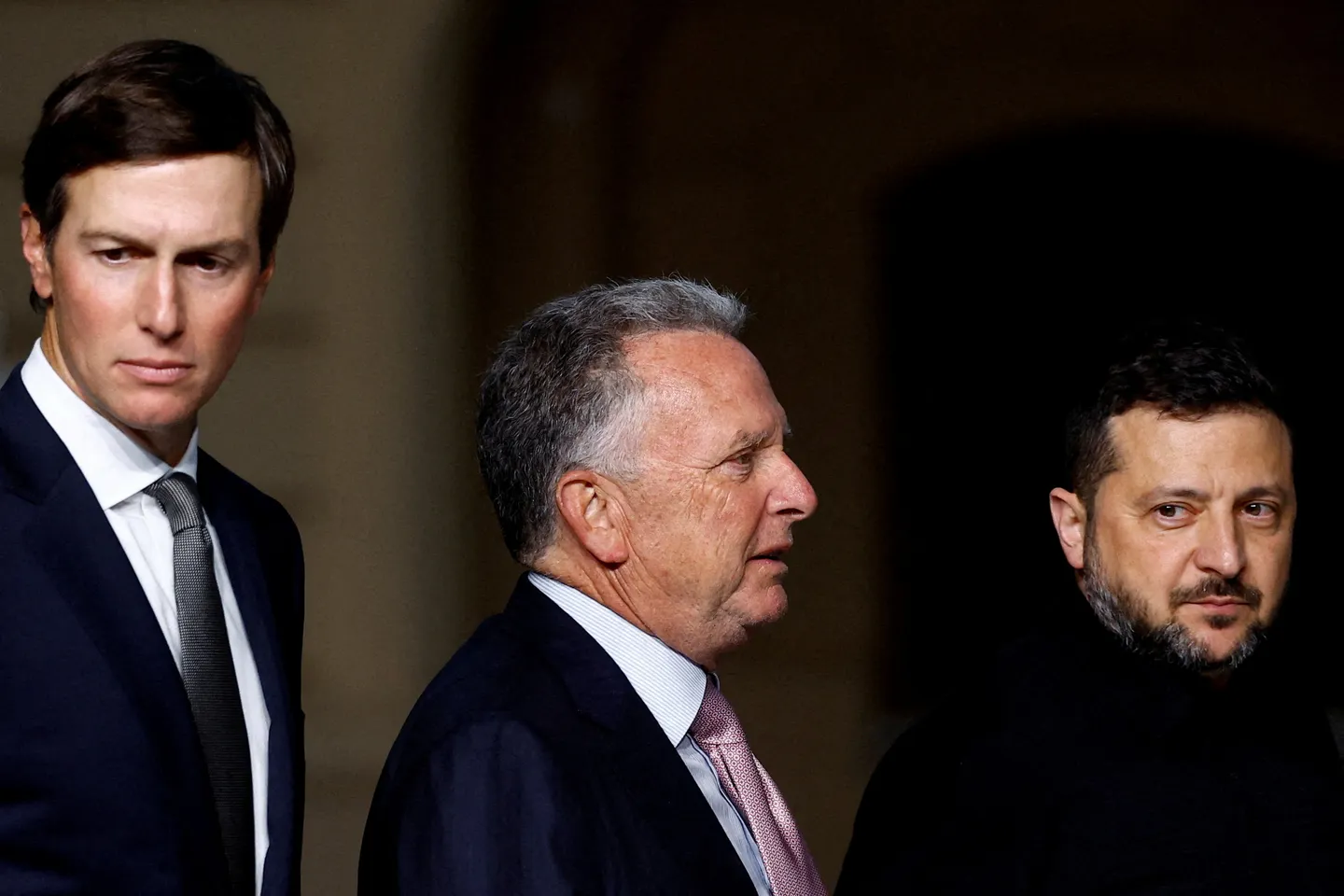
Last week, US mediators Steve Witkoff and Jared Kushner, Trump's son-in-law, met Ukrainian and European leaders in Oslo before Witkoff travelled to Saint Petersburg for further talks with Putin.
“This approach requires Zelenskyy to be clearer about the compromises Ukraine might accept. That is likely to cause friction between Kiev and Washington because their approaches still differ,” Ignatov tells TRT World.
If the US continues to push Zelenskyy to make further concessions to Russia, this approach could “lead to further friction or even conflict between Kiev and Washington,” Ignatov says.
Zelenskyy has insisted that any potential ceasefire must be backed by Western security guarantees without territorial concessions to Russia.
In a recent CNN interview, Zelenskyy maintained that Ukraine “will survive” and “will stay strong” despite tensions with Washington, while rejecting territorial concessions to Russia.
Although some analysts attribute the tensions partly to personal animosity between Trump and Zelenskyy, Korpe argues that the differences run deeper.
“The rift between the two leaders is not merely personal; rather, it is rooted in deeper disagreements regarding the objectives of the war and the vision for a final settlement.”
Korpe says institutions such as the US Congress and the Pentagon, alongside NATO, have helped prevent American support for Ukraine from collapsing entirely.
Nevertheless, “it is fair to say that the crisis of trust between the two leaders is moving distinctly toward a complete ‘break’,” he adds.
Chausovsky, however, offers a different assessment.
While Zelenskyy and the Trump administration remain at odds, he says, “these tensions should not be seen as a sign of a breakup” between Washington and Kiev.
Instead, Chausovsky describes the current friction as “rather a down period in the ebb and flow of their ties amid the protracted conflict with Russia.”
“Greater diplomatic activity can be expected as a result, though any sustainable ceasefire or peace agreement is unlikely to materialise in the short term,” he tells TRT World.