Bangladesh is pushing to secure around $2 billion in loans from multilateral agencies to address energy security concerns amid soaring global fuel prices caused by the Israel-US war on Iran.
The government has moved to reduce fuel use, including pausing production at most fertiliser plants.
On Saturday, prime minister’s finance and planning advisor Rashed Al Titumir said authorities are now pursuing a three-pronged strategy to secure a sustainable energy supply.
"Part of that is securing loans," Titumir told AFP.
"The International Monetary Fund (IMF) has committed $1.3 billion, while the Asian Development Bank (ADB) has pledged $500 million as budget support," Al Titumir said, adding the government was pursuing the loans for early disbursement.
The government may also approach the World Bank.
"As we want to keep foreign currency reserves intact, we have limited options other than seeking loans," Al Titumir said.
The government is also exploring alternatives for sourcing energy from "North America, South America or Africa".
"We are exploring all available options for alternative energy sources," Al Titumir said.







Energy dependency
Bangladesh — which imports 95 percent of its oil and gas needs — has not raised electricity and fuel prices despite the global surge.
Most crude fuel is sourced from Saudi Arabia and the United Arab Emirates, while around 35 percent of the gas supply also comes from the Middle East.
An attack on a site at Qatar's Ras Laffan LNG hub could disrupt gas supply, given the country's reliance on the facility.
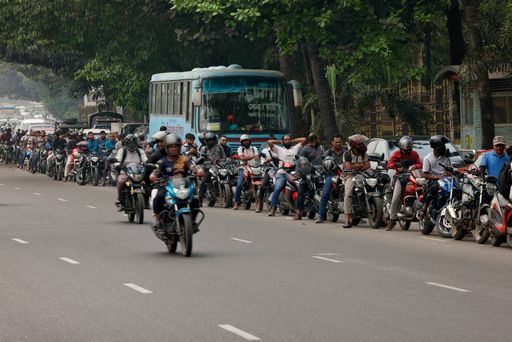
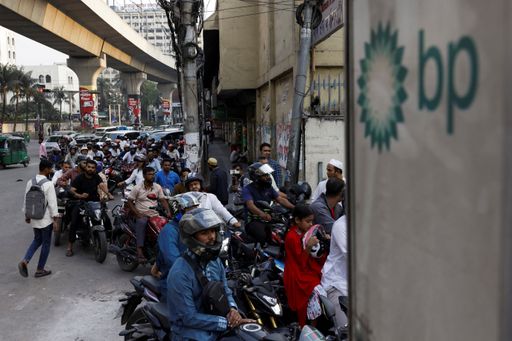
Since the outbreak of the Middle East war, authorities have taken several measures to curb fuel consumption.
These include setting limits on fuel purchases, halting production at most fertiliser factories, deploying police to patrol filling stations, and using the navy to escort LNG shipments.