 Talha Yavuz
Recent Ukrainian drone strikes on Russian oil refineries have forced several facilities to suspend operations for maintenance.
In response, Moscow has periodically introduced restrictions to stabilise fuel supplies. Fuel-sale limits have also been imposed in several Russian regions and in Crimea, which Moscow illegally annexed in 2014.
Earlier last month, Ukraine’s General Staff claimed that its forces had struck 16 major Russian oil refineries and fuel terminals, putting more than 30 percent of Russia’s refining capacity out of operation.
Russian President Vladimir Putin has announced that they have begun drawing on their fuel reserves as Ukrainian attacks on the country’s energy infrastructure intensify.
Putin also noted that Moscow is considering a ban on diesel exports, after already imposing temporary restrictions on gasoline and jet fuel exports “in the interests of domestic consumers”.
This is despite the fact that Russia is one of the world’s largest oil producers, accounting for 9-10 million barrels per day, ranking third globally behind the United States and Saudi Arabia.
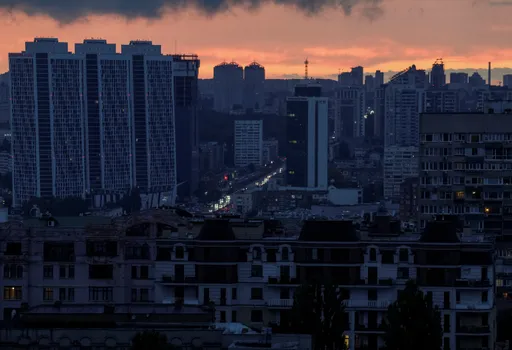
Perhaps for the first time, Muscovites, along with the residents of other major Russian cities, are beginning to feel the direct consequences of the war on this scale.
Besides, for a country whose economy is already under severe strain, the fuel-export restrictions raise a serious question: how long can Russia sustain a war effort that depends heavily on energy revenues, which constitute around 25 percent of its federal budget?
Low cost, effective and sovereign
Ukrainian president Volodymyr Zelenskyy declared that, over the past year alone, Ukraine’s long-range drones had struck more than 356,000 Russian targets.
The first clear signs of Ukraine’s technological transformation were visible in the June 2025 ‘Spiderweb’ operation. In that coordinated long-range drone strike, Ukraine launched simultaneous attacks against multiple Russian airfields deep inside Russian territory.
The operation reportedly used only 117 FPV drones, costing about $117,000 in total, to damage or destroy more than 40 Russian aircraft valued at more than $7 billion.
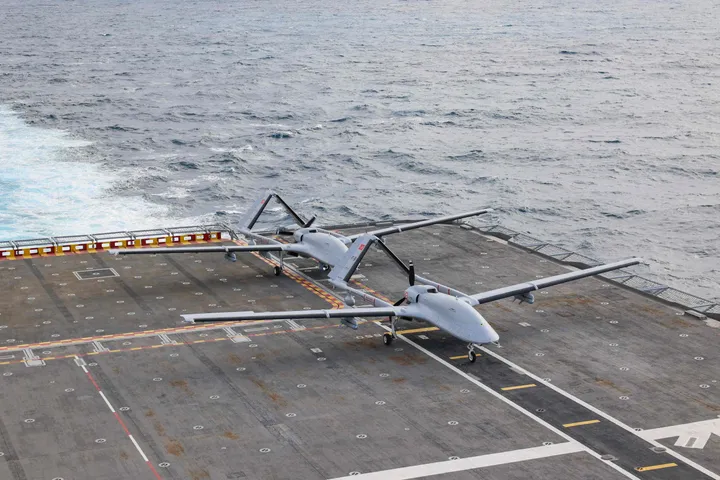
Russia, meanwhile, launched more than 54,000 Shahed-type drones against Ukraine throughout 2025. These drones, assembled from commercial components, can cost as much as $50,000 each.
Every launch required a Ukrainian response. But copying expensive foreign air-defence systems was not a realistic option, so Ukraine built its own alternatives.
This was not easy. Ukraine’s military spending consumes an estimated 40 percent of its GDP, compared with Russia’s 7.5 percent.
Yet, because Ukraine’s overall military budget remains less than half of Russia’s, Kiev has had to innovate faster and produce more efficiently.
One striking example is the Sting interceptor drone, developed by the Ukrainian military to counter Shahed-type drones.
Its significance lies not only in the number of drones it can help intercept, but also in its cost efficiency.
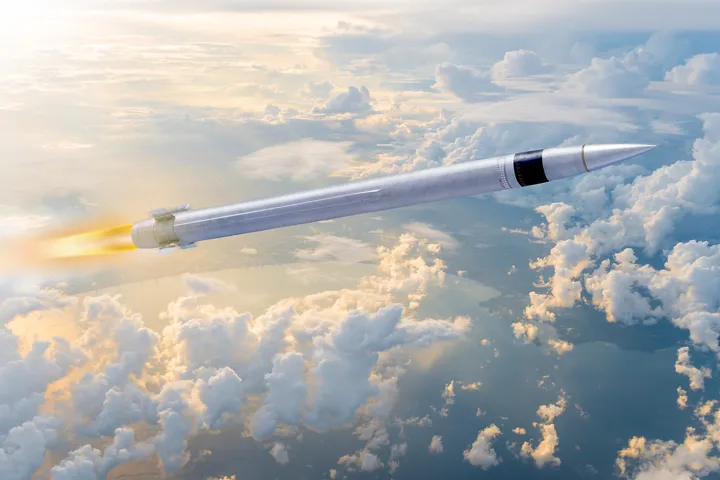
A Sting interceptor costs around $2,500. By comparison, a single US-made Patriot interceptor missile, used for a similar defensive purpose, costs more than $3 million and requires far more time, infrastructure and resources to build and operate.
Ukraine as a drone superpower
Casualty estimates vary, but one recent CSIS-backed estimate puts Russian casualties at around 1.2 million and Ukrainian casualties at up to 600,000 since the start of Russia’s full-scale war.
Russia’s population, at roughly 140 million, is three times larger than Ukraine’s pre-war population of around 40 million. Ukraine, therefore, cannot close this gap with manpower alone. So, it has to close it through technology.
At an April event marking Ukraine’s Gunsmith Day, Zelenskyy flexed the country’s military muscles by presenting more than 30 types of drones, highlighting how central unmanned systems have become to Ukraine’s war strategy.
First-person view drones, more commonly known by their acronym FPV, production illustrates this shift. Ukraine’s annual FPV drone output rose from roughly 5,000 units in 2022 to around three million in 2025.
By early 2026, Ukraine’s defence industry had the capacity to produce more than eight million FPV drones annually, making it a drone superpower.
The mass use of drones is no longer limited to air defence. It now also shapes offensive ground operations.
FPV drones, small, agile aircraft controlled remotely through headsets that stream live video from onboard cameras, allow a single operator to guide a drone precisely onto a target.
With each drone costing between $300 and $400, they have offered Ukraine a partial answer to its artillery ammunition shortage.
Ukraine’s domestically produced long-range unmanned systems also allow Kiev to strike targets deep inside Russia without needing permission from Western allies, who are sometimes reluctant to authorise the use of their supplied weapons for attacks inside Russian territory.
Besides, Kiev is now able to produce its own cruise missile, Flamingo, with a range of up to 3,000 km, even longer than its American counterpart, Tomahawk.
From asking for help to offering it
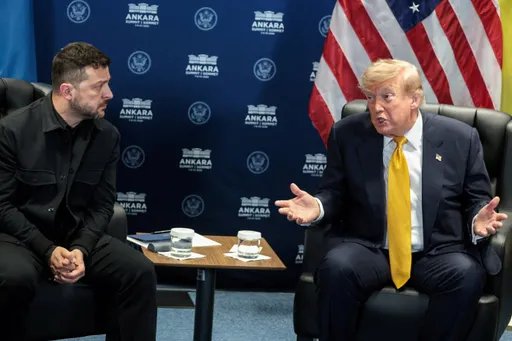
Not long ago, US President Donald Trump told Zelenskyy in the Oval Office that Ukraine did not “have the cards,” in a moment widely seen as humiliating for Kiev.
The situation now looks different. The US, which halted military and financial assistance to Ukraine under Trump, asked Kiev for support in protecting US bases in the Gulf against Iranian retaliatory strikes.
The war is no longer only about territory. It is increasingly about technological adaptation, economic endurance and the ability to impose costs far from the front line.
If Ukraine can sustain attacks on Russia’s energy infrastructure at this scale, the pressure on Moscow will grow.
Public frustration may increase, economic pain will deepen, and Russia could eventually be forced to reconsider some of the gains it has paid heavily for on the battlefield. And this might give some real momentum to the negotiations between the sides which stalled for a while.