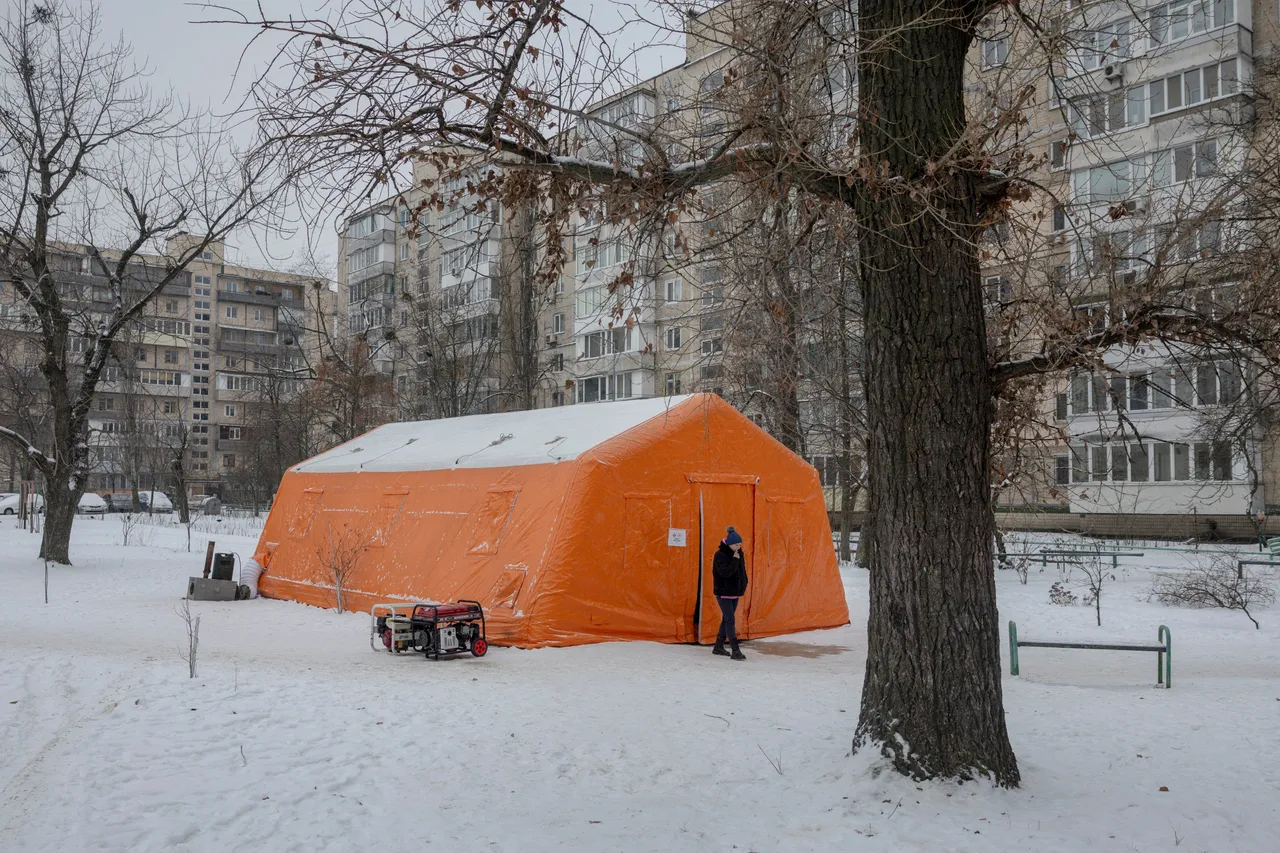
Children across Ukraine are facing an increasingly dire winter as intensified attacks on energy and water infrastructure leave families without heating, electricity and basic services, the country representative of UNICEF said on Friday.
Munir Mammadzade told reporters in Geneva that the situation for children had reached a critical point as sub-zero temperatures gripped the country. "Children in Ukraine are under fire and freezing right now and enduring the hardest winter of war," he said, describing conditions as "a crisis within a crisis."
With temperatures in Kiev dropping to minus 15°C and expected to fall further, Mammadzade said millions of families are again enduring days without heating, electricity or water. "So children and families are in constant survival mode because of that," he said, warning that life in high-rise buildings has become about "staying safe from incessant attacks and surviving extreme temperatures."
He said winter and nationwide strikes on energy infrastructure mean "there is no place for children in Ukraine where they can be safe," shifting humanitarian concern from frontline areas to urban centres, including the capital.
UNICEF, he said, is supporting spaces set up by Ukrainian emergency services outside residential areas where families can warm up, access hot food, charge devices and receive psychosocial support.
Mammadzade warned that "darkness and freezing temperatures intensify fear and stress" and could worsen both physical and mental health.
"Hypothermia is one of the concerns we have for the newborns right now," he said, stressing that "it is quickly becoming a life-threatening element in terms of absence of warmth and medical care."
According to the country representative, there are no reported cases of child deaths due to cold at this stage.
Education has also been further disrupted, he said, as schools move online amid power outages that leave children without connectivity. UNICEF is assisting 1.65 million people, including 470,000 children, through its winter response, providing generators, cash assistance and support to schools.
Nearly four years into the war launched by Russia, Mammadzade said childhood in Ukraine remains overshadowed by survival, noting an 11 percent rise in verified child casualties in 2025, according to the UN Human Rights Monitoring Mission in Ukraine.

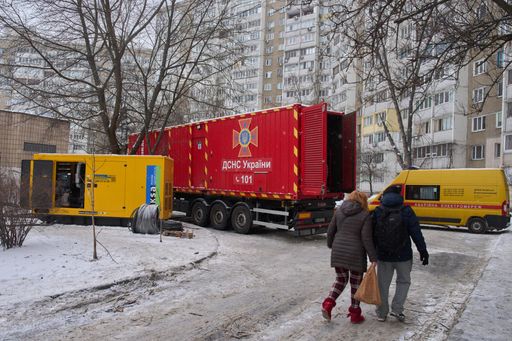
Funding shortfalls leave families without means to cope
Jaime Wah, deputy head of delegation for the International Federation of Red Cross and Red Crescent Societies (IFRC) in Ukraine, told reporters on Friday that in Kiev alone, for a week now, around 200,000 people, including herself, are "currently without heating and electricity."
Noting that a state of emergency in the energy sector was declared as temperatures dropped to -18°C at night, she said: "Without heat, people are at high risk for hypothermia, frostbite and respiratory illnesses."
According to Wah, unpredictable power cuts are disrupting water supply, healthcare service, public transportation, even including communication networks and isolating people who might not be able to call for help or reach their loved ones, while older people, children, people with disabilities and those with chronic illnesses "face the greatest risk."
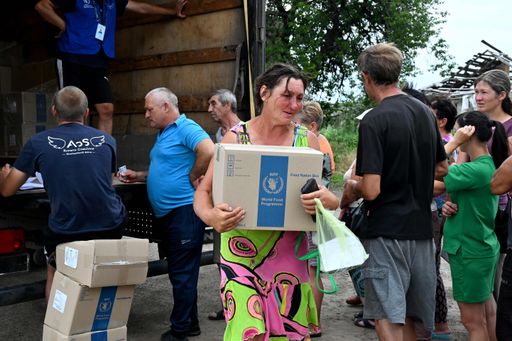
She warned that many families were reaching a breaking point.
"Many families we speak to have almost no capacity left to cope. Our research with thousands of households across Ukraine shows that seven out of 10 people have no more savings," she said as rising prices for food, fuel and medicine forcing many families "to choose between heating their homes buying food or accessing essential health care."
"These are choices that no one should make," she added.
Wah said international funding is failing to keep pace with growing needs, warning that the IFRC appeal for Ukraine is "only 13 percent covered for 2026 and 2027," leaving a funding gap of 262 million Swiss francs (over $325 million). As a result, emergency stockpiles are at "their lowest levels," including shortages of generators, battery backup systems and winterisation supplies.
"Millions of people will be at risk without life-saving assistance during the coldest months of the year," she said.