 Murat Sofuoglu
Iran’s internal tensions between hardliners and reformists have long shaped the country’s politics, with power shifting between the two camps since the 1990s.
Those tensions have come under renewed scrutiny following the US-Israeli strikes on Iran and the subsequent debate over diplomacy with Washington.
Supreme Leader Ali Khamenei had long been seen as a balancing figure between rival political factions until his death at the start of the US-Israeli war against Iran. Since then, his successor, Mojtaba Khamenei, has kept a low public profile, including during his father's week-long funeral ceremonies.
In the absence of a visible supreme leader, younger cadres within the Islamic Revolutionary Guard Corps (IRGC), who are seen as more closely aligned with the hardline political agenda than reformist ideas, have assumed a more prominent role in shaping Iran's political and military decision-making, according to experts.
“The arbitration of Khamenei, who used to let factions compete while monopolising the final call on a few red lines, is gone. Mojtaba's legitimacy is thin and derivative, and this inverts the founding functioning of the Islamic Republic where the rahbar (supreme leader) used to discipline the IRGC. But he now depends on it,” Theo Nencini, an expert on Iranian politics, tells TRT World.
The IRGC's command structure has also become more decentralised to ensure the system can continue functioning even if senior military, political or religious leaders are killed.
Although Iran lost several top officials during the conflict, experts say the country's political and military institutions have continued to operate through delegated authority across different sectors.
‘State of perpetual confrontation’
Iran has many ethnic groups and a vast geography that roughly corresponds to Western Europe, stretching from the Caspian Sea to the Gulf.
This complexity makes it harder to understand how power is distributed across the country, who is truly running Tehran, and how much influence hawks have, experts including Nencini say.
“The central issue in Iran is that at present there are several centres of power acting without real coordination, and no rahbar [leader] to arbitrate between them,” Nencini tells TRT World, referring to decentralised management in Tehran.
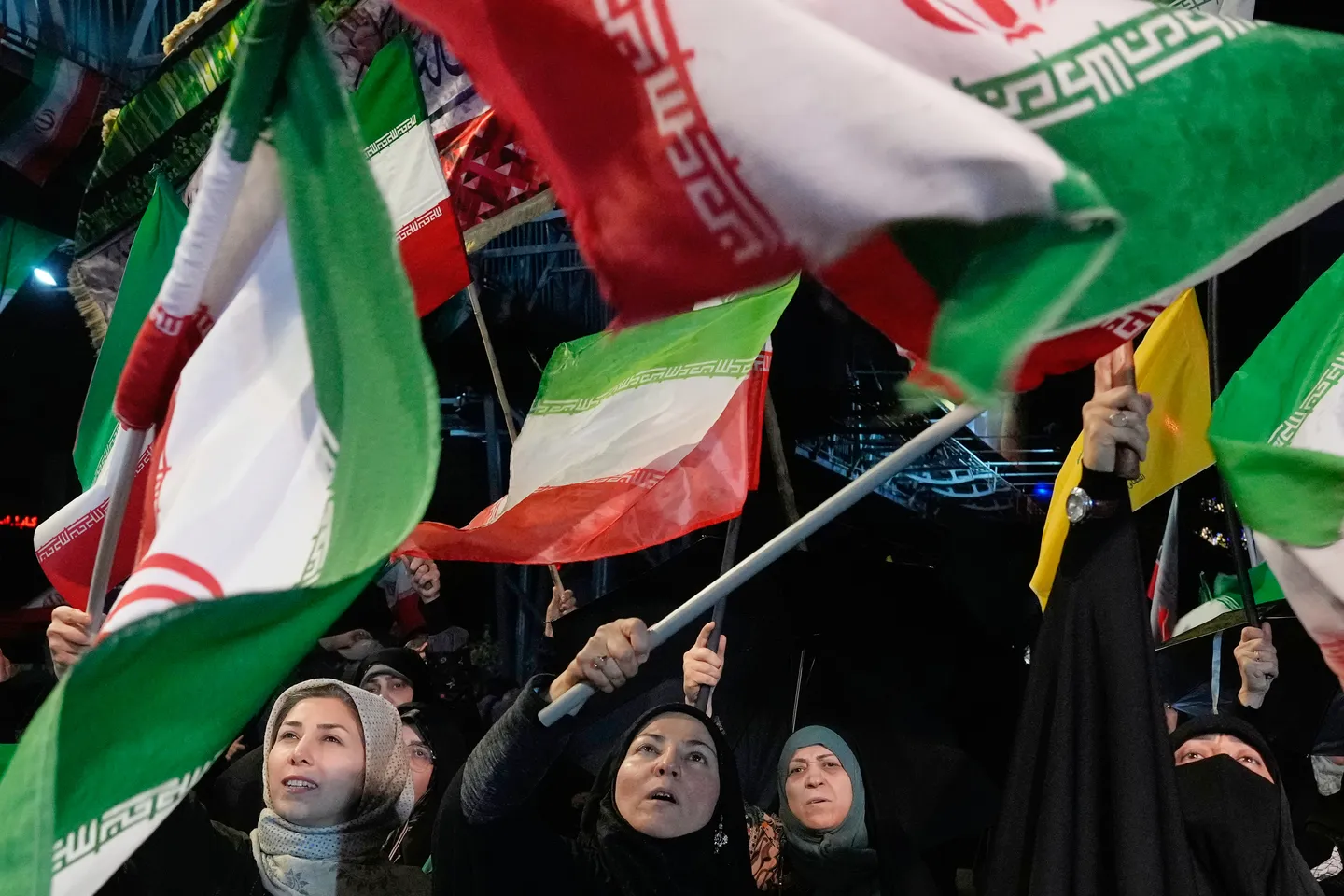
But interestingly, the Iranian system continues to function largely because of two factors: the support it receives from ordinary people, who may prioritise the threat of foreign invasion over other social and economic concerns, and the continued investment of Iranian elites in ensuring the regime’s survival, according to Nencini.
Within this framework, hawks who oppose any normalisation with the US and seek revenge for Khamenei’s death “still have a sort of veto power, given the political structure” of the current system, Nencini says.
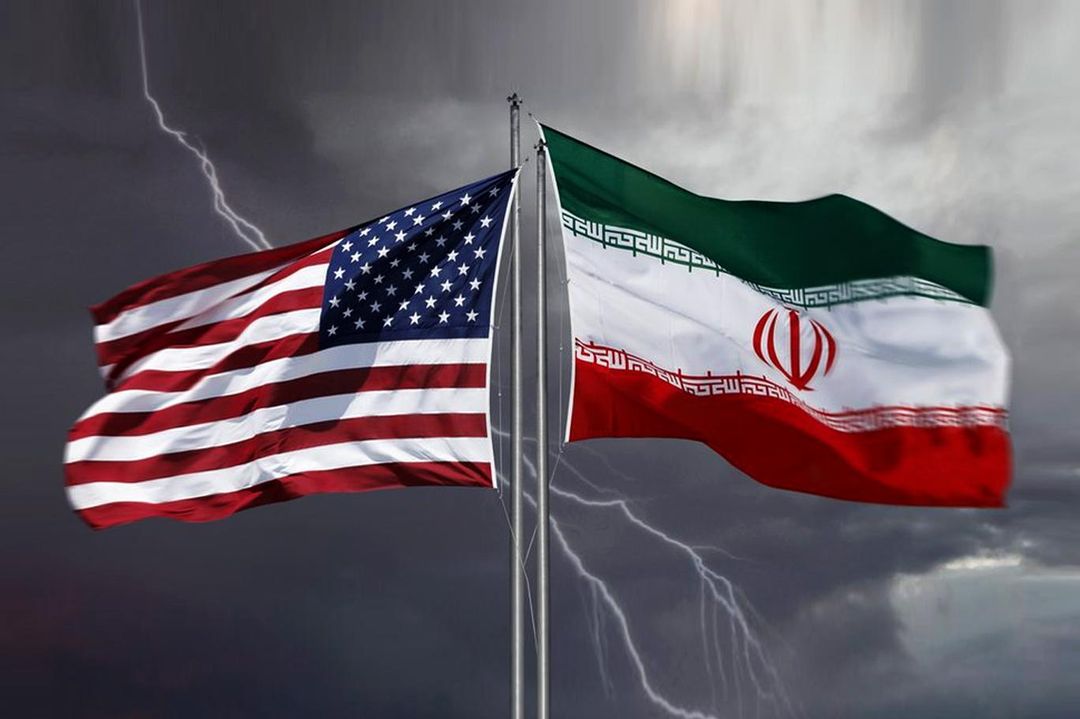
On the other hand, President Masoud Pezeshkian and Foreign Minister Abbas Araghchi, who are seen as moderates, have faced harsh criticism from conservative factions over their role in signing the memorandum of understanding with the US.
During Khamenei’s funeral procession, hardliner anger toward Pezeshkian became publicly visible as the president faced verbal attacks.
Araghchi faced an even stronger backlash, with some mourners throwing rocks at the foreign minister as he attended the procession. He was eventually escorted away from the funeral.
Mohammad Khatami and Hassan Rouhani, the two former reformist presidents, were also absent from the funeral procession, which led to some speculation on why they did not show up.
Funeral tensions and growing opposition to the Iran-US MoU show that “the prospect of genuine normalisation is not necessarily desirable for everyone in Iran,” says Nencini, referring to the hardliner agenda.
“Some need to keep the state in a state of perpetual confrontation to maintain their hold on power.”
Other analysts share Nencini’s assessment.
“There is some evidence that hardliner factions have framed retaliation for Khamenei's death as both a strategic objective and a domestic rallying point,” says Luciano Zaccara, a Doha-based political analyst on Iran.
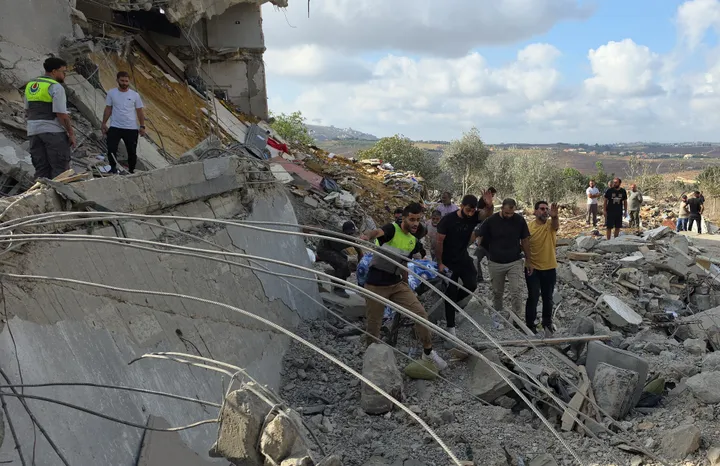
While the MoU has not completely collapsed, Zaccara warns that the conflict has entered “its most dangerous phase” since the US-Israel duo launched attacks on Iran in late February.
The MoU is no longer functioning as an effective deconfliction mechanism, but both sides are simultaneously seeking to preserve a diplomatic channel, he adds.
“The result is a ‘no war, no peace’ environment with a very high risk of miscalculation.”
Hardliners and Iranian policy
Some hardliner statements, including one that accused pro-deal Iranian leaders of plotting “a coup” against Iran’s political system, suggest that Tehran may need a prolonged confrontation with the US to restore its deterrence and national prestige.
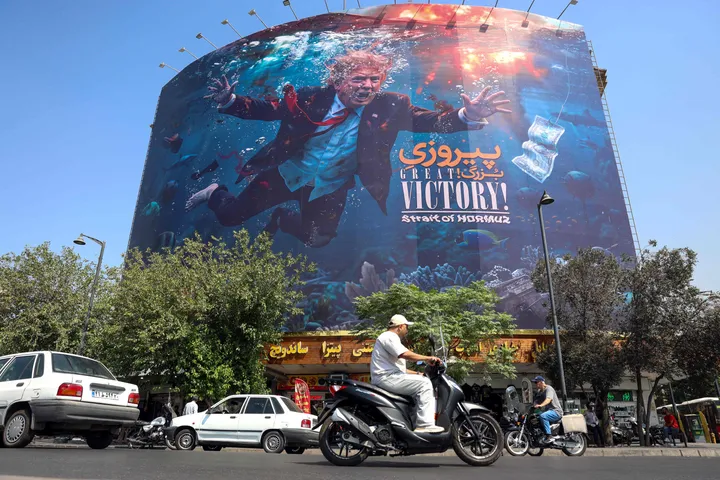

Among others, Iranian parliamentarians Mahmoud Nabavian and Kamran Ghazanfari have publicly accused the current political leadership of launching a coup to silence anti-deal factions.
These figures are largely aligned with Jebhe-ye Paydari (Endurance Front), a leading conservative group that consistently advocates resistance to Western pressure and remains deeply sceptical of negotiations with Washington.
“Although the Paydari Front is not formally part of the IRGC, it has long been regarded as politically and ideologically aligned with many elements of the revolutionary Guards,” Tural Akhundov, a political analyst at Baku-based Crescent Research Center, tells TRT World.
“The two share core positions, including opposition to rapprochement with the US and support for Iran's regional ‘Axis of Resistance’ emphasising military deterrence and revolutionary principles,” Akhundov says.
Despite the growing influence of hardliners such as Paydari Front, Iran’s increasingly complex political structure cannot allow one faction to run the Shia-majority country, according to experts.
“It is difficult to verify the extent to which these views alone shape official decision-making, as Iran's political system is complex and policy is influenced by multiple institutions, including the Supreme Leader, the Supreme National Security Council, the presidency, parliament, and the IRGC,” Akhundov says.
“It is also important to distinguish between political rhetoric and actual policy. While calls for retaliation or a tougher stance may be voiced domestically, Iran's leadership has historically sought to calibrate its responses to avoid an uncontrolled military confrontation with the United States. Strategic restraint has often accompanied strong public messaging.”
Zaccara also believes that hardliners are unlikely to seek “an unlimited war”, as many of them “appear to favour calibrated escalation that preserves pressure on Washington without provoking an uncontrollable conflict”.
He also refers to Iran’s complex political structure, where one hardliner faction cannot dictate policy. “The debate is about how to implement diplomacy rather than whether diplomacy should exist at all,” he says.
“A durable agreement will require compromises from both governments, not simply the weakening of Iran's hardline camp.”
But other analysts point out that Khamenei’s violent death, in the context of foreign attacks on Iran’s sovereignty, has led to the emergence of a new era in which Tehran’s old strategic patience doctrine, based on limited retaliations, has been replaced by a more aggressive approach led by younger IRGC cadres advocating tit-for-tat attacks against its enemies.
“In my sense the question is not whether hardliners chose to escalate, but whether anyone in the Iranian system still holds the authority not to,” says Nencini.
Ali Akbar Dareini, a Tehran-based Iranian political analyst, voices a similar view.
“The possibility of a real peace deal between Iran and the current US administration is almost nil,” Dareini tells TRT World, referring to the American assassination of Khamenei and attacks against school kids in Minab, which he describes as war crimes.
“The MoU is part of the war.”
Internal debate
While there are too many factions in the Iranian political system, which largely has its roots in the Shia school of thought people belong to, it ultimately comes down to the character of a possible US-Iran deal that could bring political stability and economic prosperity to Tehran.
Many Iranians do not want a repeat of the JCPOA, the 2015 nuclear deal between Tehran and the Obama administration, according to Iranian journalist Fatemeh Karimkhan.
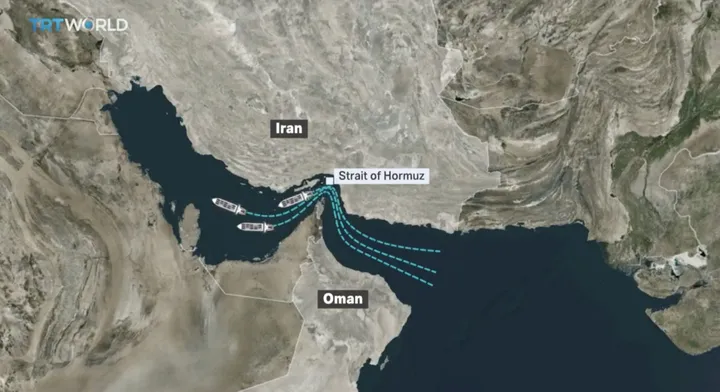
Like many experts, she believes that differing interpretations of the MoU's Hormuz clause have led to current US-Iran tensions.
The US thought that Iran should open the Hormuz Strait in exchange for economic benefits it would receive, while Tehran felt it would give up its most effective tool without receiving any tangible gains from the West, she says.
“This is exactly the classic asymmetry that was also seen in the JCPOA experience: a quick technical step from Tehran in exchange for an ambiguous and fragile economic benefit from Washington,” Karimkhan tells TRT World.
“Plus, the possibility of filling the arsenals of the US and Israel through the ceasefire.”
According to experts, the Iranian debate centres on whether the country should be satisfied with US political concessions codified in the MoU, wait for tangible results in the future, or demand immediate benefits before agreeing to open the Strait of Hormuz.
Akhunov echoes Karimkhan’s views.
While some Iranian political actors remain sceptical of negotiations, arguing that previous diplomatic efforts, such as the JCPOA, did not deliver the expected economic or strategic benefits, others see diplomacy as a necessary tool for reducing tensions and easing international pressure, says Akhunov.
“It would be too simplistic to say that Iran's hardliners alone are blocking a peace deal with the US. The obstacles are much broader and exist on both sides. Iran’s conservative factions remain sceptical of negotiations because they argue that the previous 2015 nuclear deal did not deliver the expected economic benefits after the US withdrew from the agreement,” he tells TRT World.
“This has reinforced distrust toward Washington.”