On Sunday, Bangladesh’s Supreme Court rolled back a government quota system set up to reserve 30 percent of public-sector jobs for family members of the freedom fighters of Bangladesh's Liberation War.
Established in 1972, the initiative was suspended in 2018, following protests, but was reinstated this June by a High Court. Since then, the country has been engulfed in deadly clashes between police and protestors, with 180 people killed and over 2,500 arrested, according to AFP.
One of those killed in the violence was a young English language student named Abu Sayeed, reported The Guardian newspaper. The first of his family to make it to university, his brother Hossain remembers him as a “martyr” telling the newspaper: “My brother died for demanding fair rights for every student”.
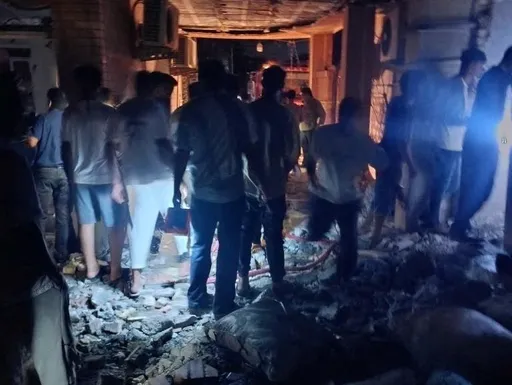
The clashes led the government to impose a nationwide curfew and a communications blackout, causing cities across the country to come to a standstill.
The demonstrations were started by thousands of university students, angered by the lack of employment opportunities available to them, demanding an end to the quota system.
According to Reuters, the decision to reestablish the quota “sparked anger among students grappling with high youth unemployment, as nearly 32 million young people are out of work or education in a population of 170 million”.
Photojournalist Shahidul Alam described the scenes from across the country in a recent opinion piece for Al Jazeera. “Armoured personnel carriers prowl the streets. Orders to shoot on sight have not quelled the anger and people are still coming onto the streets despite the curfew. There is the other side of the story. Reports of policemen being lynched and offices being set on fire are some of the violent responses to the government-led brutality,” he wrote.
Now the country’s top court has ruled that the 30 percent quota has to be reduced to five per cent; with 93 percent of jobs being assigned on merit; and two percent reserved for minorities and disabled people.
“I am hoping normalcy will return after today’s ruling and people with ulterior motives will stop instigating people,” the Attorney General of Bangladesh AM Amin Uddin told Reuters.




For her part, Prime Minister Sheikh Hasina “condemned the loss of lives and called for patience ahead of the Supreme Court's verdict,” Reuters reported.
Economic miracle
In recent years, Bangladesh has been hailed as a ‘South Asian economic miracle,’ with a per capita GDP that now exceeds India’s. But the economy, “once among the world's fastest-growing, has stagnated, inflation hovers around 10 percent and dollar reserves are shrinking,” reported Reuters.
This has led to fear and insecurity among Bangladesh’s largely younger, working-age population. According to the International Labour Organization, around 67 percent of Bangladeshis are aged between 15 and 64.
What began as a student protest movement has turned into a wider expression of anger against the country’s economic woes, with other groups joining in to call out inflation and high food prices.
Poverty has declined in Bangladesh, but many feel frustrated that “economic growth has been uneven, and there is huge inequality and corruption,” Pierre Prakash from the International Crisis Group told the New York Times. “The quota protest is just the manifestation of a widespread malaise that’s not just about quotas but also economic and political.”