 Nasir Qadri
On the morning of October 9, 2026, the Norwegian Nobel Committee in Oslo awarded its Peace Prize to the South African jurist who had led the UN commission that found Israel responsible for genocide in Gaza.
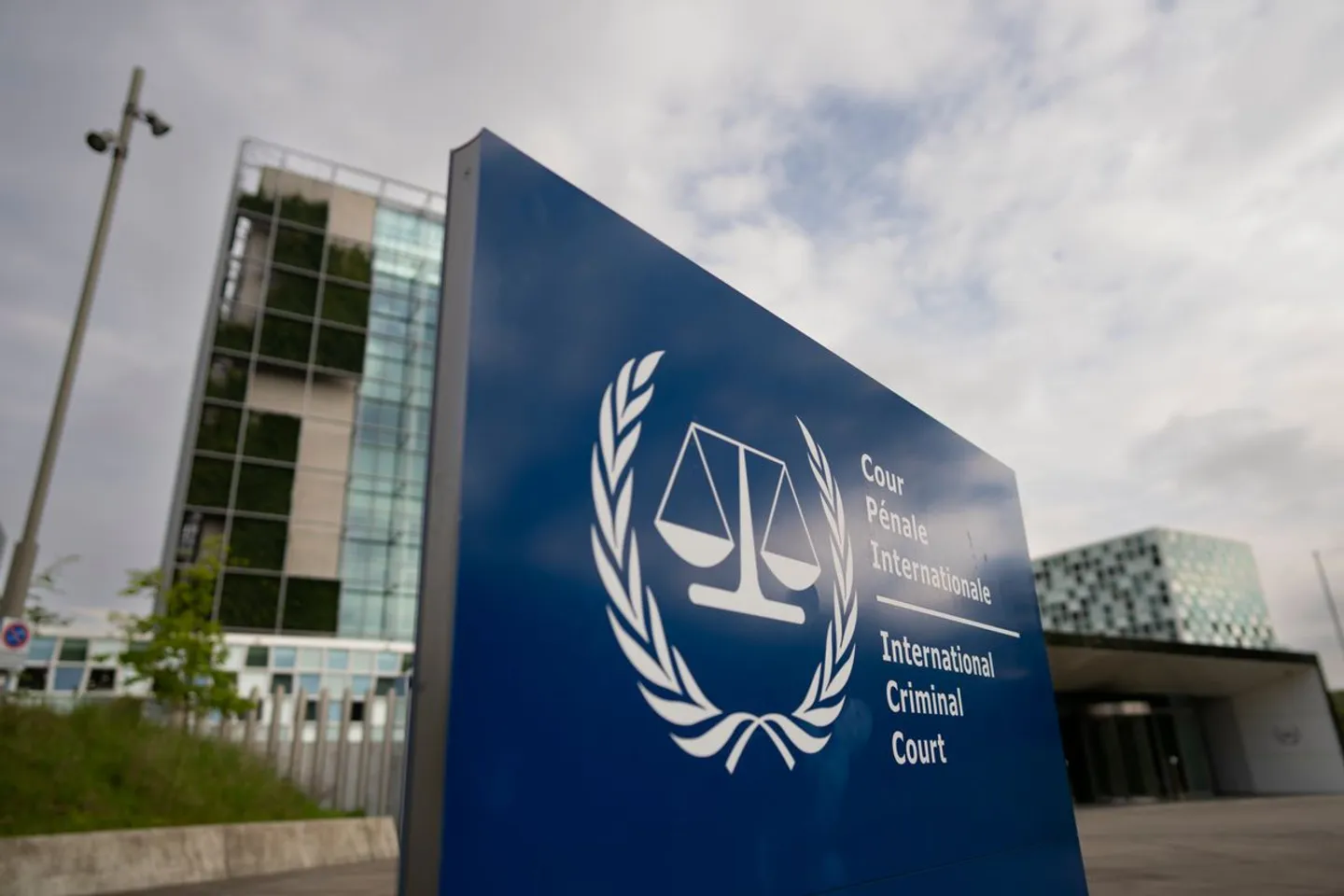
By the afternoon, the United States Secretary of State announced sanctions against the International Criminal Court as an institution. Not against individual officials, as Washington had done in 2020 and again in February 2025, but against the court itself, which the administration had declared rogue.
Three years of South African legal filings, Palestinian evidentiary submissions, UN commission hearings, and General Assembly resolutions produced the genocide finding Pillay announced, and the Pre-Trial Chamber warrants Rubio moved to punish.
Between the law’s formal reach and the impunity its founders assumed it would preserve, the sanctions were the closing instrument.
What October 9 made visible is not a crisis of international law but its constitutive condition: that the universality claimed by the institutions built to deliver accountability was always contingent on those institutions never seriously threatening the states that built them.
The distance between those two acts measures how far the Global South’s legal mobilisation pushed. The institutions the West built to represent universal justice after colonialism were never designed to deliver it against themselves.
What pushed the court past its limit
South Africa’s December 2023 genocide filing at the ICJ was the deployment of the system’s own instruments against a situation those instruments had never been activated on simultaneously.
The Genocide Convention’s Article IX compromissory clause went before the ICJ, the Rome Statute’s complementarity framework before the ICC, and the General Assembly’s Uniting for Peace mechanism across both.
Palestinian legal documentation had built the evidentiary record for decades. Invoking Article IX of the Genocide Convention before the ICJ required a state party with full standing to file, and Palestine did not hold that standing.
What South Africa provided was the jurisdictional key the evidence had been waiting for.
Four separate mandates, each operating under its own evidentiary standard and jurisdictional basis, reached the same conclusion.
The ICJ’s January 2024 provisional measures found a plausible right to protection from genocidal acts. Francesca Albanese’s March 2024 Special Rapporteur report found reasonable grounds that the genocide threshold had been met.
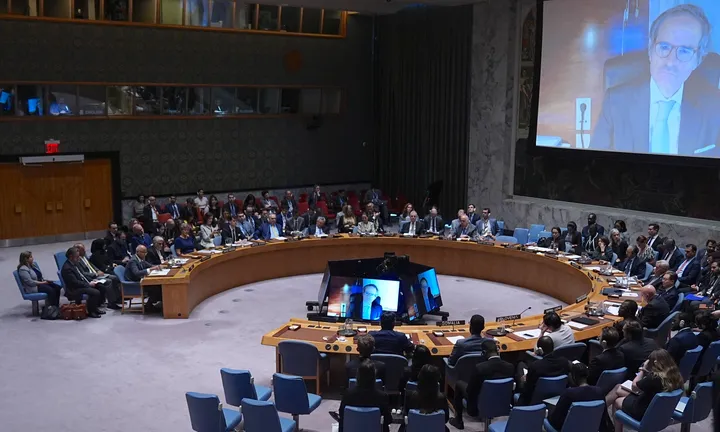
The Independent International Commission of Inquiry chaired by Pillay attributed responsibility for specific genocidal acts to Israel’s senior leadership and found that its senior leadership had incited genocide within the meaning of Article III(c) of the Genocide Convention.
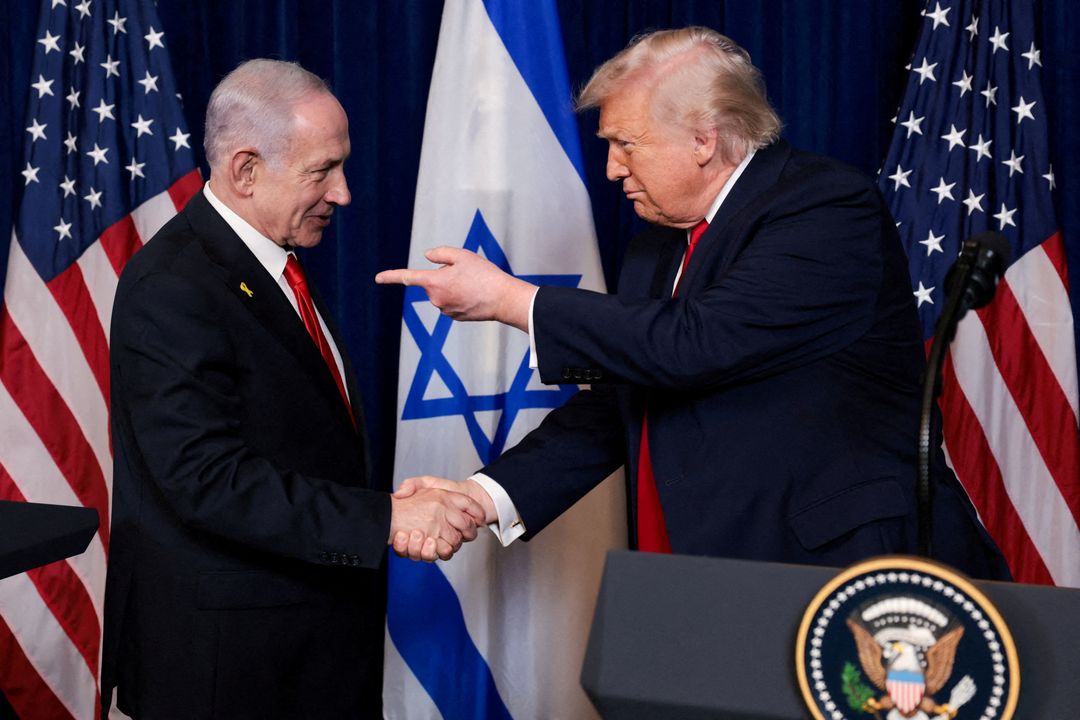
The ICC Pre-Trial Chamber issued warrants for war crimes and crimes against humanity against Netanyahu and Gallant in November 2024.
Its founding states had not designed the institution to produce that convergence for a Western-allied government. Once it emerged, they had no way to contain it without acting against the institution itself.
Pillay had sat on Trial Chamber I of the ICTR that delivered the Akayesu judgment in 1998, the first international conviction to establish rape as a constituent act of genocide.
The judge who helped build that jurisprudence from the bench was now the author of the most precise genocide determination the Gaza proceedings had produced.
Oslo honoured that tradition. Washington sanctioned the institution that applied it on the same day.
The threshold that was never named.
When the ICC Pre-Trial Chamber issued arrest warrants for the political and military leadership of an occupying power, nothing in the Rome Statute prohibited it from doing so.
What the warrants exposed was the distance between the law’s formal reach and the prosecutorial limit its founding states had assumed the court would never approach, a limit held in place by the interlocking operation of Article 98 bilateral non-surrender agreements, Security Council deferral rights under Article 16, and the financial leverage of states whose contributions fund over forty per cent of the court’s budget.
For two decades, that structure held without requiring activation, and no confirmed prosecution had reached the political or military leadership of a Western-allied government.
The African Union formally threatened mass withdrawal in 2017, accusing the court of concentrating its coercive reach on African leaders while investigations elsewhere stopped well short of confirmed charges against officials whose states Washington considered partners.
The founding states declined to engage with that challenge, because the Pre-Trial Chamber’s warrants had not yet required them to.
South Africa’s filing activated proceedings the existing architecture had no mechanism to stop. Article 98 bilateral agreements bound third states not to surrender US nationals to the ICC.



They had no reach over a Genocide Convention filing before the ICJ, which operates on an entirely separate jurisdictional basis.
Bilateral non-surrender agreements did not apply to a Genocide Convention filing before the ICJ.
The Article 16 deferral mechanism required a Security Council resolution that Russia and China would veto, and the kind of financial leverage Washington could deploy operates over years, not the months the proceedings took.
Prosecutorial reach had run in one direction for two decades not because the founding instruments required it to, but because the states that built those instruments had no reason to enforce the limit before anyone crossed it.
Built to protect its own
At Rome in 1998, the US voted against the Statute it had spent years shaping, demanding Security Council control over referrals and prosecutions, an end to automatic jurisdiction, and protection for nationals of non-party states.
The Like-Minded group, led by Canada and Australia, defeated all three demands. Washington left with a text it could not control and set about building a parallel architecture to constrain it from outside.
Marco Rubio’s declaration that the US neither needs nor wants the International Criminal Court is that legal framework, operating as its drafters intended.
Washington withdrew its signature in May 2002 after failing at Rome to secure the jurisdictional carve-outs it required, and spent the next two decades resisting: contesting the Afghanistan investigation, sanctioning the prosecutor and other officials in 2020, and imposing further measures against court personnel in February 2025.
All of Washington’s prior interventions had targeted individuals. Sanctioning the court itself was something it had never done.
Through negotiation, the United States shaped the Rome Statute into three layers.
By coercing over 100 states into bilateral non-surrender agreements under Article 98, Washington constrained cooperation obligations for its nationals. The Security Council deferral mechanism under Article 16, a multilaterally negotiated provision Washington pressed for, reserved the power to seek a twelve-month suspension of any specific investigation.
The American Service-Members Protection Act of 2002 authorised the President to use military force to recover any American held by the court.
The October 9 executive order prohibited American technology providers from servicing the institution, making the ICC’s dependence on United States commercial infrastructure an instrument of the sanctions themselves.
Washington tested that deferral mechanism early. Security Council Resolution 1422 (2002), extracted under threat of vetoing UN peacekeeping mandates, sought a blanket exemption for all non-party nationals involved in UN operations, not a deferral of any existing case, but a generic preventive suspension the article’s text does not authorise.
States and scholars condemned it as exceeding Article 16’s case-specific scope, and the resolution was not renewed after 2003.
The instrument Washington had pressed for proved legally indefensible when it was activated.
In 2011, Washington voted in the Security Council to refer Muammar Gaddafi to the ICC under Article 13(b), placing the leadership of a non-party state within the court’s jurisdiction while remaining outside it.
The same Security Council instrument it had pressed for as a defensive deferral mechanism it deployed offensively against a government it wished to remove.
The same text included both offensive referral and defensive deferral, and Washington used whichever served its interests at the time.
That duality held for two decades because the Pre-Trial Chamber’s warrants had never reached a government Washington was committed to protecting.
Faced with findings it could not contain through any of the instruments it had built for that purpose, the United States sanctioned the court itself.
The test the mobilisation now faces is whether the 124 states whose filings, mandates, and evidentiary work drove those findings will bear the cost of defending the institution under that pressure.
When Robert Jackson drafted the Nuremberg Charter in 1945, he wrote that no official position shields an individual from criminal responsibility for crimes against humanity, then confined the Charter’s jurisdiction to the defeated, leaving the victors' conduct outside the tribunal he was constructing as the foundation of a universal legal order.
That selective foundation has now been pushed, through the sustained legal mobilisation of non-Western sovereign states using the system’s own instruments, past the prosecutorial limit its founders assumed would never be crossed.
Sanctioning the institution that crossed it was the system working exactly as designed.