 Kazim Alam
The political divide in a deeply polarised American society is becoming increasingly blurred as the country heads to crucial midterm elections that could impact the balance of power in Congress.
Progressive lawmakers with positions typically associated with the hard-left end of the political spectrum now find themselves in agreement with far-right commentators on a range of issues that have otherwise divided US society for decades.
Be it Israel’s genocidal war on Gaza, unconditional military aid to Tel Aviv, yet another US war in the Middle East, the unrestrained power of AI platforms, or the accountability of those involved in Jeffrey Epstein’s paedophilia ring, the two opposite sides of the US political spectrum have taken increasingly identical positions.
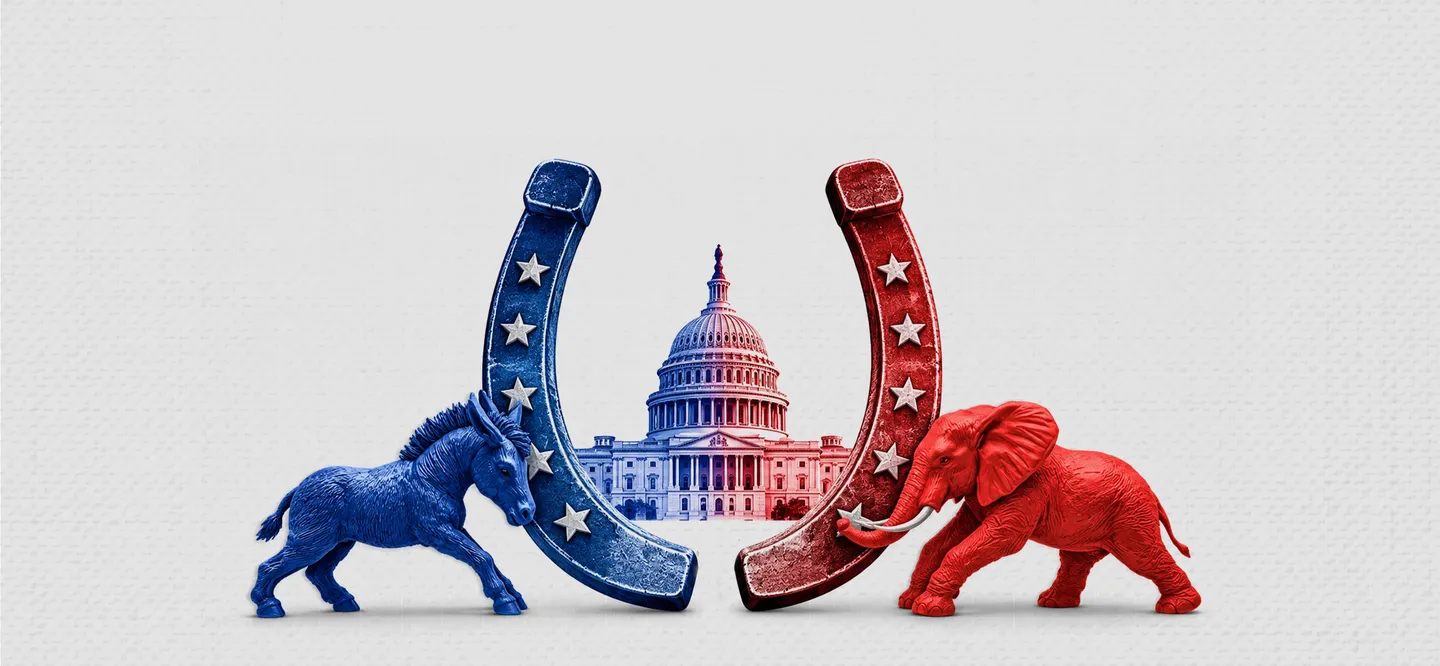
The convergence of the ideological opposites has a textbook name: the horseshoe alliance.
It’s a theory derived from the U-shaped horseshoe – where the hard-left and the far-right bend toward each other and, on some key issues, stand closer to one another, far away from the political centre.
The so-called horseshoe alliance in the US is most visible on the issue of Israel’s relentless war in Gaza.
A Pew poll found earlier this year that six in every 10 Americans held an unfavourable view of Israel, including large majorities of Democrats and a rising share of Republicans under the age of 50.
Similarly, a Gallup poll showed that more Americans now sympathised with Palestinians than with Israelis – a first since the polling firm began asking this question in 2001.
Josef Gregory Mahoney, a professor of politics and international relations at East China Normal University in Shanghai, explains the shift through the prism of religion.
“What leads an American Catholic, an American Protestant, an American Jew, or an agnostic or atheist to support or oppose genocide in Gaza can be influenced by personal perspectives on religion,” he tells TRT World.
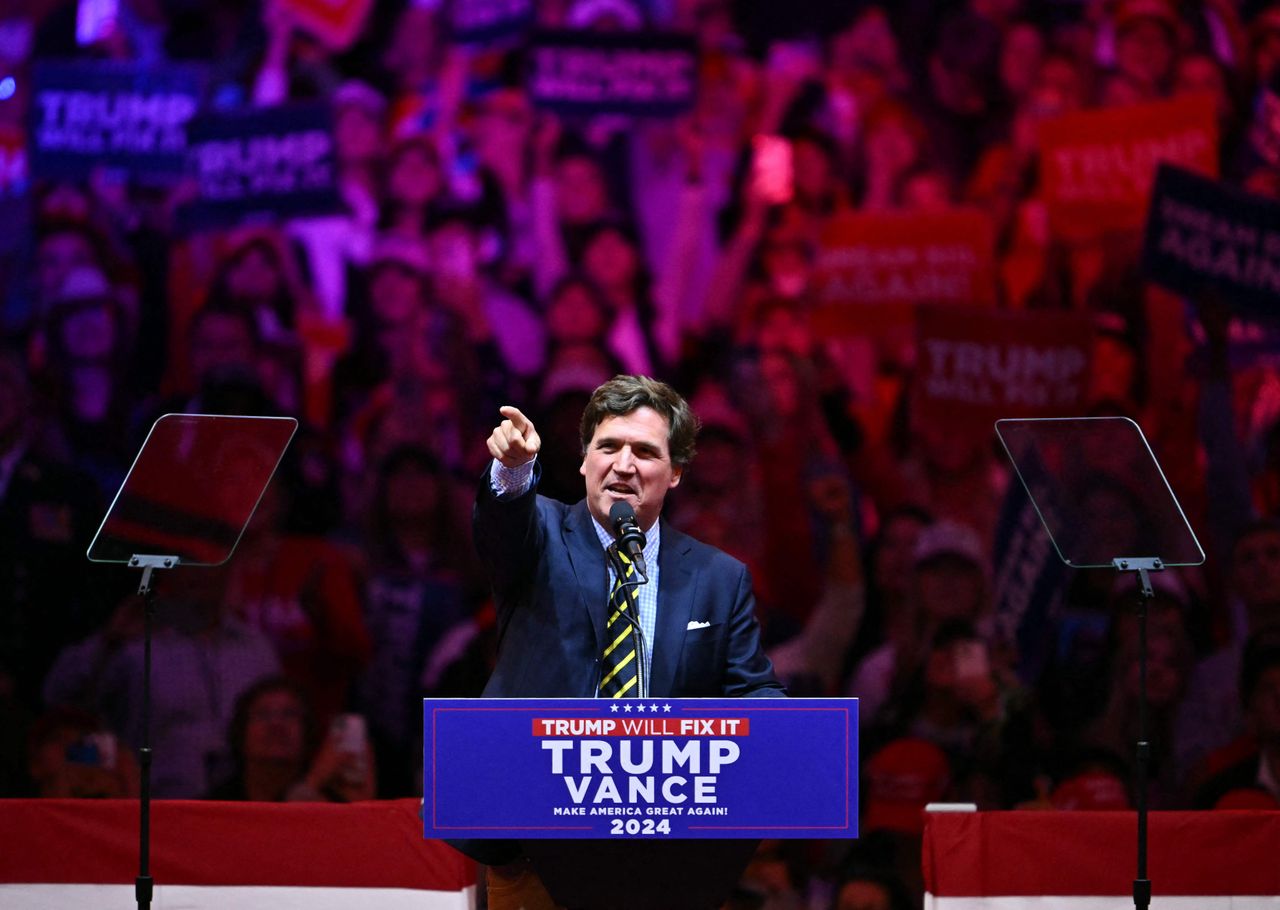
He says that political commentator Tucker Carlson – who has gained a massive following in the Global South because of his highly critical view of Israel and its expansionist policies – is an Episcopalian Christian who “publicly lauds Catholicism”.
“Both churches, distinct from white evangelicals, have expressed reservations about what Israel has done in Gaza,” he says.
Some American Jews object “either from similar moral concerns” or because they worry that Zionist excesses undermine Israel’s long-term security, he says.
“Most Americans are not that different from each other. It’s often the case that identity politics plays up those differences in extreme ways,” he says.
Douglas Rossinow, a history professor at Metro State University in Minnesota, says the political shift is generational, but other factors have also contributed to it.
Older members of the Democratic Party have indeed changed their view of Israel, he tells TRT World.
“For the Democrats, it is the party elites versus the party supporters on a popular level where Israel/Palestine is concerned,” he says.
That shift in public sentiment has finally reached Congress. In July, the House of Representatives rejected an amendment by Congressman Thomas Massie of Kentucky to end $3.3 billion in aid to Israel.
The move failed, but as many as 104 Democrats voted for the cut – a nearly three-fold increase from only 37 Democrats who backed a similar effort only two years ago.
According to Mahoney, the political overlap matters because it punctures the old claim that criticism of Israel’s war is a “fringe” position.
But he warns that the shift should not be construed as a new policy altogether.
“MAGA as a governing project is not an anti-Zionist project,” he says, while referring to the make-America-great-again movement that helped bring the Republican Party to power.
“Parts of it will still arm Israel… Other parts will say America First and mean: stop writing the cheques,” he says.
“Palestine should treat the second group as a tactical opening, not as a comrade,” he adds.
Rossinow says the future of US-Israel relations remains uncertain despite the emerging horseshoe alliance.
More important than any left-right partnership is the “broader alienation” of the general public from Israel, he notes.
“The Republicans have not faced as serious a backlash on this issue from primary voters yet, despite the prominence of Tucker (Carlson) and (Steve) Bannon,” he says, while referring to the two far-right pundits, who have railed against Israeli premier Benjamin Netanyahu for influencing US foreign policy.
Iran war: A betrayal of America First?
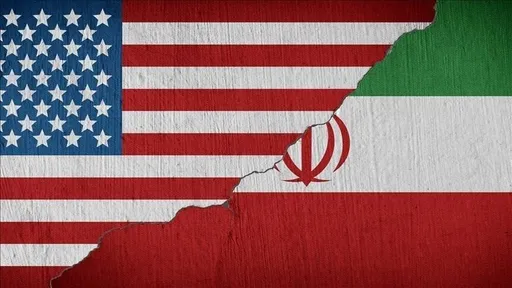
The Iran war is another flashpoint where the far-right and hard-left seem to be converging.
Isolationist voices on the Republican right have called the war a betrayal of “America First” because they believe Washington acted solely to protect Israeli interests.
On the left, anti-war progressives have opposed it as another imperial project meant to reorganise countries thousands of miles away.
Polls show the war is unpopular with a majority of Americans and especially with younger Republican voters.





But Mahoney warns against confusing this phenomenon with any well-thought-out strategy.
“They share a refusal to open another expensive war, while the domestic order is already straining,” he notes.
The overlapping positions in the two camps can “cancel a march to Tehran in a given month”, but are not enough to lift sanctions or produce a permanent settlement.
Rossinow describes the Iran war as one more source of “bitter disillusionment” among MAGA supporters, who had believed earlier Republican promises of non-intervention in the Middle East.
“The war against Iran was another betrayal,” he says.
United against AI oligarchs
The newest meeting point for the far-right and hard-left in the US is Big Tech.
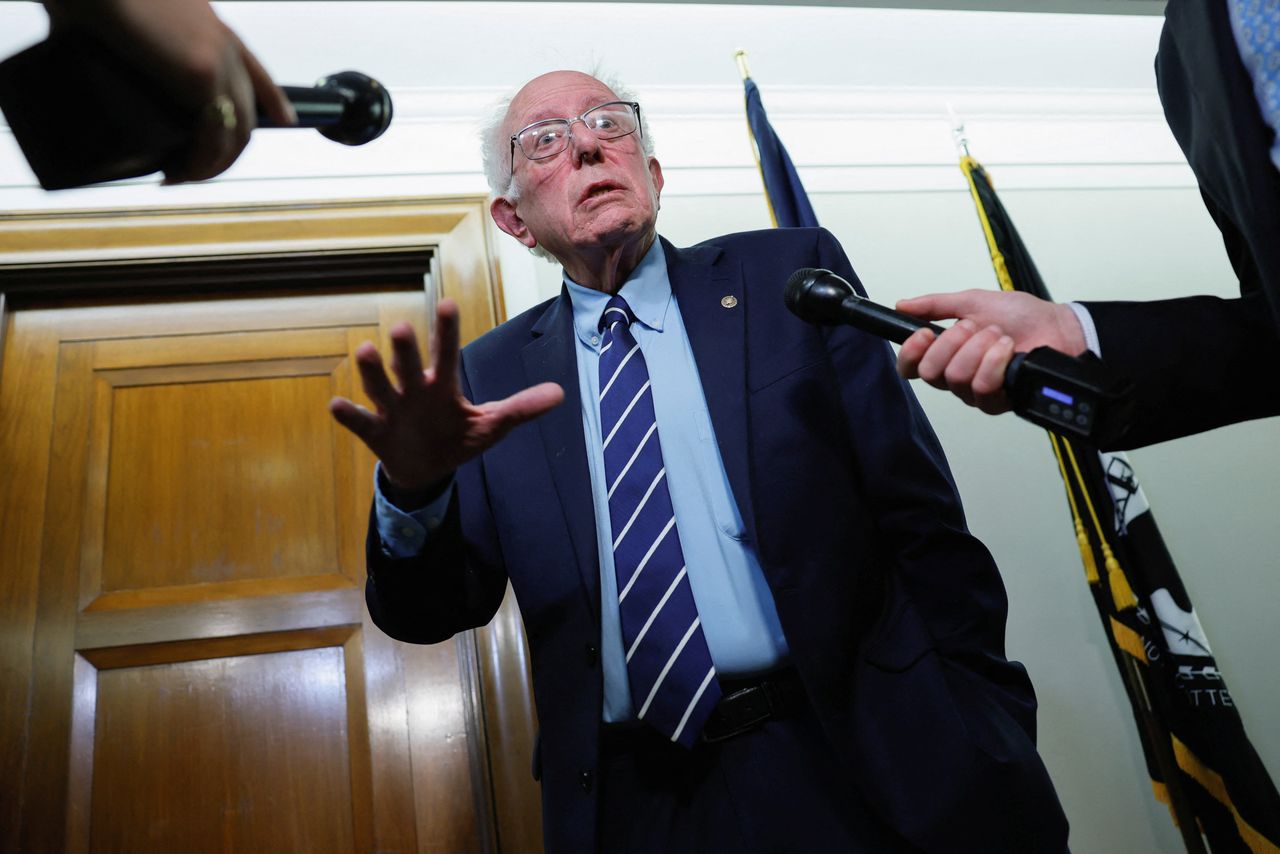
Bannon, the far-right strategist, and Senator Bernie Sanders, a self-declared democratic socialist, spoke back-to-back at the same Washington conference on September 15 to condemn AI “oligarchs” and demand tighter control of the emerging technology.
They did not endorse one another’s programmes, even though each of them criticised the same AI platforms.
For Mahoney, Sanders’s position on AI is framed around “class and accountability” questions.
But Bannon’s scepticism of AI platforms is based on his views about “sovereignty and anti-oligarchy”, Mahoney says.
“They are not building a joint programme. They are hitting the same firms because those firms now sit on labour, information, and the means of political speech,” he says.
More than an electoral tactic?
Is the horseshoe alliance part of a tactical restructuring in the run-up to the mid-term elections?
Mahoney disagrees, saying it is not merely a midterm tactic.
“Tactics are there – they always are – but they are not what produced the overlap,” he says.
“There is no joint party, no shared theory of the state, no common programme for Palestine, Iran, or the dollar,” he notes.
What exists is a “conjunctural convergence” that can be “electorally useful” in 2026.
“It is not an electoral invention,” he says.
Rather, the overlap has imperial and fiscal roots.
“The US is having more difficulty sustaining imperial prerogative and paying off the domestic coalition that used to receive the spoils,” he notes.
When that happens, the opposing wings of the political spectrum discover that they can speak on the same stage “without first becoming friends”.
Rossinow says he is sceptical that the shift will last long.
That’s because the patterns of partisanship for party establishments are deeply ingrained, he says.
“Most of those on the US left do not want a left-right alliance,” he says, adding that cooperation on non-intervention, Epstein files, and even AI remains possible.
“But this will be sporadic,” he adds.
For the Global South, Mahoney’s advice is straightforward: do not mistake a crack in the US consensus for a new policy.
“Some Americans notice the moral obscenity. Some notice the fiscal and military overstretch. A few notice both. That is the horseshoe,” he says.
The horseshoe can constrain the worst impulses of the centre, he notes.
However, the horseshoe alliance cannot end Zionism as a political project, or defend Iran, he insists.
“Those remain tasks for the peoples actually under the bombs and the sanctions,” he says.