An "omega blocking" weather pattern over Europe has trapped heat across the continent, fueling an abnormal heat wave and pushing temperatures to record levels in several countries, according to Prof Mikdat Kadioglu, climate and meteorology expert at Istanbul Technical University.
Several European countries, including France, the United Kingdom, Belgium, the Netherlands, Spain and Italy, have faced record-high temperatures in recent days.
In Italy, an Africa-origin heat wave prompted red alerts in eight cities, while in Spain, soaring temperatures have disrupted daily life, particularly in Granada.
French weather agency Meteo-France warned that temperatures could reach record levels between June 21-23, with 60 departments under orange alert and extreme heat expected to continue into next week.
In Amsterdam, temperatures are forecast to reach tropical levels in the coming days, with meteorologists warning that some areas could exceed 30°C. Belgium’s Royal Meteorological Institute also issued an orange alert due to extreme heat and severe storms.
The UK Met Office said elevated temperatures are expected to persist through Thursday, with some areas forecast to exceed 30°C and the hottest regions potentially reaching 38°C.
Speaking to Anadolu, Kadioglu said a massive ridge of high pressure shaped like the Greek letter Omega has settled over Europe, creating what meteorologists call an “omega block.”
“This pattern consists of a strong warm ridge in the centre, flanked by low-pressure systems on both sides,” he said.
He explained that the system has effectively blocked weather patterns from progressing west to east, trapping heat over Europe, while countries on the eastern side of the system, including Türkiye, remain under cooler and wetter conditions.
Kadioglu stressed that the current heat wave is not a typical summer event.
“There is a clear difference between ordinary summer heat and a heat wave strengthened by atmospheric blocking,” he said.

“In an omega block, a large high-pressure ridge becomes locked over Europe. Air descends beneath the ridge, skies remain clear, and the sun continuously heats the surface. Since weather systems cannot move forward, heat accumulates in the same area for days.”
He noted that the unusual nature of the event lies in both its timing and geographic reach.
“For such intense heat to arrive this early in June and extend as far north as Scandinavia and Norway means temperatures are significantly above seasonal norms. This is not a normal summer day but an abnormal heat wave reinforced by atmospheric blocking,” he said.
Kadioglu said heat waves are a natural part of summer but emphasised that this event is being amplified by persistent atmospheric blocking.
He added that such heat waves have become more frequent and severe in recent years.
“The highest risk is in Western and Central Europe, including France, Spain, Germany, the Benelux countries, the UK, and also Scandinavia and Norway, where the warm flow extends northward,” he said.

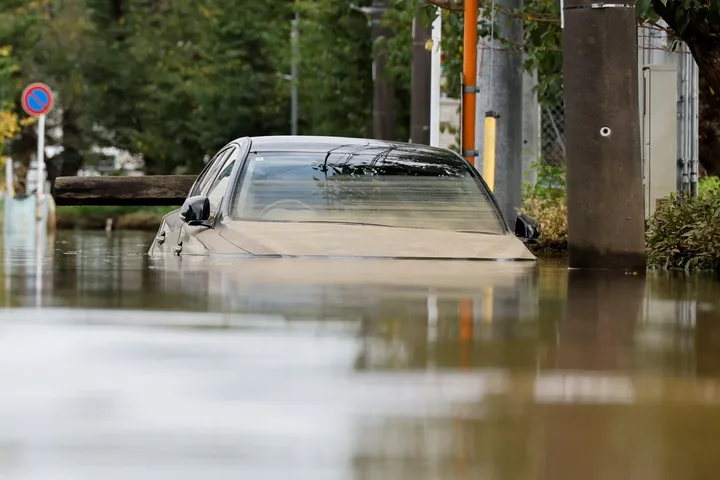






He warned that prolonged high temperatures could increase drought conditions and elevate wildfire risk.
Türkiye in cooler, wetter zone
Kadioglu said Türkiye is currently located on the cooler and wetter eastern flank of the omega block and has been relatively shielded from the extreme heat affecting Europe between June 21-26.
He said northern airflows have pushed temperatures below seasonal norms in some regions, while inland, northern and eastern areas face risks of localised thunderstorms, hail and sudden strong winds.
He also warned of flash floods and waterlogging, particularly in the Black Sea region.
Kadioglu noted that if the trough deepens into a cut-off low and stalls over the Black Sea, repeated rainfall over the same areas could significantly increase flood risk.
By contrast, coastal Aegean and Mediterranean regions, along with southeastern Türkiye, are expected to remain hotter and drier.
He said temperatures in Türkiye are likely to rise again after June 25-26 as the trough weakens.
Kadioglu said rising temperatures and earlier heat events suggest atmospheric blocking patterns are becoming more frequent and persistent.
“The fact that heat is reaching higher latitudes such as Scandinavia, where such temperatures are uncommon, shows the baseline temperature of the atmosphere is rising,” he said.
“A single event does not define climate, but repeated record-breaking heat waves in recent years indicate a clear trend.”
Kadioglu said Europe’s heat wave may ease towards the end of June as the blocking pattern weakens, while Türkiye is expected to warm further heading into July and August.
He warned that above-normal temperatures, periodic heat waves, drought and elevated wildfire risks are likely during the summer.

“These blocking patterns may repeat throughout summer. Each new blocking event could place either Europe or Türkiye under extreme heat,” he said.
Kadioglu also stressed that climate crisis is not the direct cause of a single heat wave but increases the likelihood, intensity and duration of such events.
He said global warming has raised baseline temperatures, meaning the same atmospheric blocking pattern now produces higher peak temperatures than it did 10 to 20 years ago.