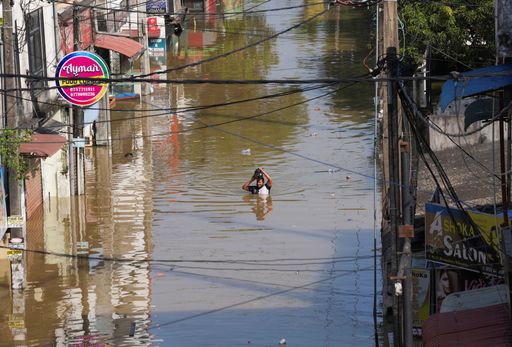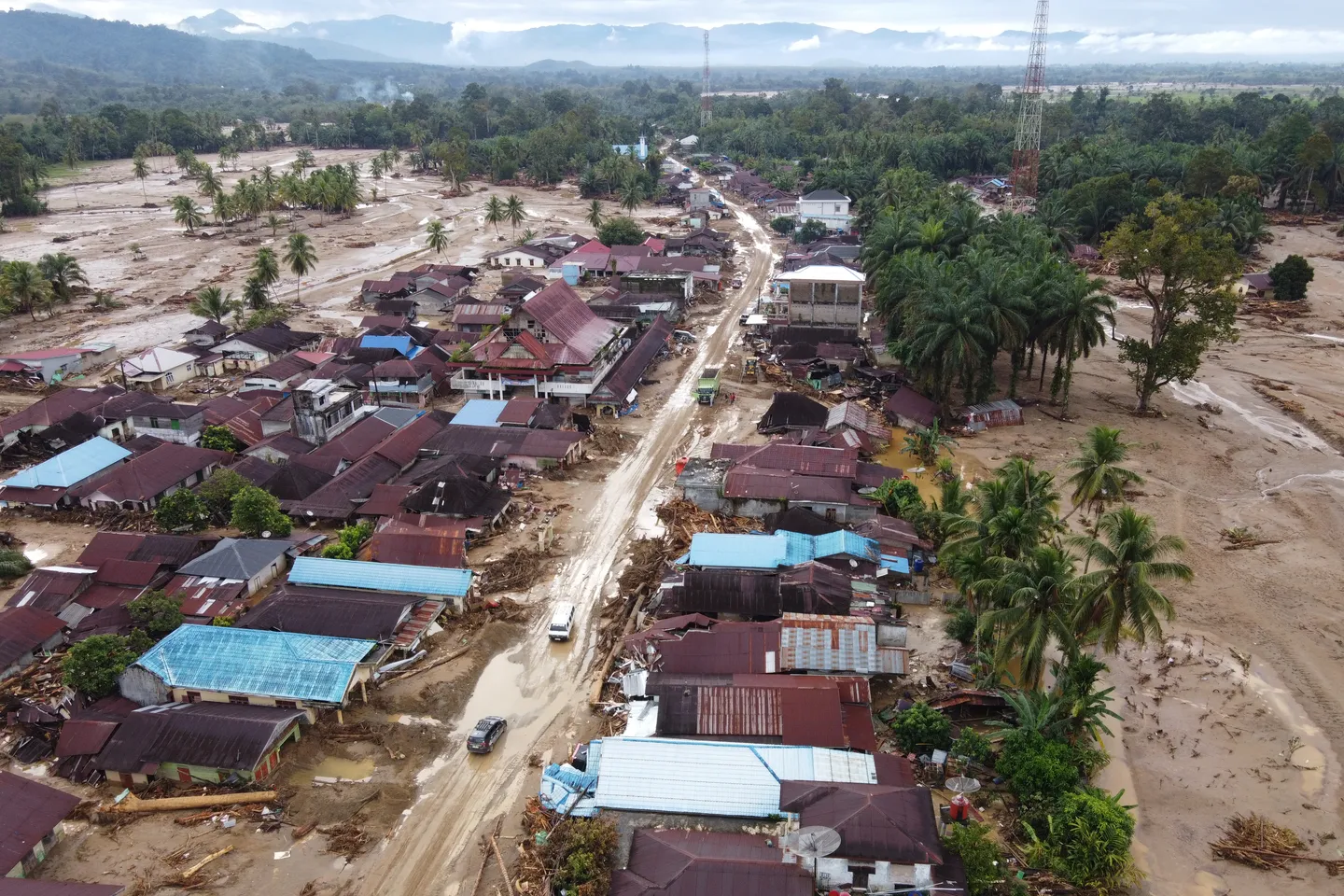
Governments and aid groups in Indonesia and Sri Lanka worked to rush aid Tuesday to hundreds of thousands stranded by deadly flooding that has killed around 1,200 people in four countries.
Torrential monsoon season deluges, paired with two separate tropical cyclones, last week dumped heavy rain across all of Sri Lanka and parts of Indonesia's Sumatra, southern Thailand, and northern Malaysia.
Climate change is producing more intense rain events because a warmer atmosphere holds more moisture, and warmer oceans can turbocharge storms.
The floodwaters have now largely receded, but the devastation means hundreds of thousands of people are now living in shelters and struggling to secure clean water and food.
In Indonesia's Aceh, one of the worst-affected regions, residents told AFP that survivors who could afford to were stockpiling supplies.
"Road access is mostly cut off in flood-affected areas," 29-year-old Erna Mardhiah said as she joined a long queue at a petrol station in Banda Aceh.
"People are worried about running out of fuel," she added from the line she had been in for two hours.
The pressure has caused skyrocketing prices.
On Monday, Indonesia's government announced that it would send 34,000 tonnes of rice and 6.8 million litres of cooking oil to the three worst-affected provinces: Aceh, North Sumatra, and West Sumatra.
"Communities across Aceh are at severe risk of food shortages and hunger if supply lines are not reestablished in the next seven days," charity group Islamic Relief said.
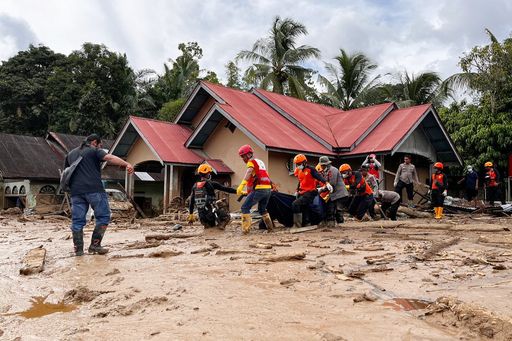
A separate storm brought heavy rains across all of Sri Lanka, triggering flash floods and deadly landslides that killed at least 390 people.





Another 352 remain missing, and some of the worst-hit areas in the country's centre are still difficult to reach.
President Anura Kumara Dissanayake has declared a state of emergency to deal with what he called the "most challenging natural disaster in our history".
Unlike his Indonesian counterpart, he has called for international aid.
Sri Lanka's air force, backed by counterparts from India and Pakistan, has been evacuating stranded residents and delivering food and other supplies.
In the mountainous Welimada region, security forces on Monday recovered the bodies of 11 residents buried by mudslides, a local official said.
In the capital Colombo, meanwhile, floodwaters were slowly subsiding on Tuesday.
The speed with which the waters rose around the city surprised residents used to seasonal flooding.
"Every year we experience minor floods, but this is something else," delivery driver Dinusha Sanjaya told AFP.
"It is not just the amount of water, but how quickly everything went under."
Rains have eased across the country, but landslide alerts remain in force across most of the hardest-hit central region, officials said.