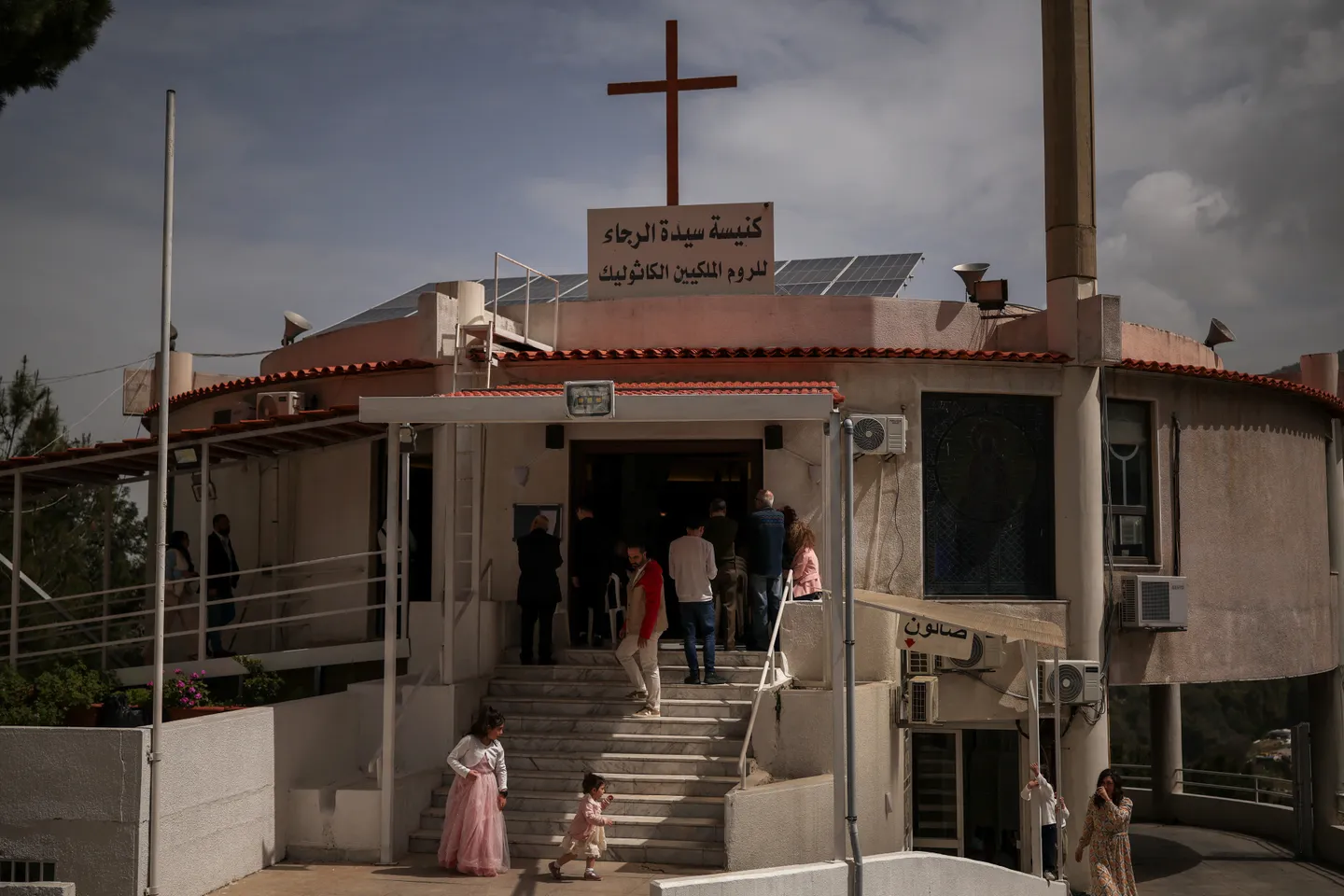
Christian-majority villages along Lebanon's southern border have rejected Israeli Prime Minister Benjamin Netanyahu's claim that they sought to “join” Israel, reaffirming their commitment to the Lebanese state and dismissing the remarks as "fabricated and completely detached from reality."
Mayors, clergy and community leaders from villages stretching across Lebanon's border region told Anadolu they remain committed to their Lebanese identity, describing Netanyahu's remarks as an attempt to sow division at a time when residents are struggling with continuing Israeli attacks and a worsening humanitarian crisis.
The response came after Netanyahu claimed in a televised interview on Sunday that some Christian villages in southern Lebanon had asked to be annexed by Israel for protection from Hezbollah.
In a joint statement, municipalities representing Christian border villages said the claims were entirely false and did not reflect the views of residents, who continue to regard the Lebanese state as the sole legitimate authority.
"Residents of the border villages remain committed to the Lebanese state and its legitimacy, and have never deviated from this position despite the difficult conditions imposed by Israel's assault," the statement said.
The municipalities reaffirmed their loyalty to the Lebanese state, saying residents had endured years of conflict without abandoning their national identity.
Lebanese Parliament Speaker Nabih Berri praised the unified response, saying the position of Christian communities reflected their attachment to their land and warning against what he described as Israeli efforts to create internal divisions.
'Our identity is Lebanese'
For local leaders, Netanyahu's comments struck at the heart of communities that have remained on their land despite repeated displacement, bombardment and occupation.
Al-Qlayaa Mayor Hanna Daher said the villages rely solely on the Lebanese army for protection and rejected any suggestion that residents sought another sovereign authority.
"The Lebanese flag cannot be replaced by any other flag," he told Anadolu.
Father Antonios Eid Farah of St. George Parish echoed that sentiment, saying Christians in the south have no desire for separation.
"Our identity is Lebanese," he said. "We are people of southern Lebanon who want to live peacefully in our homeland."




Father Gregorios Salloum, priest of the Greek Orthodox parish in Ebel el-Saqi, said Christian communities remain committed to Lebanon "as a state and army" and would not accept decisions imposed from abroad.
Fouad Abu Nader, president of the Christian broadcaster Noursat Network, argued that Netanyahu's remarks formed part of a broader psychological campaign aimed at weakening Lebanon's internal cohesion.
"Christians believe their future is in Lebanon and nowhere else," he said, adding that the municipalities' joint statement had undermined attempts to divide border communities.
Living through war
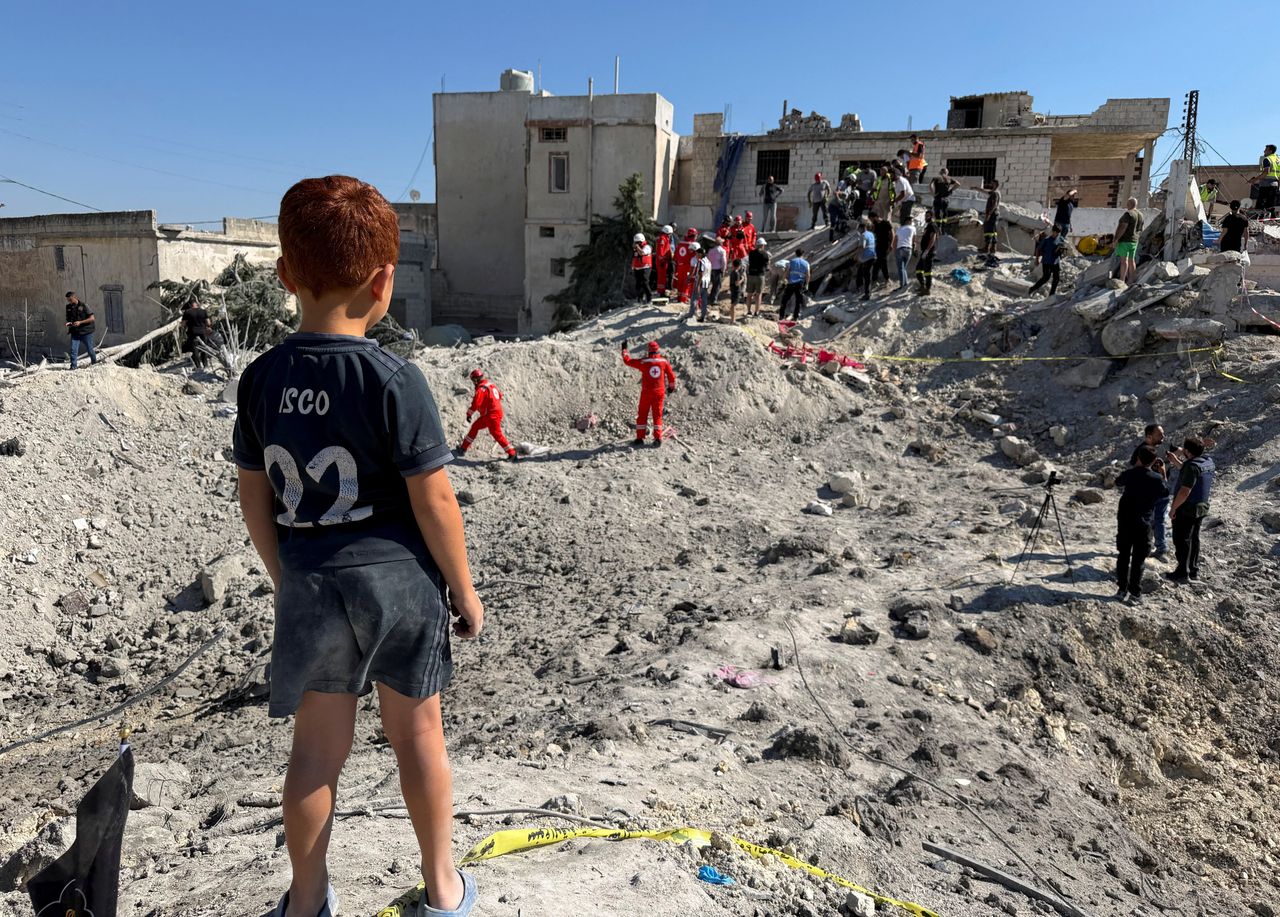
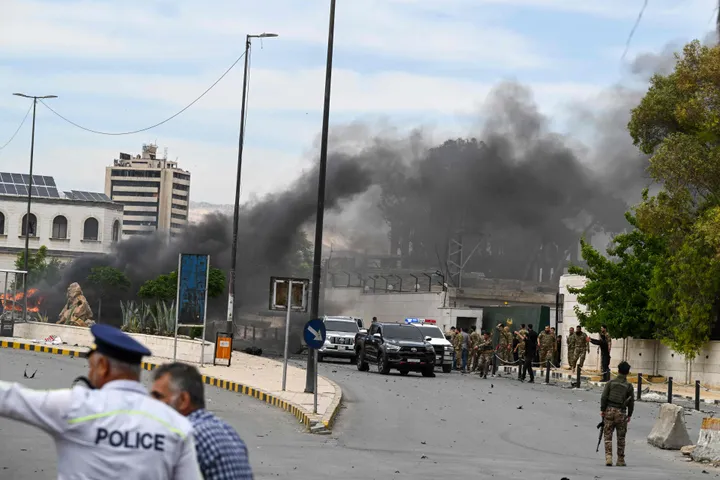
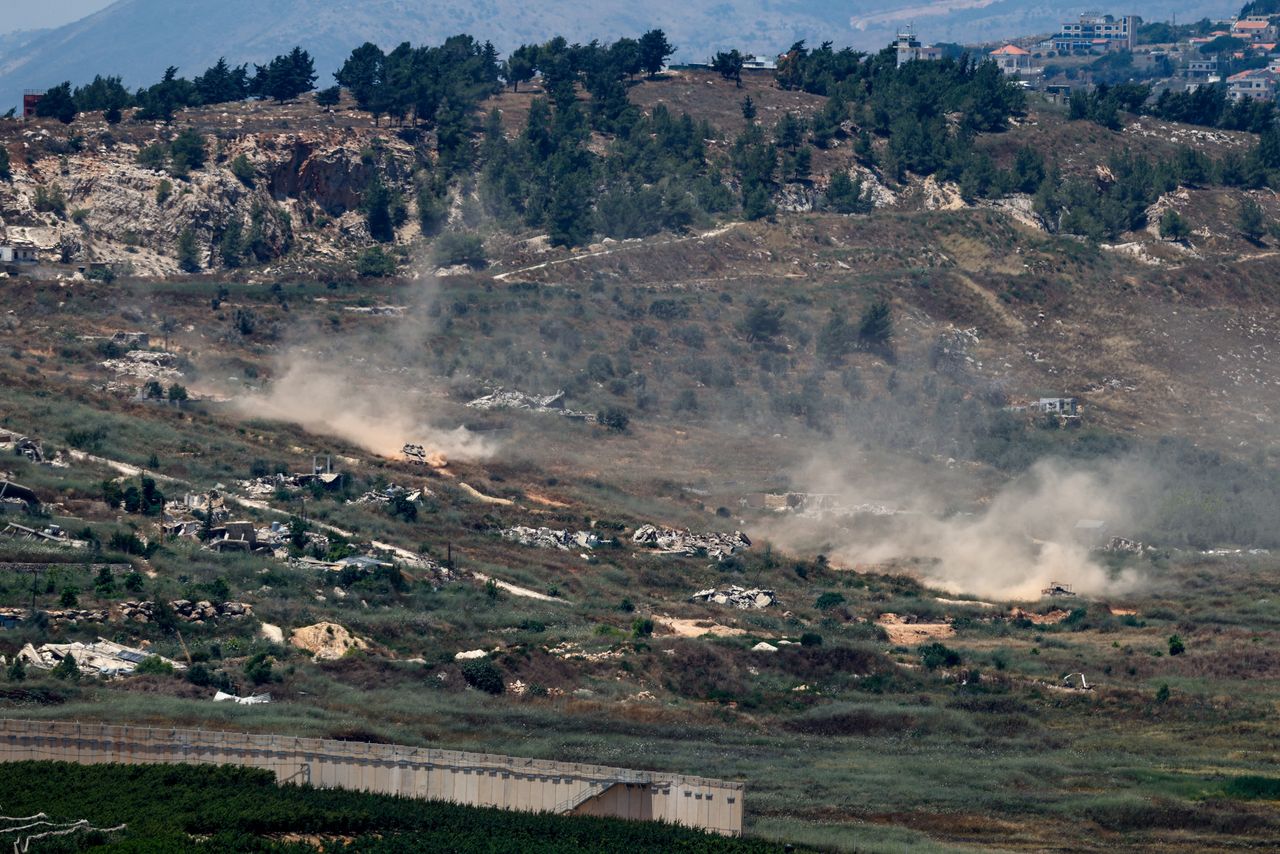
The political dispute unfolds against the backdrop of a deteriorating humanitarian situation across southern Lebanon.
Daher described conditions in the border villages as "tragic," saying families have spent years living under constant insecurity while losing access to olive groves, vegetable fields and other sources of income.
He appealed to Lebanese authorities and the UN Interim Force in Lebanon (UNIFIL) to secure safe passage along the Nabatieh-Khardali road, a critical route connecting the area with the rest of the country.
Abu Nader warned that continued displacement poses a broader national challenge.
"If the Christian villages directly along the border are emptied of their residents, there is a real danger to the Lebanese identity of the land," he said.
Farah said humanitarian assistance must go beyond emergency food aid to include support for schools and economic recovery, arguing that communities cannot remain on their land without viable living conditions.
According to Lebanon's Health Ministry, Israel's assault since March 2 has killed 4,304 people, injured 12,203 others and displaced more than 1 million.
Israeli forces continue to occupy parts of southern Lebanon despite a US-sponsored framework agreement signed on June 26 providing for a gradual Israeli withdrawal beginning with two pilot areas.