 Murat Sofuoglu
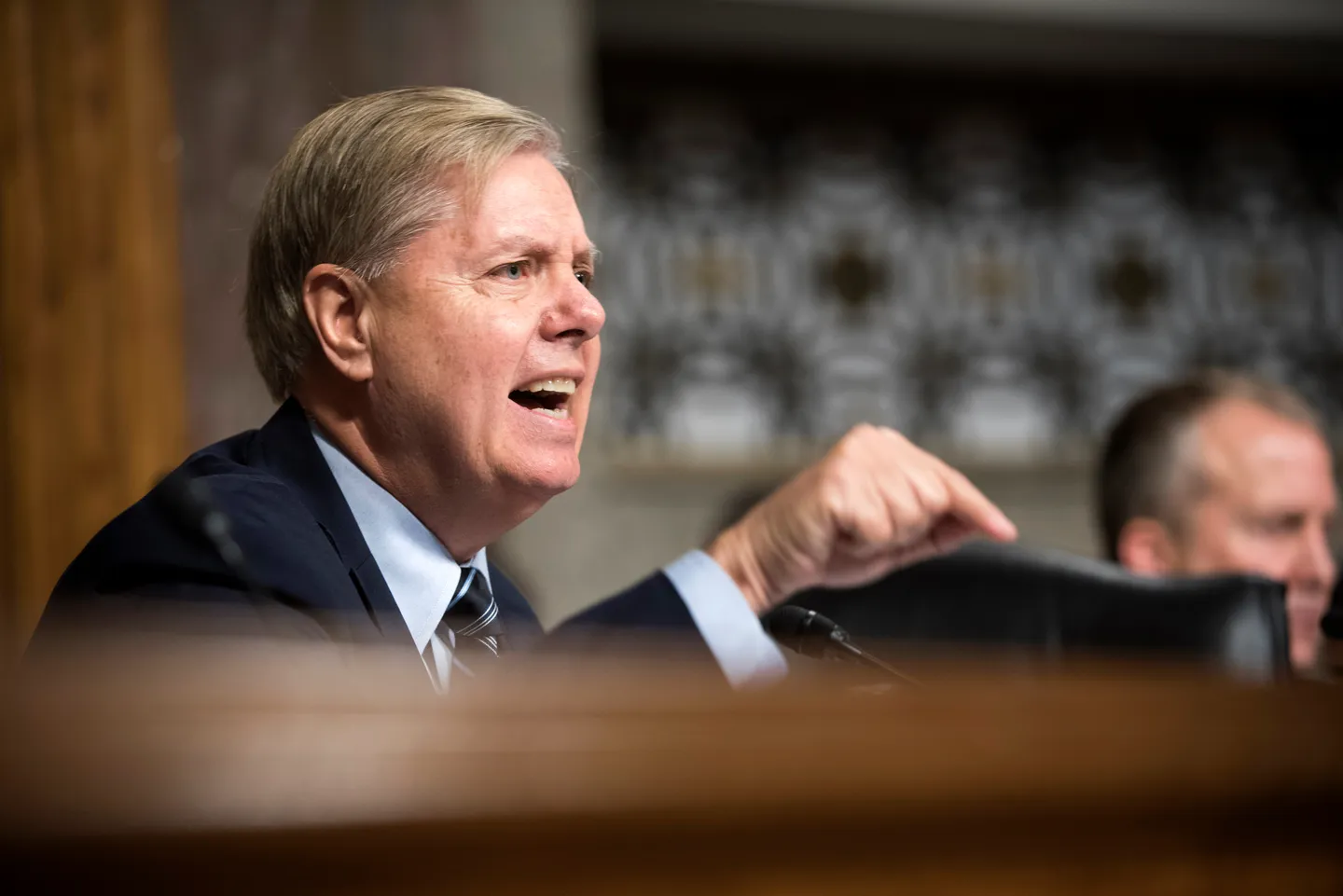
Several days after the US-Israel attacks on Iran, Lindsey Graham, a staunch advocate of government change in Tehran, said the conflict “will set the course for the future of the Middle East for the next thousand years”.
Graham, who died on July 12 hours after a visit to Ukraine, did not live to see the latest phase of the Iran war, which reignited over disagreements surrounding the Strait of Hormuz and has reportedly resulted in further American casualties.
The hawkish Republican senator, who went from being a fierce critic of President Donald Trump to one of his closest allies, was among Washington's strongest advocates for both Ukraine and Israel.
He consistently backed military support for Kiev while arguing that Israel should be defended at all costs.
Since Hamas's October 7 cross-border blitz, Graham visited Israel at least a dozen times, underscoring his commitment to the country.
“Israel has lost one of its greatest friends,” Israeli Prime Minister Benjamin Netanyahu said in a statement after his death. Netanyahu and his allies held 71-year-old Graham in high regard as Israeli isolation across the globe, including US territories, has deepened.
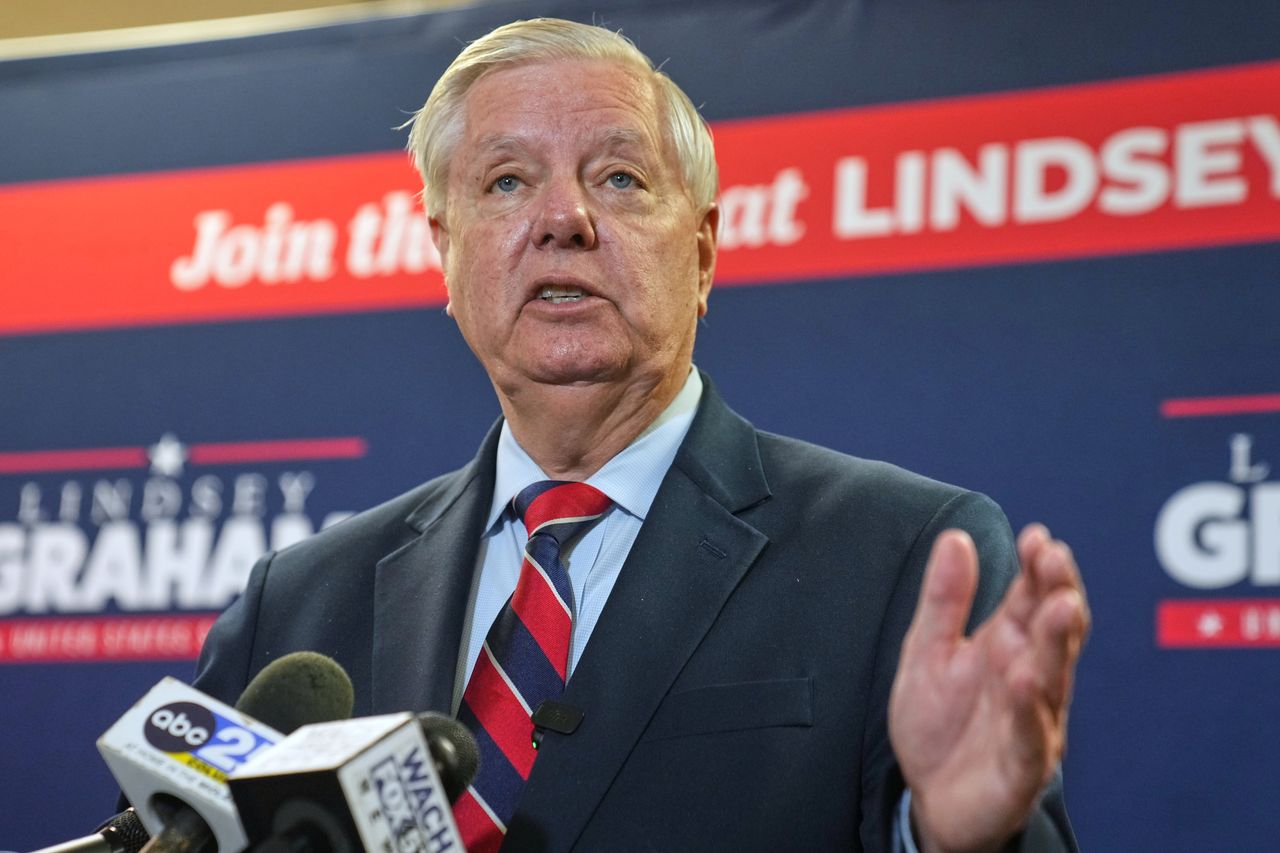
Graham, one of the most outspoken advocates of American Christian Zionism, had “genuine love, not just political love” for Israel, according to Michael Oren, Israel's former ambassador to the US.
A hardcore Zionist
Besides his influence within the US administration, Graham's decades-long career in the Senate also made him an influential voice across both Republican and Democratic circles, a valuable asset to pro-Israel lobbying groups for many decades.
“Ultimately, his absence represents the removal of a major structural pillar of unconditional Israeli support in US politics—one that cannot easily be replaced,” Ramzy Baroud, a Palestinian political analyst and writer, says, noting that Graham was “not merely an ordinary pro-Israel politician but he was a central pillar of foreign support for Zionism”.
“He was fully aware of the immense diplomatic and moral damage the genocide in Gaza inflicted on the United States as Israel’s primary benefactor, defender, and weapons supplier. Yet he persisted without hesitation,” Baroud tells TRT World.
In various interviews, Graham compared the situation in Gaza to America's atomic bombings of Hiroshima and Nagasaki, and encouraged Israel to “do whatever you have to do”, including the use of nuclear weapons against the native Palestinian population of the Mediterranean enclave, prompting a protest from the Japanese government.
“This was not standard foreign policy rhetoric. What made it particularly alarming was that Graham possessed the political influence, institutional power, and status within Washington to normalise and champion such extreme talking points,” Baroud says.
In many respects, Graham served as the American counterpart to far-right Israeli figures such as Itamar Ben-Gvir, who advocated “the minimum of the minimum” for Palestinian prisoners and urged the Netanyahu government to annex the occupied West Bank and dismantle the Palestinian Authority.
Baroud says that Graham was particularly “reckless, rhetoric-heavy, deeply influential, and seemingly indifferent to the catastrophic real-world consequences of his statements.”
The Republican senator, who was a ranking member of both the Senate Judiciary Committee and the Senate Foreign Relations and Appropriations Committees, leveraged his legislative authority to advance the Israeli agenda in various ways.
He consistently spearheaded bipartisan efforts to secure billions in unconditional foreign military financing, pushed for aggressive sanctions against international bodies like the International Criminal Court (ICC) for investigating Israeli actions, and relentlessly advocated for a military-first foreign policy across the Middle East.
While Graham's death is unlikely to significantly alter US policy toward Israel, Sami al Arian, director of the Center for Islam and Global Affairs at Istanbul Sabahattin Zaim University, argues that the Zionist movement has lost one of its most influential public advocates, whose prominence extended across both the US media and international political circles.
“His absence would certainly hurt the Zionist cause,” he says.
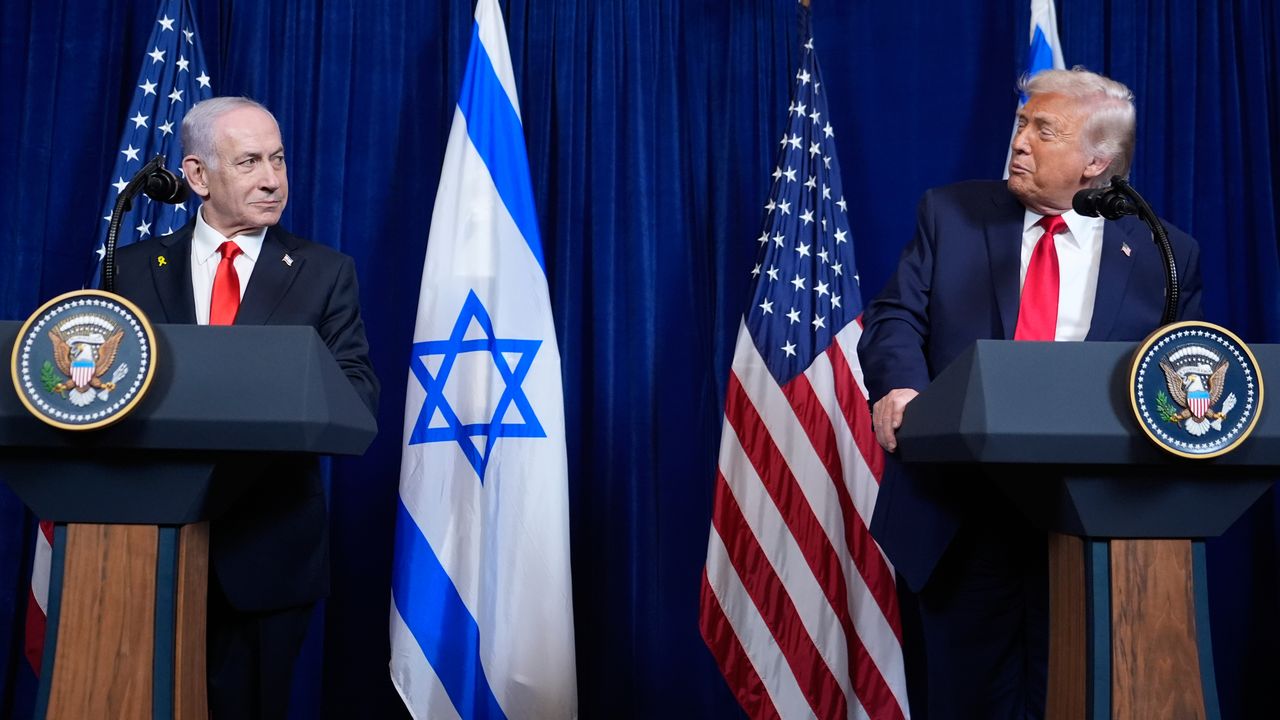
Graham’s loss might also impact Trump-Netanyahu political dynamics, which have led to some rifts due to the US war on Iran, as some influential American commentators like Tucker Carlson and Steve Bannon have criticised Israeli influence in US decision-making on Middle Eastern politics.








Graham, a big ally of the Netanyahu government, who exerted a significant influence over the Trump administration, was a fierce defender of the US war on Iran. Without Graham’s presence, Israel will have less voices to advocate more war on Iran and other enemies of Zionism across the Middle East.
An irreparable loss?
Despite his large influence, experts do not see his death as an irreparable loss for Israel, whose supporters in the US continue to exert large influence across different sectors of the American administration.
“In terms of policy, there would not be much change even though he had a greater influence on Trump, but Trump has a lot of Zionists who are also pressuring him,” Arian tells TRT World.
“Also in the Congress, there are other Zionists who will pick up where Graham left off,” Arian says, referring to pro-Israeli Republican members of the US Congress, whose numbers have declined significantly since October 7.
Political analysts say two Republican senators known for their hawkish pro-Israel positions, Ted Cruz of Texas and Tom Cotton of Arkansas, are among the most likely figures to fill the political space left by Graham.
Both have consistently defended Israeli policies as the Netanyahu government has continued its military offensives in Gaza while expanding attacks into Lebanon and Iran.
Following Lindsey Graham's unexpected death, his sister, Darline Graham, was appointed interim senator to fill South Carolina's seat in the US Senate. Endorsed by Trump, she has also indicated that she plans to run for a full Senate term in the November midterm elections.
“His sister, who's taken over his seat in the Senate, will continue to vote for pro-Zionist causes,” says Arian.
Arian argues that Graham's absence is unlikely to bring major changes to US policy towards Israel because of the influence of lobbying groups — particularly pro-Israel organisations such as AIPAC — which play a significant role in Congress and the electoral process by supporting candidates whose positions align with their priorities.
“We are talking about a system in which members of Congress are open to various forms of manipulation, including financial ties with lobbies. So, the problem is much deeper than the presence or absence of Lindsey Graham, if the system is open to abuse,” Helin Sari Ertem, an expert on US foreign policy and an academic at Istanbul Medeniyet University, tells TRT World.
As a result, Ertem argues that Graham can be replaced by other figures in the Senate “as long as the US Congress is under the influence of various lobbies and interest groups, some of which are directly linked to Israel and related war-mongers.”
Experts also point out that Graham is not an irreparable loss for Israel, given not only the presence of other pro-Israeli figures in the US Congress but also Tel Aviv’s declining influence across the North American country, where pro-Palestine protests have forced many lawmakers to rethink their support for Zionism.
"Not at this stage. It was correct until Oct 7th. During the last 2.5 years, Israel lost a lot of ground in the US,” Alon Liel, a former director general in the Israeli foreign ministry, tells TRT World, referring to the increasing opposition of many Americans including American Jews with liberal views against the Netanyahu government’s policies.
Graham and midterms
Republicans' prospects in the upcoming midterm elections have been clouded by rising fuel prices linked to US-Iran tensions, which have affected American consumers as Tehran's strikes on US bases across the region — from Bahrain and Kuwait to the UAE and Jordan — reportedly resulted in additional American casualties.
Although Republicans hold narrow majorities in both the Senate and the House of Representatives, growing voter dissatisfaction over fuel prices and broader economic issues could reshape the balance of power in Congress, according to recent surveys that show Democrats gaining ground.
However, experts say Graham's death is unlikely to affect the midterm elections because his Senate seat is not considered competitive. South Carolina has long been regarded as a reliably Republican state.
“Whoever is the Republican nominee will most likely be elected to the US Senate,” says Arian, referring to Graham's seat in South Carolina.
“His seat would be retained by the Republicans.”