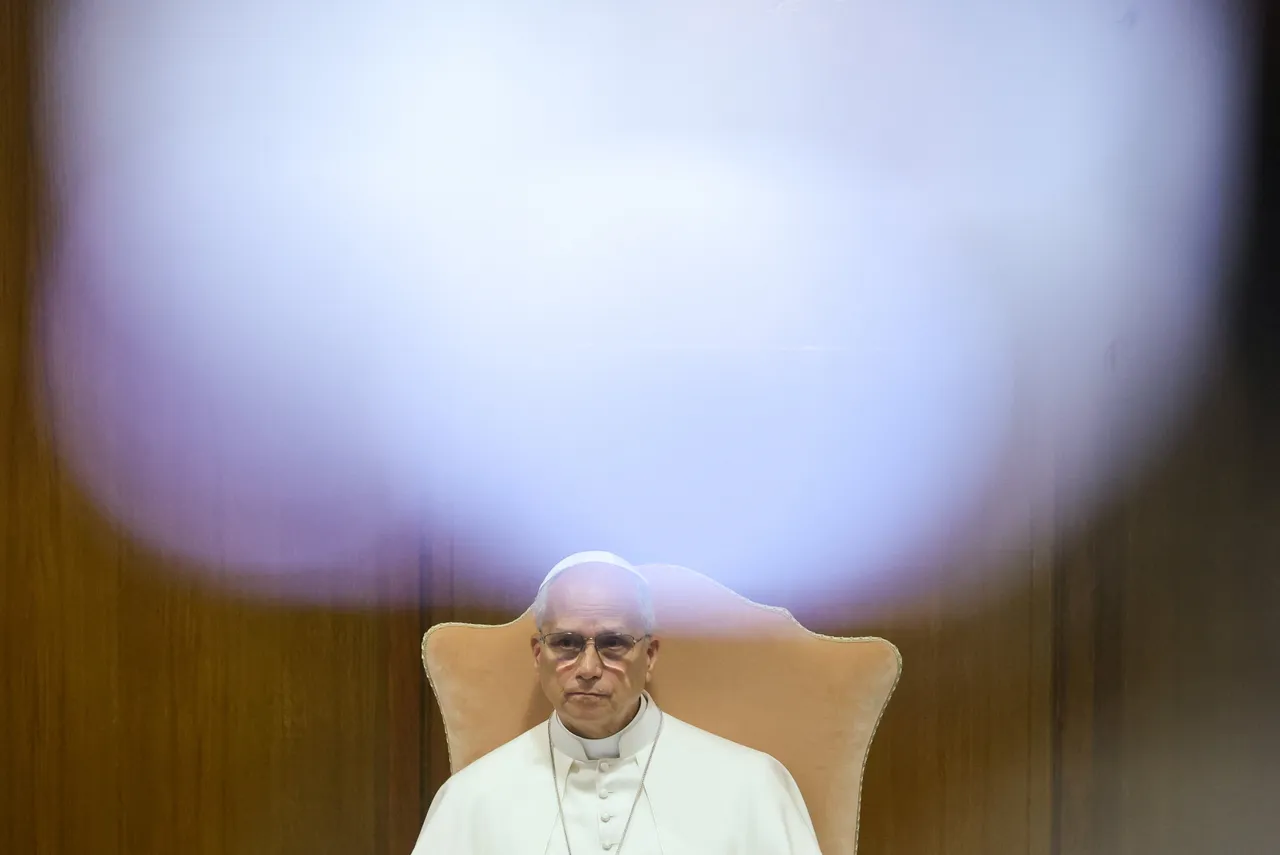
Pope Leo XIV made a historic apology on Monday for the role the Holy See itself played in legitimising slavery and for having failed to condemn it for centuries, calling the Vatican’s record a “wound in Christian memory.”
Past popes have apologised for Christians’ involvement in the trans-Atlantic slave trade. But no pope has ever publicly acknowledged, much less apologised for, the role that past popes themselves played in giving European sovereigns explicit authority to subjugate and enslave “infidels.”
History’s first US-born pope, whose family history includes both enslaved people and slave owners, delivered the apology in his first encyclical, “Magnifica Humanitas,” (Magnificent Humanity), which was released on Monday.
The sweeping manifesto is about safeguarding humanity in an era of increasing reliance on artificial intelligence. Leo raised the trans-Atlantic slave trade in relation to what he called the new forms of slavery and colonialism that the digital revolution is fuelling, such as the unregulated labour required to procure rare minerals needed for AI chips.
In doing so, Leo responded to decades of calls by Black American Catholics, activists and scholars for the Holy See to atone for its own role in the colonial-era trade in human beings.
“It is impossible not to feel deep sorrow when contemplating the immense suffering and humiliation endured by so many in stark contrast to their immeasurable dignity as persons infinitely loved by the Lord,” Leo wrote. “For this, in the name of the Church, I sincerely ask for pardon.”
Centuries of legitimising slavery for European colonisers
The Vatican has insisted that it always upheld the dignity of all human beings as children of God. But a series of 15th-century directives from the Vatican authorised Portuguese sovereigns to conquer Africa and the Americas and enslave non-Christians.
In 1452, for example, Pope Nicholas V issued the papal bull Dum Diversas, which gave the Portuguese king and his successors the right “to invade, conquer, fight and subjugate” and take all possessions — including land — of “Saracens, and pagans, and other infidels, and enemies of the name of Christ” anywhere.
The bull also gave the Portuguese permission “to reduce their persons to perpetual slavery.”
That bull and another issued three years later, Romanus Pontifex, formed the basis of the Doctrine of Discovery, the theory that legitimised the colonial-era seizure of land in Africa and the Americas.
Nicholas V’s permissions to the Portuguese were confirmed or renewed by Pope Callixtus III in 1456, Pope Sixtus IV in 1481, and Pope Leo X in 1514, according to the Rev Christopher J. Kellerman, a Jesuit priest and author of “All Oppression Shall Cease: A History of Slavery, Abolitionism, and the Catholic Church.”
Spanish kings received the rights for the Americas.
In 2023, the Vatican formally repudiated the Doctrine of Discovery, but it never formally rescinded, abrogated or rejected the bulls themselves. The Vatican insists that a later bull, Sublimis Deus in 1537, reaffirmed that Indigenous peoples shouldn’t be deprived of their liberty or the possession of their property, and weren't to be enslaved.
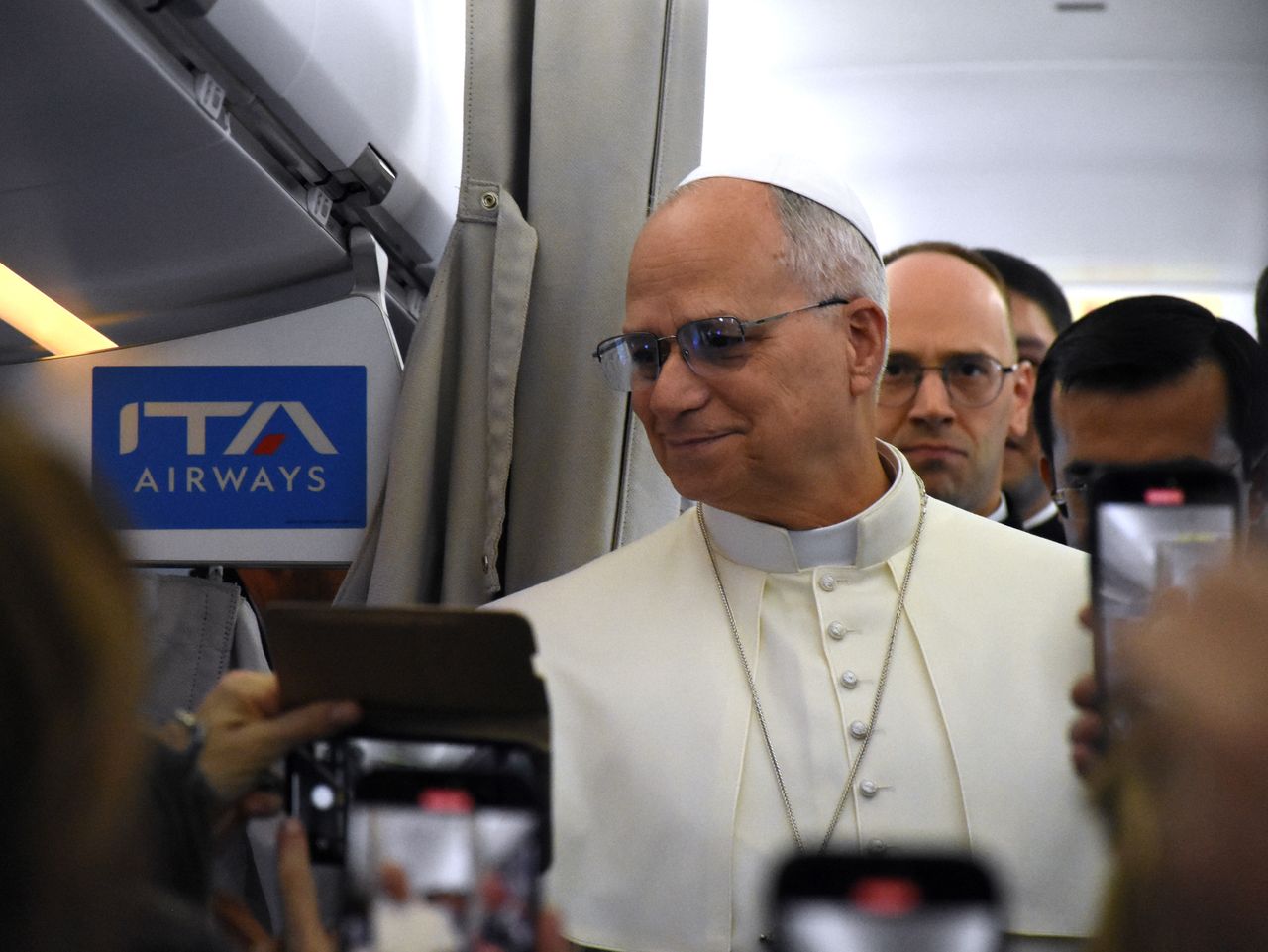
Holy See late to condemn slavery, Leo says
In his encyclical, Leo recalled that his namesake, Pope Leo XIII was the first pope to explicitly condemn slavery in 1888, though that was long after many countries had already abolished it. Before that, in antiquity and the Middle Ages, even church institutions had slaves.
In acknowledging the Holy See’s own role and the 15th-century papal bulls, Leo wrote in his encyclical: “Already in the early modern period, the Apostolic See of Rome, responding to the requests of sovereigns, intervened several times in order to regulate and legitimise forms of subjugation, and, in certain cases, including the enslavement of ‘infidels.’”
Leo said that it wasn't possible to judge the morality of the decisions with today’s standards.
“Yet neither can we deny or diminish the delay with which both society and the church came to denounce the scourge of slavery,” he said.
The pope said that the church has long affirmed the dignity of every human being as the basis of its doctrine, “even if it took eighteen centuries for its full incompatibility with slavery to be explicitly recognised.”
“This constitutes a wound in Christian memory, one from which we cannot consider ourselves detached,” he said.
Leo said that the church today must firmly condemn all forms of trafficking related to the digital technological revolution “if we want to avoid the need to ask for pardon again in the future for having failed to respect the treasure of human dignity that is required by our faith.”


Leo’s own family history and past apologies
During a 1985 visit to Cameroon, St John Paul II asked forgiveness of Africans for the slave trade on behalf of Christians who participated in it, but not for the popes’ own role in it. In a 1992 visit to Goree Island, Senegal, which was the largest slave-trading centre in West Africa, he denounced the injustice of slavery and called it a “tragedy of a civilisation that called itself Christian.”
According to genealogical research published by Henry Louis Gates Jr, 17 of Leo’s American ancestors were Black, listed in census records as mulatto, Black, Creole or a free person of colour. His family tree includes slaveholders and enslaved people, Gates wrote in The New York Times.
During a visit to Angola last month, Leo prayed at a Catholic shrine located at the site of an important hub of the African slave trade during Portugal’s colonial rule. While at the Sanctuary of Mama Muxima, Leo recalled the “sorrow and great suffering” Angolans endured for centuries, but he didn’t refer specifically to slavery
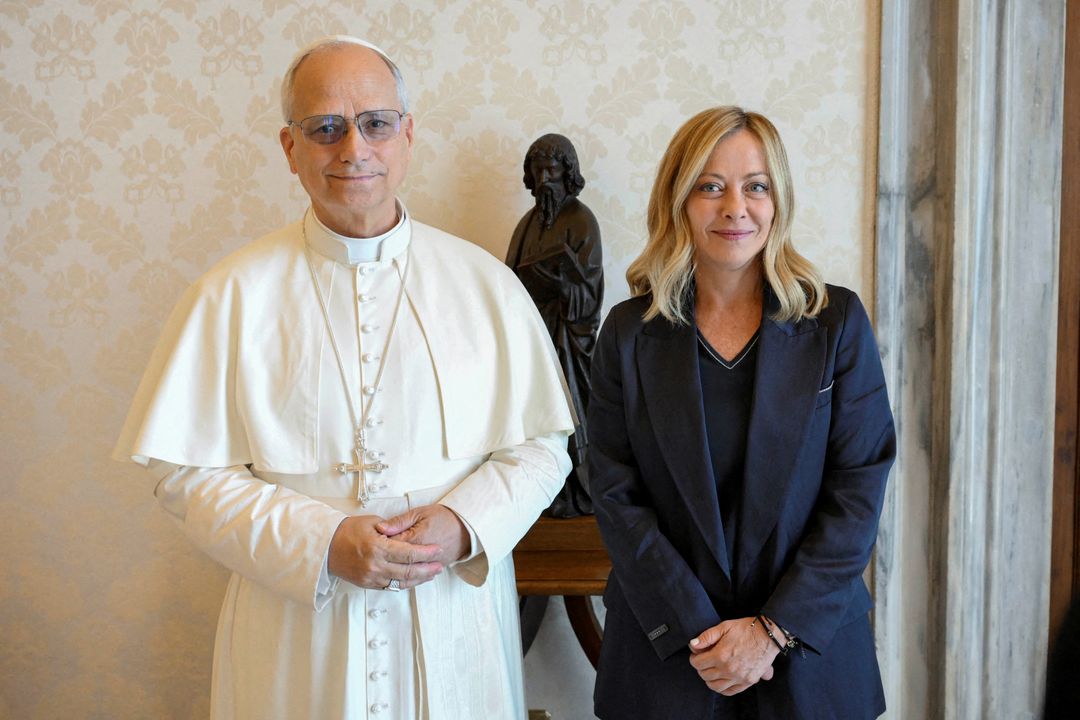
Pope calls for robust regulation of AI in manifesto
In the manifesto, Leo called for robust regulation of artificial intelligence and for its developers to work for the common good rather than profit.
In the text, Leo denounced the “culture of power” driving the AI race, especially in developing ever more sophisticated methods of remote warfare. He declared that it was “not permissible” to entrust irreversible, lethal decisions to AI systems, setting up another flash point between the American pope and the Trump administration, which has worked aggressively to deregulate AI development.
Experts in the tech industry, academia and Catholic morality said the document will likely become a benchmark in the debate over AI, a point of reference for policymakers, researchers and ordinary folk alike. It comes as the near-daily developments in the technology trigger concerns rise over AI replacing human jobs and even human intelligence.
“It lends itself to people who are at the forefront of these tools and able to see the incredible things that they’re able to do, to have questions about their own ‘What does it mean to be human?’” said Taylor Black, a Microsoft AI executive and director of Catholic University of America’s AI institute.
Pope calls out AI companies even as he hosts Anthropic
The pope was to present the text at a Vatican launch on Monday that featured the co-founder of Anthropic, which is currently locked in a legal battle with the Trump administration over access to its AI technology. The Vatican decided to involve Anthropic as part of its decade-long effort to engage Silicon Valley in dialogue over the human cost of AI.
And yet in his text, Leo repeatedly blasted the concentration of power and data in the hands of so few people in the private sector as a danger, especially to children and the most vulnerable, and called for external regulation of their work.
“It is not enough to invoke ethics in the abstract; robust legal frameworks, independent oversight, informed users and a political system that does not abdicate its responsibility are required,” he wrote. “A more moral AI is not enough if that morality is determined by a few.”
Leo appealed several times to AI developers and political leaders responsible for regulating them to just slow down and reflect on what they are doing. He urged them to use ethical and spiritual guidelines to make the choice to work not for their own profit or power, but the betterment of humanity.
AI competitors
OpenAI and Anthropic are the second- and third-most valuable US private companies, each valued at hundreds of billions of dollars, more than the GDP of many nations.
Experts say the text will become a benchmark.
“I am convinced that this will prove to be a defining document for our era, a profound and prophetic document,” said Paolo Carozza, law professor at Notre Dame Law School and chair of the Meta oversight board.
“Pope Leo is offering a clear, comprehensive, and coherent voice urging us to take responsibility for constructing a world in which technology will serve humans rather than degrade them,” he said.
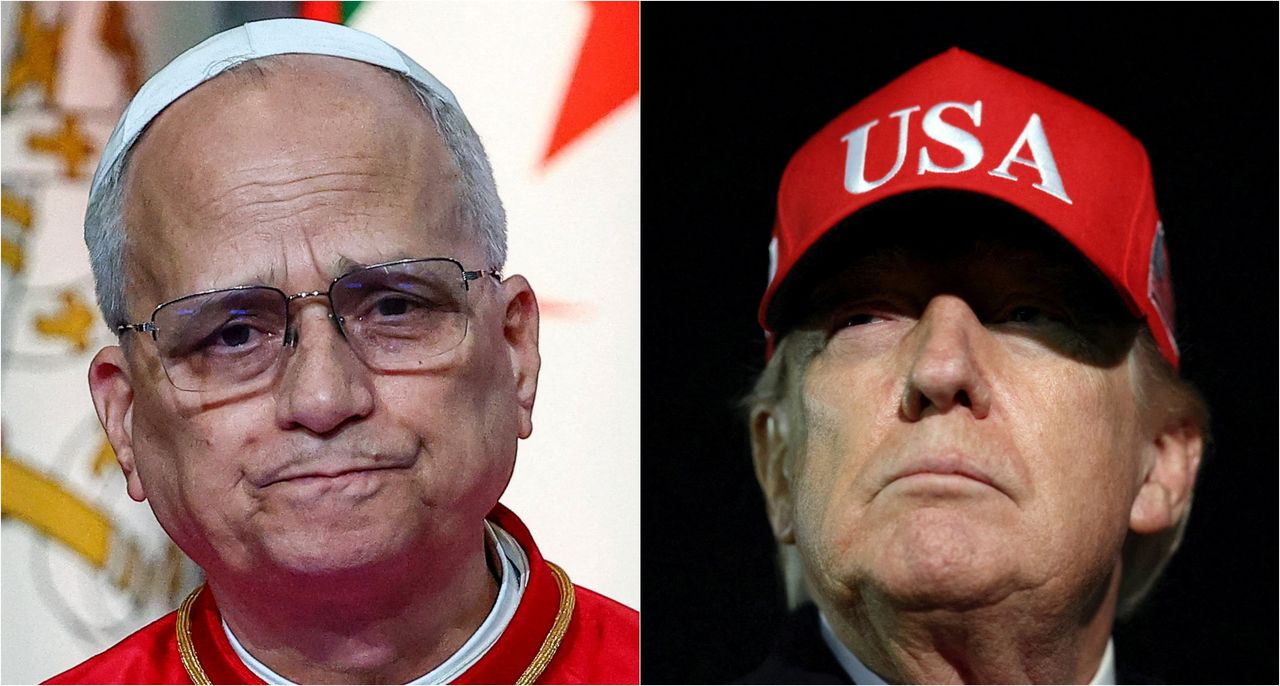
In its strongest chapters, Leo denounced how AI had helped accelerate the “normalisation of war” by desensitising people to its cost. He didn’t name specific conflicts, but cited “opposing imperialisms, between powers that wish to preserve their supremacy, and those that aspire to seize that supremacy.”
Leo signed the text May 15, the 135th anniversary of the publication of “Rerum Novarum” (Of New Things), the most important teaching document of Leo’s hero and namesake, Pope Leo XIII. That document addressed workers’ rights, the limits of capitalism, and the obligations that states and employers owed workers as the Industrial Revolution was underway.
It became the foundation of modern Catholic social thought, and the current pope cited it at the start of his pontificate in relation to the AI revolution, which he believes poses the same existential questions that the Industrial Revolution posed over a century ago.