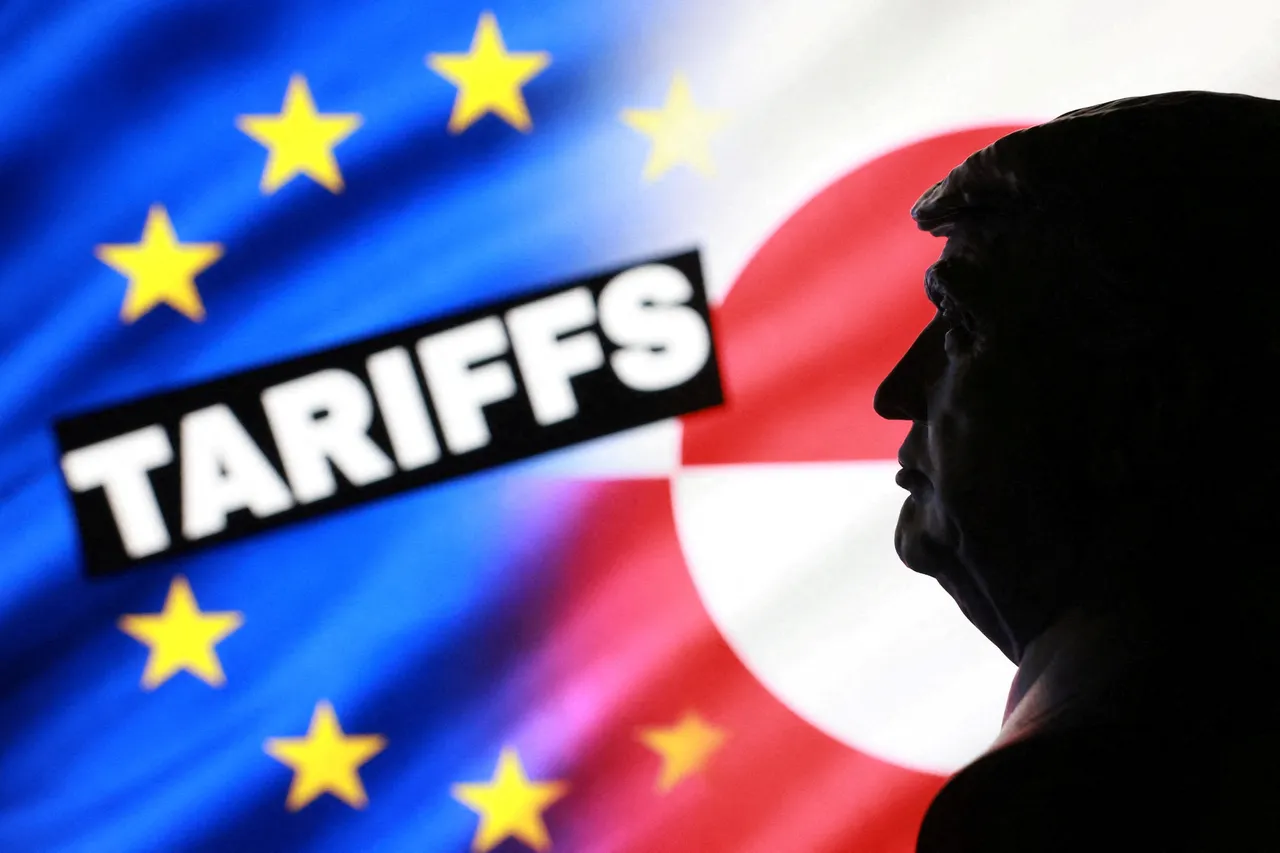
Calls are growing louder for the European Union to deploy its powerful "anti-coercion instrument" in response to US President Donald Trump's threats to impose tariffs in the standoff over Greenland.
Trump stunned Europe on Saturday when he vowed to slap EU members Denmark, Finland, France, Germany, the Netherlands, and Sweden — and non-members Britain and Norway — with levies of up to 25 percent unless the Danish territory is ceded to the United States.
French President Emmanuel Macron has raised the prospect of hitting back with the EU's trade weapon, that was established in 2023 but has never been activated.
The leader of the liberal Renew group in the European Parliament, Valerie Hayer, also called for the weapon to be used.
Referred to as a "bazooka" or "nuclear" option, the instrument is intended to deter economic coercion against any of the EU's 27 member states.
The EU defines coercion as a third country "applying — or threatening to apply — measures affecting trade or investment", thereby interfering "with the legitimate sovereign choices" of the EU and member states.

What does the instrument do?
The armoury allows the EU to take measures such as import and export restrictions on goods and services in its single market of 450 million people.
It also gives Brussels the power to limit American companies' access to public procurement contracts in Europe.
The EU last year threatened to use the weapon during difficult trade negotiations with Trump to avoid steep levies but the two sides struck a deal.
A major target could be American tech giants since the United States has a services surplus with the EU.





Brussels previously drew up a list of US services to potentially target.
The instrument's creation came after Lithuania accused China of banning its exports because Vilnius allowed a Taiwanese diplomatic representation to be opened on its soil in 2021.
How does it work?
Both the commission and member states have the right to seek its activation, but it would then need the green light of at least 55 percent of the member countries voting in favour, representing 65 percent of the bloc's population.
Even if Brussels were to activate the weapon, it could take months before any measures were taken, according to the rules.
First, the European Commission has four months to investigate the third country accused of detrimental trade policies — then member states would have eight to 10 weeks to back any proposal for action.
Only then would the commission have a green light to prepare measures, to take effect within six months. The EU says the timeframe is indicative.
But even just triggering an investigation under the instrument would send a powerful message that Brussels is willing to fight back against its important ally.
"The United States is making a miscalculation that is not only dangerous but could be painful," Renew group's Hayer said in a statement.
"The anti-coercion instrument is our economic nuclear weapon," she said.