 Kazim Alam
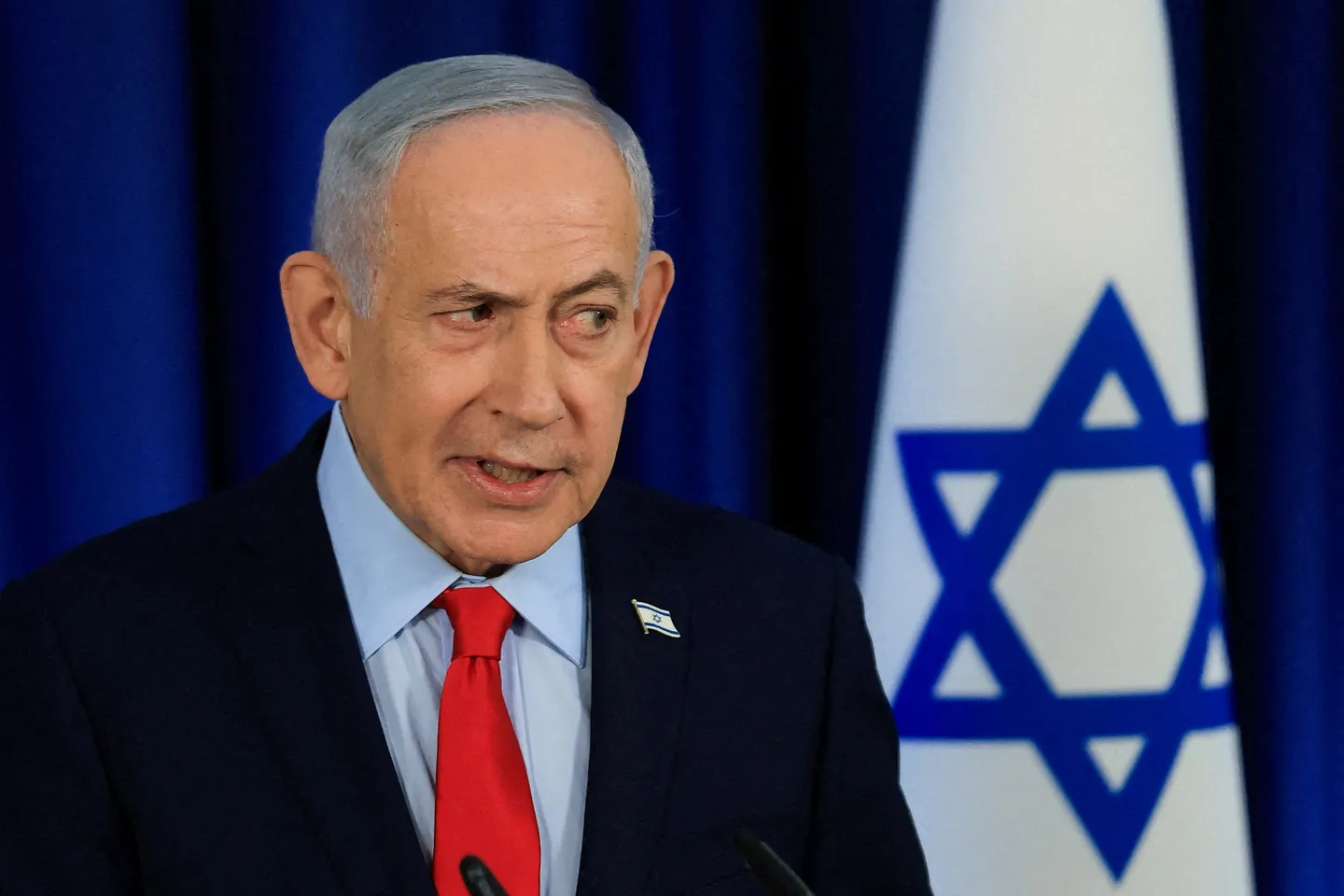
For decades, Israeli Prime Minister Benjamin Netanyahu built his political identity as a security hawk – a muscular image that has helped him win successive elections and made him the longest-serving prime minister of his country.
Netanyahu will again be standing for re-election as Israel goes to the polls in October.
But a new survey suggests that his re-election is now in serious doubt.
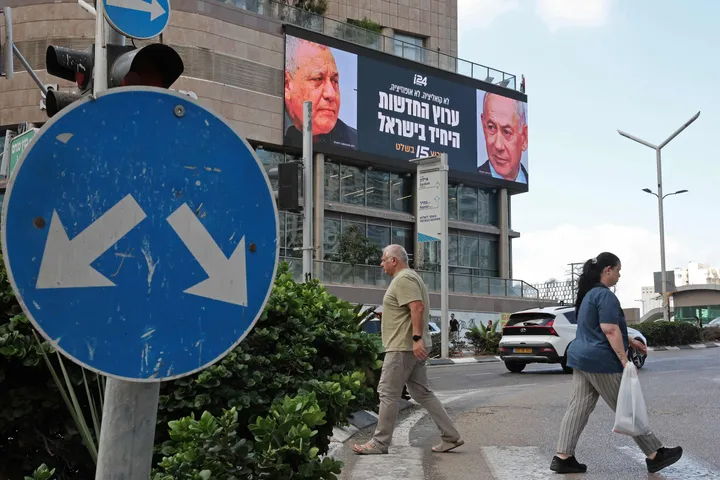
Conducted for the country’s Channel 12 by Midgam Institute, one of Israel's leading market research and public opinion polling firms, the survey shows 43 percent of Israelis would rather see Gadi Eisenkot, former chief of the Israeli army, as prime minister.
In contrast, only 34 percent of Israelis favour Netanyahu as prime minister.
Yashar, Eisenkot’s new political party, is projected to win the most seats (23), according to the survey. Netanyahu’s Likud party trails closely with 22 seats, if elections were held now.
The broader anti-Netanyahu coalition is expected to win 59 seats in the Knesset, barely short of an outright majority (61 seats). In contrast, the survey projects a total of 51 seats for the pro-Netanyahu bloc of parties.
The numbers may not seem dramatic at first. But they reveal a deeper erosion of Netanyahu’s once-dominant security brand in Israeli politics.
Analysts attribute the weakening of Netanyahu’s security credentials to more than two and a half years of a genocidal campaign in Gaza, besides the on-again, off-again wars against Lebanon and Iran.
Arik Rudnitzky of Tel Aviv University’s Moshe Dayan Center says that Netanyahu had spent years positioning himself as “Mr Security”.
“For many Israelis, this image suffered a severe blow following the events of October 7, 2023, particularly because Netanyahu has never accepted personal responsibility for the failures that led to the attack,” he tells TRT World.
Tugce Ersoy Ceylan, associate professor at Izmir Katip Celebi University, agrees with this assessment, saying Netanyahu’s “entire political brand was fundamentally fractured” on October 7, 2023.
His long-standing approach of managing the Palestinian conflict rather than resolving it and relying on technological deterrence “collapsed in a single day”, she tells TRT World.
The result was an immediate and lasting hit to Netanyahu’s credibility on the issue that has defined his career over the decades.
The Israeli premier has since tried to rebuild the credibility he lost on October 7, 2023, through multi-front, never-ending wars.
Tel Aviv has attacked six countries, including Palestine, Iran, Lebanon, Qatar, Syria, and Yemen, since October 7, 2023.
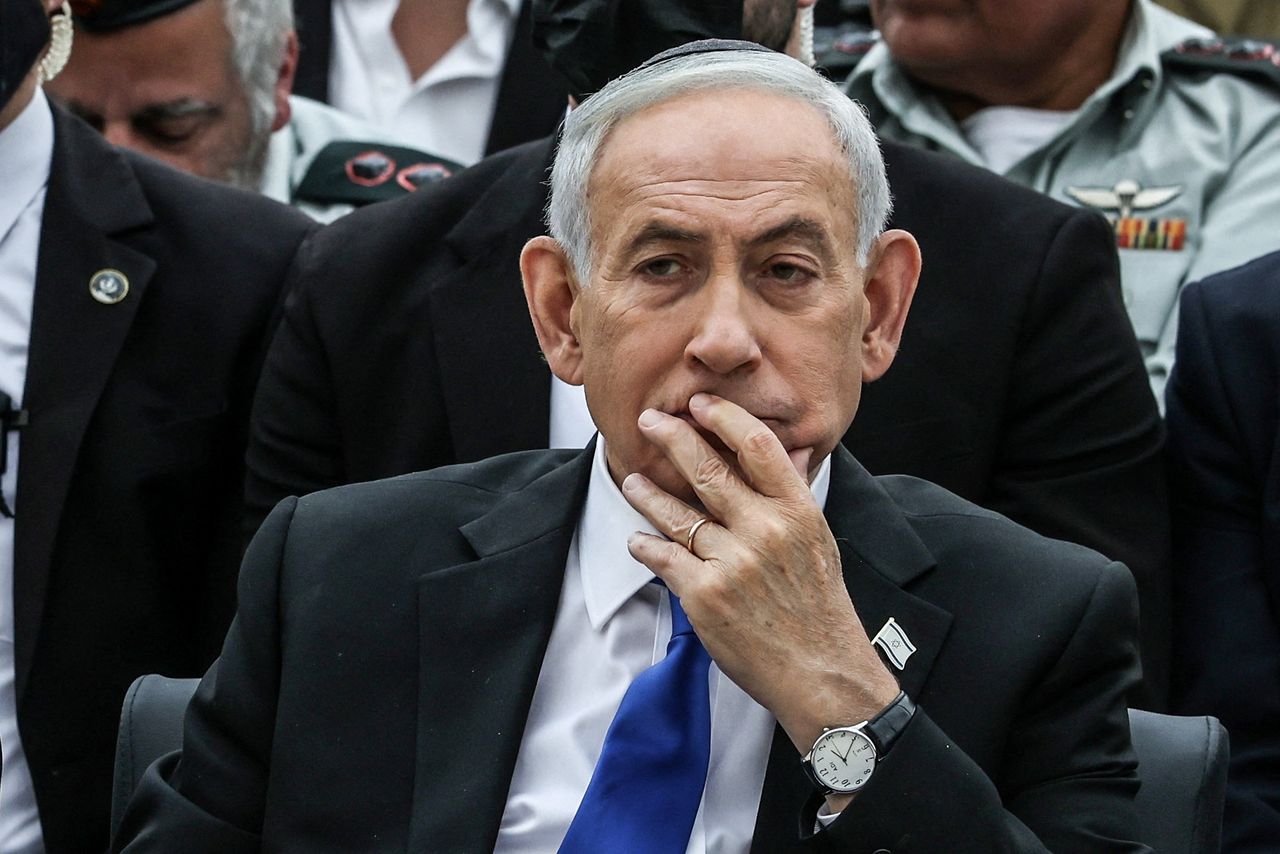
Ceylan describes Netanyahu’s strategy as an attempt to reframe the narrative: from the leader “who let October 7 happen” to “the only leader strong enough to stand up to Iran”.
Rudnitzky acknowledges that some Israelis give Netanyahu credit for launching the Iran war.
Yet, Netanyahu continues to face fierce criticism for Israel’s handling of its northern border, where Hezbollah has managed to rebuild some of its capabilities and continues to pose a significant security challenge, he says.
The human costs of those overlapping wars have become impossible to ignore for ordinary Israelis, analysts say. Prolonged rocket and missile fire has tested the home front in ways not seen in decades.
Rudnitzky points to official findings, including the state comptroller’s January 2026 report, showing that many communities – especially in the geographic and social periphery – still lack adequate shelters and emergency infrastructure.
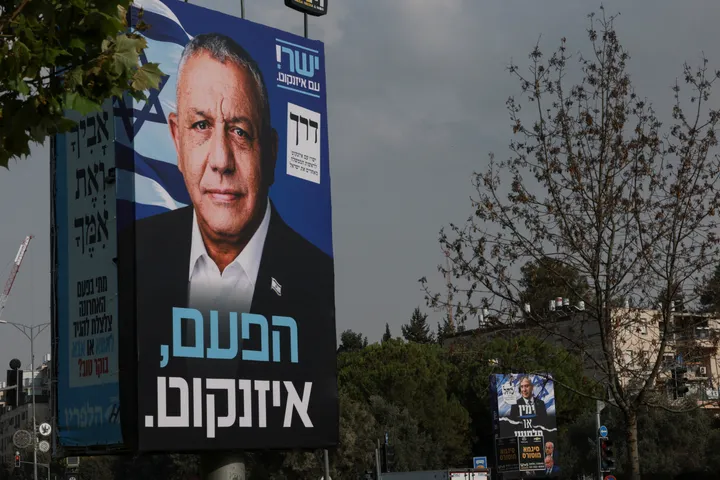




As many as one-third of Israel’s residents are “not adequately protected against missile attacks”, according to the state comptroller’s report.
Rudnitzky says security is not only about preparing the military for combat.
“It also means ensuring that the civilian population is equipped to endure prolonged periods of uncertainty, disruption, and insecurity,” he adds.
Has the war fatigue kicked in yet?
Ceylan highlights the economic and personal toll of Netanyahu’s multiple wars for the Israeli public: high defence spending, repeated call-ups of reservists, and inflation have “shattered the illusion of normal life” for the country’s middle class.
Most damaging of all has been the hostage crisis, she says.
For large numbers of Israelis, Netanyahu’s refusal to prioritise the hostages’ return was “seen as a betrayal”.
“Netanyahu is seen personally accountable for the death of the hostages,” she says, noting that the prime minister has alienated even moderate right-wing and centrist voters who once trusted him to keep them safe.
His dependence on far-right partners such as Itamar Ben-Gvir, Israel’s minister of national security, has further narrowed his appeal, locking him into an increasingly narrow political niche, she says.
Israel’s never-ending wars on multiple fronts have not pushed security off the national agenda. Instead, they have expanded what Israelis mean by the term, analysts say.
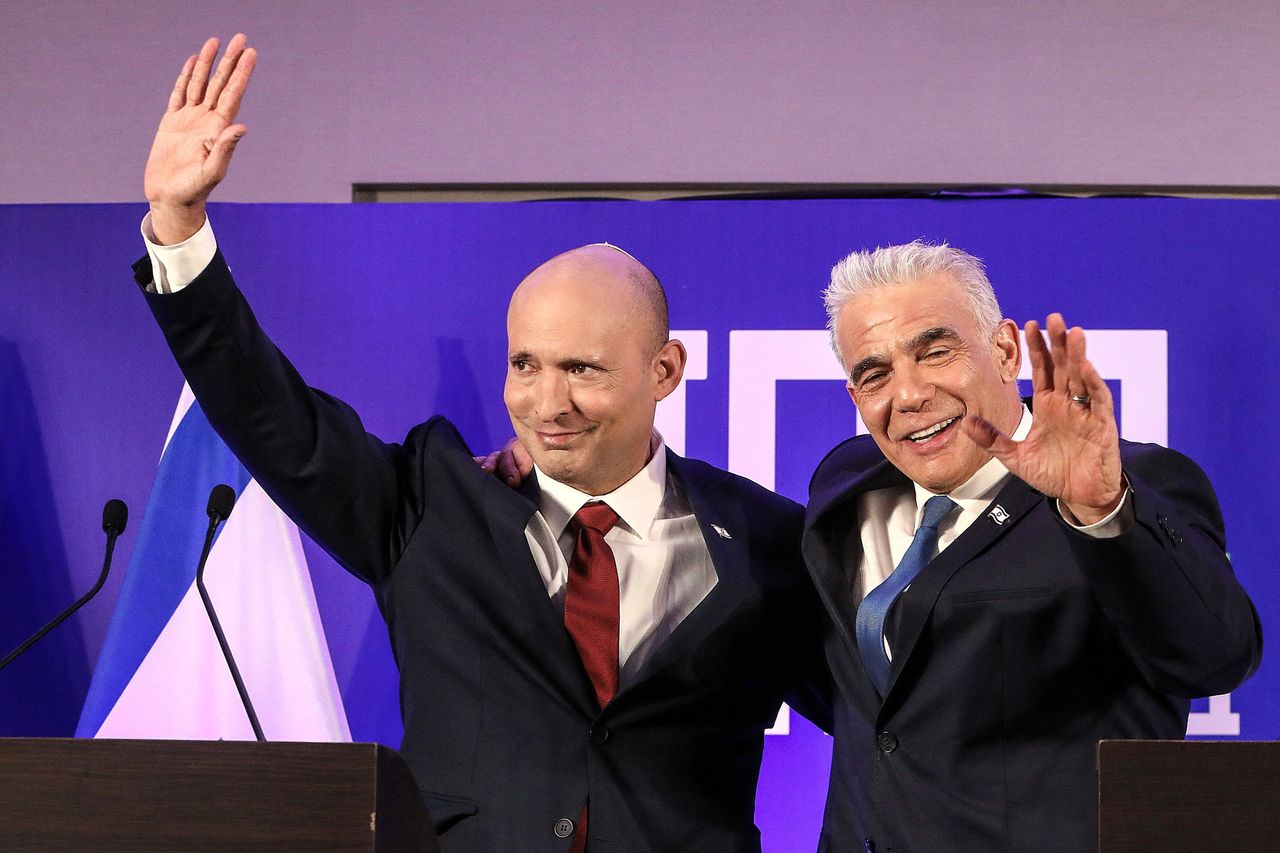
Rudnitzky says that voters are now demanding not only military strength, but also accountability, competent leadership, transparency, and a willingness to learn from past failures.
Public trust in the military itself has held up relatively well, largely because military commanders accepted responsibility and published investigations into the October 7 failures, he says.
However, the political leadership is widely seen in Israel as disconnected from those expectations, he adds.
Ceylan says Netanyahu’s repeated attempts to shift blame onto the Israeli armed forces and intelligence services while shielding his own cabinet have turned the military into a “political punching bag for Bibi’s survival”.
In the process, he has deeply alienated secular and centre-right Israelis.
The public mood has shifted towards accountability without abandoning security as a core concern, she notes.
The definition of security itself has changed. What voters now appear to want is “more competent, pragmatic and accountable security leadership” – qualities that many Israelis associate with Eisenkot.
“We can say that October elections will not be a debate between war and peace,” she says.
“It will be a referendum on competence, personal integrity, institutional trust versus ideological survival,” she adds.