 Zeki Tarik Sarioglu
Türkiye’s relationship with NATO cannot be understood solely as a military alliance. For Ankara, the alliance also signifies foreign policy flexibility, economic ties and a stronger position within the Western system.
Türkiye is a NATO member, but it also maintains active relations with countries outside the alliance, including those in the Middle East, the Caucasus, Africa, and Central Asia.
This gives Ankara room to act as a bridge between NATO and wider regions.
At the same time, NATO is economically important. In the past year, Türkiye’s defence and aerospace exports reached $10.9 billion, with 57 percent of these exports going to NATO countries.
This shows that Türkiye’s place in the alliance is also linked to industrial growth, trade networks and defence partnerships.
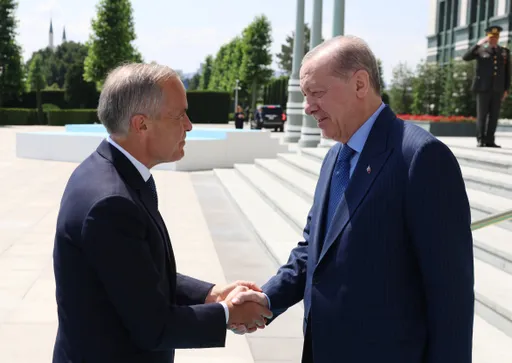
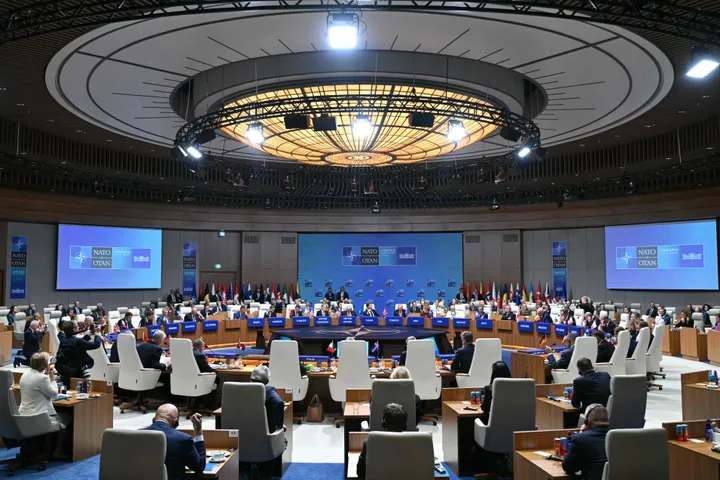
The 2026 Ankara Summit is more than a diplomatic event; it is a testament to two decades of structural change. NATO leaders, defence industry representatives, diplomatic delegations and international media will gather in Ankara.
Whereas the 2004 Istanbul Summit was marked by Türkiye's reliance on external procurement and alliance support, the 2026 gathering in Ankara reflects a nation that has successfully pivoted towards domestic production, strategic autonomy, and collaborative security partnerships.
This choice has symbolic value. It shows that Ankara is not only Türkiye’s capital, but also an important centre for international security diplomacy.
At the 2004 NATO Summit in Istanbul, Türkiye was best known for its strategic location, military capacity and role on NATO’s southeastern flank.
At the time, NATO’s agenda was shaped by the fight against terrorism, operations in Afghanistan, Bosnia and Herzegovina and Iraq, the transformation of the alliance and emerging security threats.
This agenda made Türkiye an important member of the Western security system because of its geography, military strength and proximity to crisis regions.
So, Türkiye’s contribution to NATO during that period was still understood largely in terms of its location and military manpower rather than its defence industry. Its defence sector depended largely on foreign procurement, joint production and technology transfer.
In this sense, the 2004 Istanbul Summit reflected a period when NATO was focused on transformation and operational capabilities, while Türkiye was still seeking to strengthen its defence capacity within a system largely shaped by external suppliers and alliance support.
By 2026, Türkiye’s position within NATO had changed.
This time, Türkiye will not only be present as the country with NATO’s second-largest army, but also as one with a defence industry that has grown significantly over the last twenty years.
The main change between the 2004 Istanbul Summit and the 2026 Ankara Summit is Türkiye’s gradual shift from being a “consumer” to becoming a country that produces and exports security.
The clearest sign of this change is evident in export figures.
According to data from the Presidency of Defence Industries, Türkiye’s defence and aerospace exports were approximately $196 million in 2004.
In 2025, this figure hit $10.054 billion, implying Türkiye’s defence and aerospace exports increased roughly 51 times since 2004.
Growth was not limited to exports. It was also evident in the sector's institutional capacity. In 2004, the number of defence projects carried out in Türkiye was 84. Today, this number has risen to more than 1,400, an increase of more than 16-fold.
During the same period, the value of defence projects increased from about $8 billion to over $100 billion, including ongoing tenders, representing roughly a 12.5-fold increase.
These figures are important for understanding why Türkiye’s role within NATO has changed. In 2004, Türkiye was largely a country that bought systems from abroad, carried out modernisation programmes, and sought technology transfer.
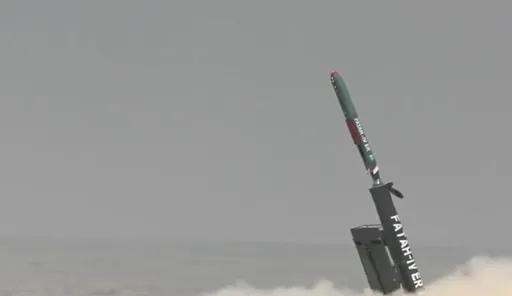
By 2026, Türkiye had developed a broader defence ecosystem. This ecosystem includes unmanned aerial vehicles (UAVs) and armed drone systems, ammunition, electronic warfare, radar systems, armoured vehicles and air defence systems.
One of the most critical aspects of this transformation is air defence. Türkiye’s security experience in recent years has shown that missile and air defence capacity is directly linked to foreign policy and alliance relations.




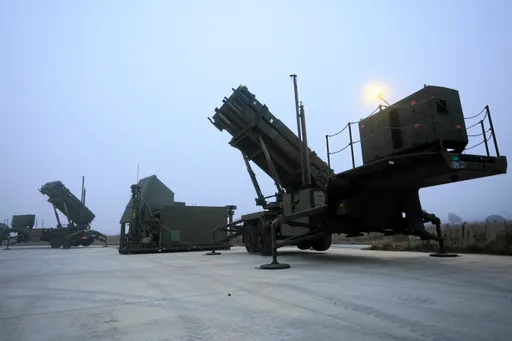
In 2012, Türkiye requested support from NATO in response to threats from Syria. NATO deployed Patriot batteries to strengthen Türkiye’s air defence.
In 2013, six Patriot batteries, provided by Germany, the Netherlands, and the United States, became operational in Kahramanmaras, Adana, and Gaziantep under NATO command and control.
In 2015, the United States withdrew its Patriot batteries from Türkiye, citing the end of the mandate and maintenance needs.
Germany also withdrew its Patriot systems after its three-year NATO mission ended and the missile threat from Syria was reassessed. Following Germany’s withdrawal, reports indicated that only Spain’s Patriot elements remained in Türkiye.
This process was a significant turning point for Türkiye. The withdrawal of the Patriot systems made Türkiye’s need to develop its own air defence capacity even clearer.
In other words, for Türkiye, the main issue was to become a stronger, less dependent actor within NATO.
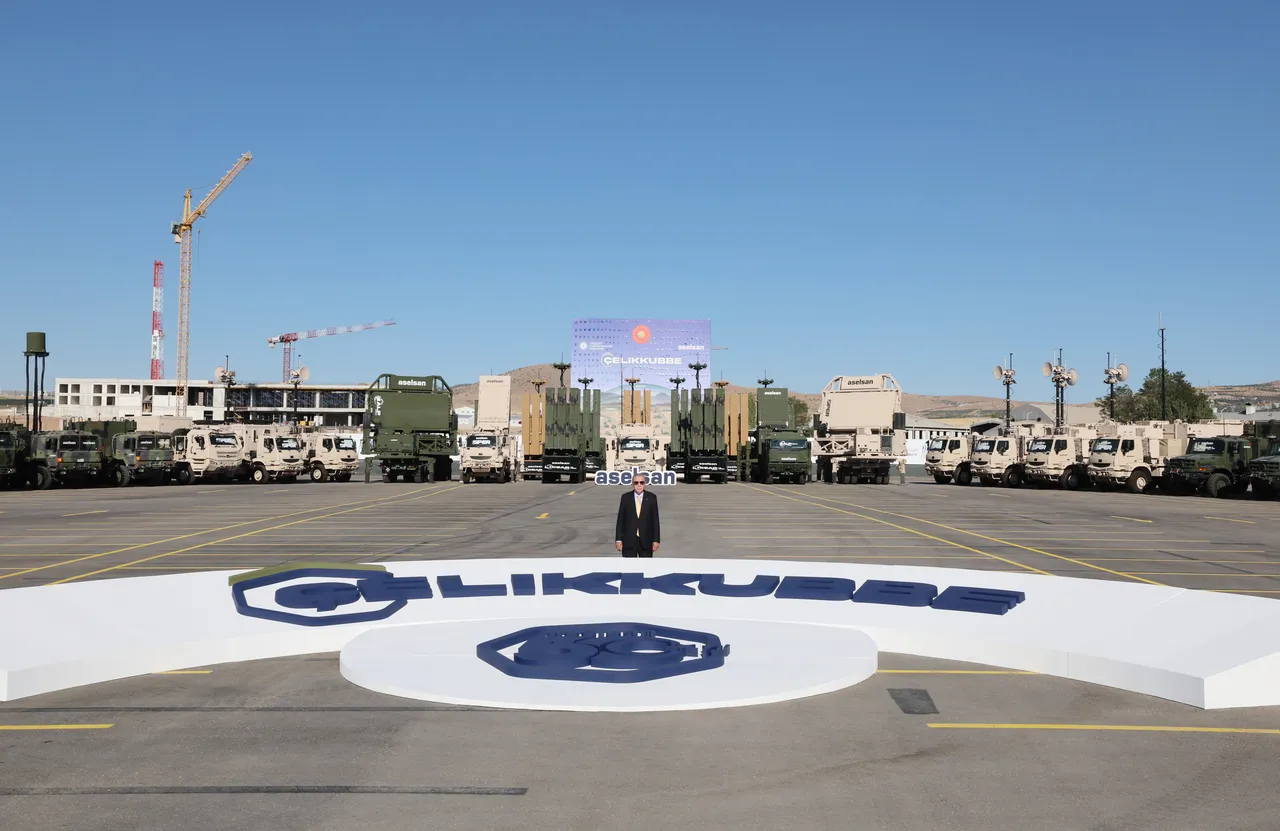
Today, the Steel Dome project represents the clearest result of Türkiye’s search for greater air defence autonomy. Rather than relying on separate systems or temporary support from allies, Steel Dome aims to create an integrated national air defence architecture by connecting radars, sensors, command-control units and different layers of defence systems under a single structure.
This shows that Türkiye’s air defence policy has moved beyond merely responding to urgent security needs. It has become part of a broader strategy to build an independent, layered and nationally controlled defence shield.
This is where the difference between 2004 and 2026 becomes clear. In 2004, Türkiye’s security architecture was largely shaped by foreign procurement, modernisation programmes and support from its alliance.
By 2026, Türkiye still values NATO solidarity, but it is also seeking to build its own air defence architecture, produce its own systems and discuss joint production with its allies on more equal terms.
One of the main topics of the 2026 Ankara Summit will be strengthening the transatlantic defence industry, increasing defence spending, supporting Ukraine and reinforcing deterrence.
Türkiye is now joining such a summit as a country that can contribute to the alliance with its production capacity, export network and defence industry partnerships.
According to Reuters, Türkiye now supplies defence products to around 40 countries. It is also looking for more defence sales and joint production opportunities as the West rearms.
This situation could give Türkiye several concrete advantages at the 2026 Ankara Summit.
First, Türkiye will have the chance to present its defence industry products more clearly to NATO allies.
Second, it will be able to more clearly explain the cost of excluding Türkiye from the European security architecture.
Third, Türkiye may gain economic and technological benefits from exports of defence-industry products and from joint production projects.
The meaning of the 2026 Ankara Summit for Türkiye is therefore not only about hosting the event. This summit is a diplomatic stage where the transformation in Türkiye’s defence industry since the 2004 Istanbul Summit will become visible within NATO.
This change also gives Türkiye’s foreign policy a more confident tone. As capacity in the defence industry increases, the number of options at the diplomacy table also increases.
A Türkiye that develops its own systems, exports them and comes to the joint production table with technology is no longer discussed within NATO only because of its geographical position. It is also discussed because of its capacity to contribute.
As a result, Türkiye’s story between the two NATO summits is not only a story of military modernisation.
It is also a story of transformation: from foreign dependence to the pursuit of strategic autonomy; from a country seeking suppliers to one that produces; and from an actor under NATO’s security umbrella to one that can contribute to the alliance’s defence industry capacity.
The 2026 Ankara Summit has the potential to become the showcase of this transformation.