 Owais Tohid
Those who grew up in 1980s Pakistan remember the repressive junta rule very well, as well as the tumultuous period of the Soviet-Afghan War, the effects of which spilt across the borders.
But even in those days of despair, cricket offered millions a refuge. That era reshaped cricket and its popularity.
Pakistan-India matches filled stadiums, with crowds goading the debonair Imran Khan as he ran down the track on his way to becoming the country's cricketing icon.
Khan became Pakistan’s first global cricket star; his posters hung in homes nationwide. Cricket became a street sport. It was a source of celebration.
From the mountains to the Thar Desert, cricket eclipsed field hockey, Pakistan’s national game.
The country became a nursery for raw, world-class talent. Imran spotted fast bowling sensation Waqar Younis and batting legend Inzamam-ul-Haq; when Javed Miandad picked a teenage Wasim Akram to represent the country, Pakistan had found a new legend,
Under Imran, Pakistan won a series in England, drew a series against the mighty West Indies in the Caribbean, and beat rival India in India.
Experienced players like Imran and Miandad channelled Pakistan’s raw talent onto the global stage. Miandad’s last-ball six against India in Sharjah, and victories overseas, turned cricketers into larger-than-life figures. Cricket became a household word.
Cricket has also straddled politics, for better or worse.
General Zia-ul Haq made a surprise visit to India’s Jaipur to watch a Pakistan-India match — an act of cricket diplomacy that eased tensions. But he also used the game to dampen dissent, pressing the global star Imran Khan not to retire.
The fairy tale came in 1992, when Imran Khan led his “cornered tigers” to the World Cup title. Cricket fans still remember the sea of people in Lahore welcoming the champions.
After its 1992 World Cup triumph, Pakistan boasted world-class match-winners in the 1990s: fast bowlers Wasim, Waqar, and Shoaib Akhtar, plus aggressive batters Inzamam and Saeed Anwar, who stunned the world.
Yet the team won no world title, and allegations of match-fixing and infighting tainted its image.
In a free fall
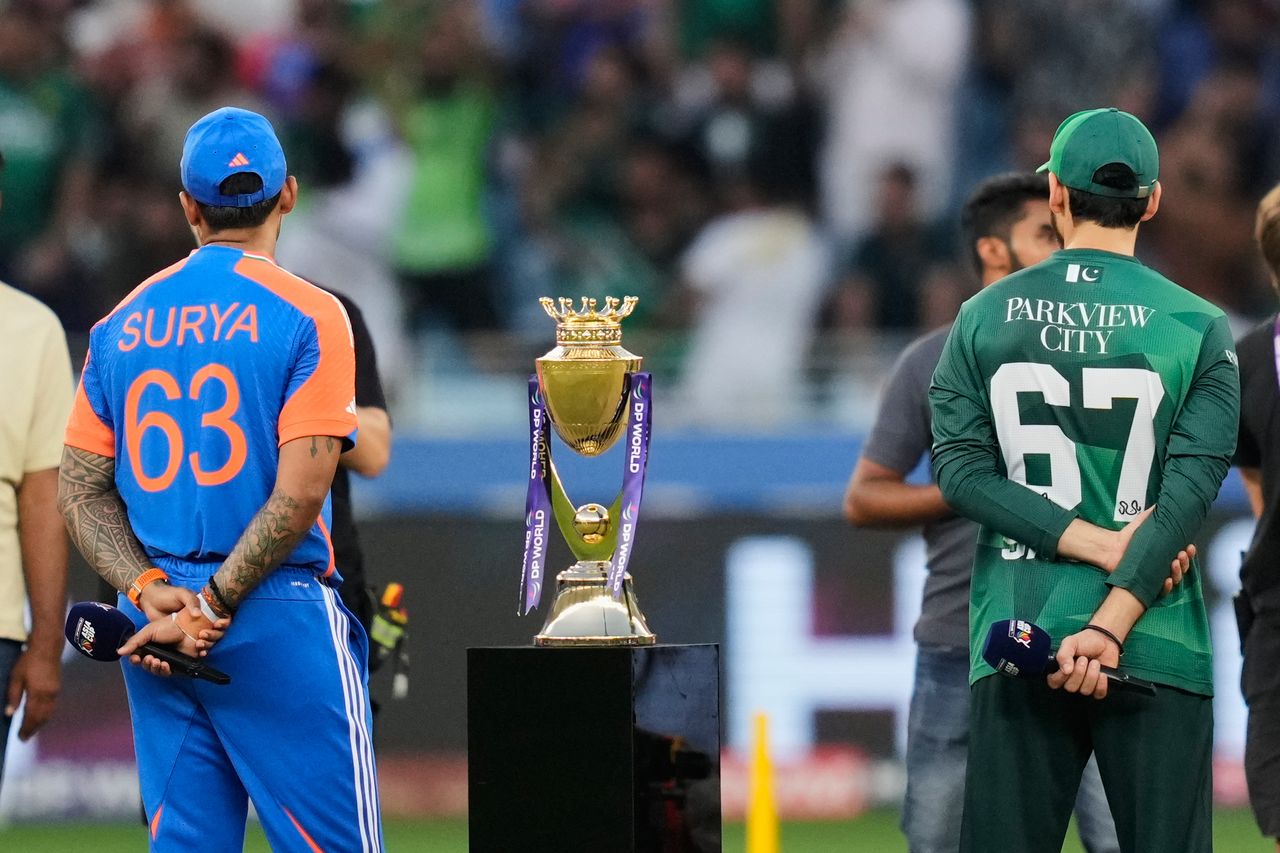
The game of cricket, once a binding national force for rich and poor alike, is now in free fall. It has become a source of disillusionment for fans.
And its decline is not just a temporary slump. It is the visible symptom of a system that never modernised.
Pakistan has not won the 50-over World Cup since 1992, nor the T20 World Cup since 2009. Its last major international title was the 2017 Champions Trophy, nine years ago. Its Test ranking sits at a historic low.
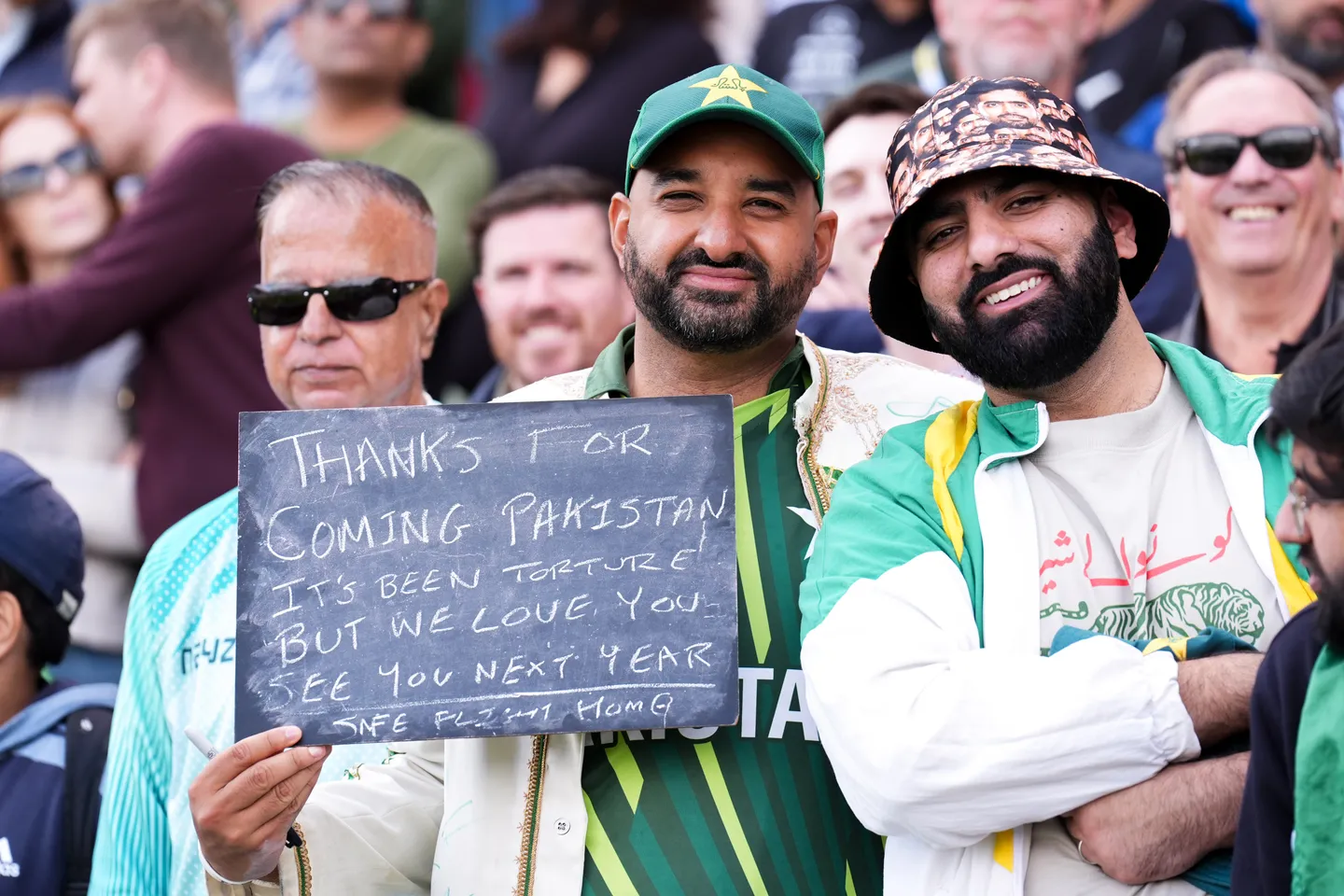
Pakistan’s recent tour of England descended into chaos: two heavy defeats, seven players sent home mid-tour, and head coach Sarfaraz Ahmed and bowling coach Umar Gul sacked, with some of those dismissed learning of their fate through social media.
One of the selectors, Misbah-ul-Haq, also resigned, adding to the chaos.
So much so that opening batsman Imam-ul-Haq was accused of faking an injury to avoid facing the hostile English fast bowlers at Lord’s, where Pakistan lost the series.
Former England captains Nasser Hussain, Michael Atherton and Eoin Morgan criticised Pakistan’s cricket administration for the unprecedented mid-tour changes, calling the knee-jerk reaction disrespectful to players and coaches.
Many others argued that the changes turned players into scapegoats instead of holding selectors and administrators accountable for repeated failures and the team’s decline.
Interior minister and PCB chairman Mohsin Naqvi contested the view that the country’s cricket was in tatters, drawing comparisons with South Africa and T20 champions India, both of whom lost to lower-ranked teams recently.
What he did not say was that while South Africa and India suffered one-off losses, Pakistan’s flatlining is consistent over five years.
Anyone who knows the business side of a cricket bat also knows what actually ails Pakistan’s cricket: a lack of consistency.
The country’s cricket administration is constantly playing musical chairs, with four chairmen, 17 selectors and close to a dozen coaches shuffled in and out in just five years.
This has resulted in constant instability, reflecting poor decision-making and perhaps incompetence.
Former captain Mohammad Yousuf said that the turmoil reflects “the familiar cycle of internal chaos, differences of opinion, and controversies that have long haunted Pakistan cricket.”







Former greats have been reproving the domestic system, the pathway for players to international cricket.
The crisis is not new. The 1990s brought match-fixing allegations as batsman Salim Malik was banned for life by the Justice Qayyum inquiry in 2000, though the ban was later overturned on appeal.
In 2010, three players – then-captain Salman Butt, Mohammad Asif, and Mohammad Amir – were banned for spot-fixing in a Test against England; the three were imprisoned the following year.
In 2009, militants attacked the visiting Sri Lankan team in Lahore, driving international cricket away and forcing Pakistan to play ‘home matches’ on flat pitches in the UAE for a decade, depriving a generation of aspiring cricketers of seeing their heroes in person.
Every such turmoil tainted Pakistan's cricketing image, yet the supply of world-class players has never really stopped. What has failed is everything around them.
Pakistan briefly reached the No. 1 spot in Tests in 2016. Sarfaraz Ahmed captained them to victory over India in the 2017 Champions Trophy final.
Babar Azam, once compared to Indian maestro Virat Kohli, has not evolved as a player or captain, despite three tenures. The latest 3-0 mauling in England may cost him his captaincy.
Most of Pakistan's top players show signs of brilliance and progress, but their regression is more noticeable.
Despite the presence of quality players like Shaheen Shah Afridi, Naseem Shah, Haris Rauf, Fakhar Zaman and Saim Ayub, Pakistan crashed out of the last two Twenty World Cups, the ODI World Cup and the Champions Trophy. They lost to greenhorns US in the 2024 World Cup.
Afridi and Hasan Ali have lost pace; they rarely play domestic cricket. Naseem is more visible in TV ads than on the field. Most of them want to play the lucrative T20 leagues rather than Test matches, considered the true measure of players.
But all is not lost
Amid the doom and gloom, a 21-year-old forced into the spotlight overnight showed the world that there is no dearth of raw talent in the cricket-crazy country.
Arriving in England as a replacement from Pakistan’s mountainous northwest, the strapping Razaullah sent down thunderbolts at speeds south of 93 mph. He then picked up the bat and tore apart England’s much-touted pace attack, hitting nine sixes in a stunning counter-attacking innings in a losing cause.
His all-round performance salvaged some of Pakistan’s bruised pride and proved that Pakistan still has talent but lacks the system to hone it – disconnected from the grassroots so essential to nurturing talent.
Pakistan has failed to safeguard its first-class domestic structure because of poor decision-making, while the glamour and money of T20 cricket overshadow the longer formats.
The domestic system became a laboratory for successive cricket bosses to experiment with.
The departments that once employed cricketers and groomed talent disbanded their teams, rendering hundreds of players jobless.
Now the departments have been restored, but big names are shying away because of inconsistent policies.
Pakistan’s cricket crisis mirrors a deeper institutional failure: a system that produces talent but cannot sustain it, that changes coaches and shuffles captains, and that has let T20 money hollow out the first-class game.
Razaullah’s dream-like performance has given a glimpse of Pakistan cricket’s golden past.
But to change the fate, Pakistan cricket cannot rely on a few lone stars and their flashes of brilliance; it must rebuild the whole constellation through systemic and structural reform.
The system needs stability, planning and restructuring.
Former cricketers say the game’s modernisation requires a multi-tier development system.
Reviving club cricket and establishing regional U-16 and U-19 academies with hostels. Much of Pakistan’s raw talent comes from impoverished regions and communities—the Pashtun northwest, southern Punjab and low-income urban areas. That talent also needs free education.
Academies run by the cricket administration in Lahore, Islamabad and Karachi should link to research and engineering universities, be equipped with biomechanics and scientific data, and be staffed by nutritionists and trained physiotherapists.
The domestic first-class system must also be strengthened to turn raw talent into longer-format players and give Pakistan’s international players a platform to regain form and match practice.
Until the Pakistan Cricket Board builds a modern structure with scientific support and a protected domestic circuit, and a real pathway from grassroots to the national team, the next generation of aspiring Pakistani cricketers will keep looking for refuge in a game that may no longer offer it.