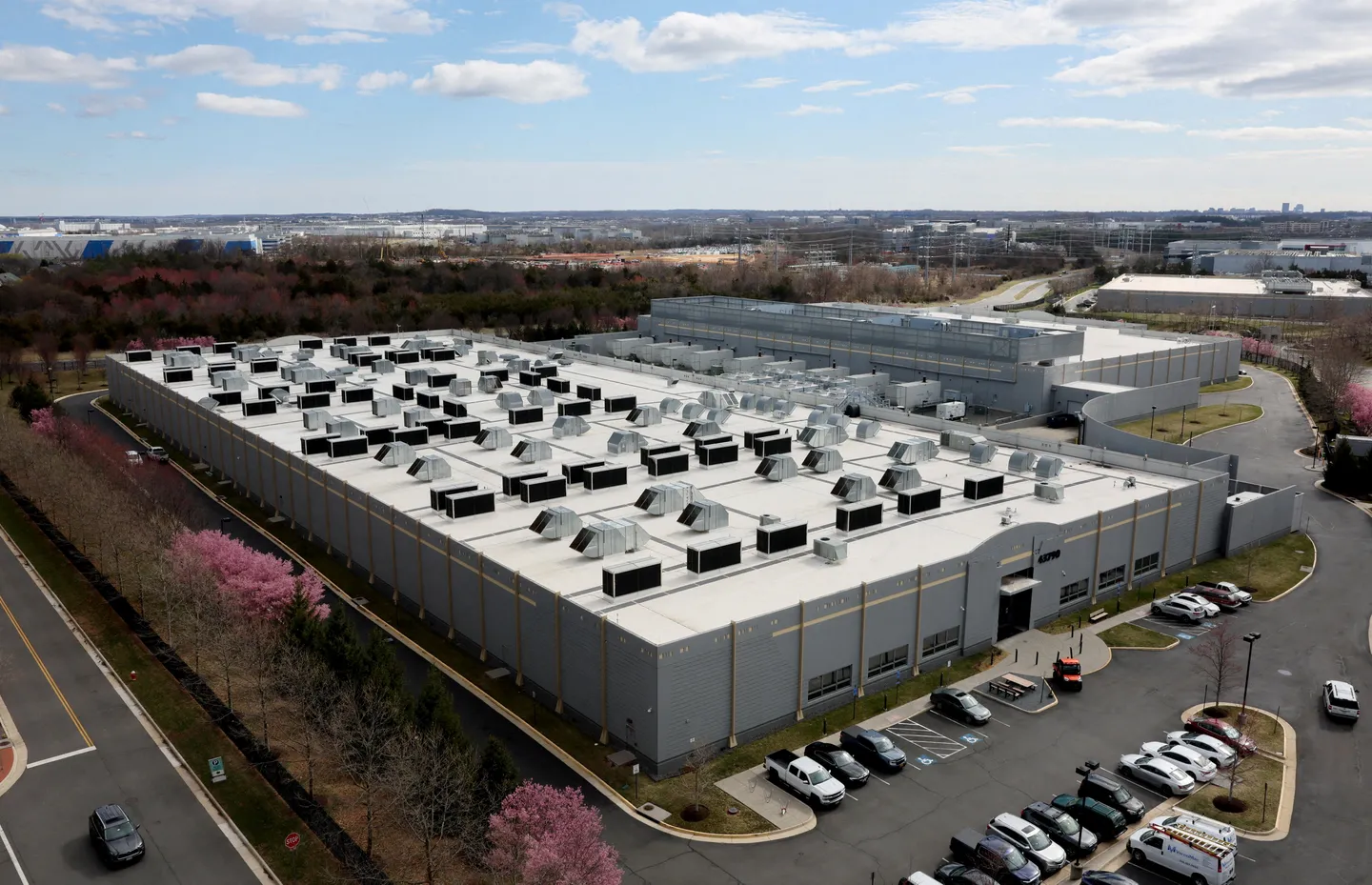
The snowballing opposition to data centres in communities across the United States has transformed the midterm election landscape, thrown a wrench into the plans of the world's richest companies and brought perhaps the industry's biggest booster, President Donald Trump, to its defence.
It's a dramatic shift from two years ago, when few people had even heard of a data centre.
But the late 2022 debut of OpenAI's ChatGPT ignited worldwide demand for chatbots and other generative AI products that typically require large amounts of computing power to train and operate.
Now, Oracle, Meta, Google, Amazon and Microsoft expect to plunge more than $700 billion into data centers in the US this year alone.
Sprawling into rural America Tech giants and developers need huge tracts of land to accommodate mammoth computing warehouses, so they've been exploring deeper into rural America.
The push has united conservative ranching and farming communities with left-leaning environmental advocacy groups, who share a combined concern about drought-stricken waterways, pollution in food-growing areas and shrinking farmland.
In New Mexico, where Oracle and OpenAI are building Project Jupiter, a $165 billion data centre complex planned near the Mexican border, concerns over dwindling water supplies are mounting.
There, the Center for Biological Diversity, an environmental advocacy group, challenged the state’s approval of well drilling permits to supply millions of gallons of water to Project Jupiter. The centre said the state approved a permit last year after ignoring public-notification procedures in state law.
Samantha Barncastle Salopek, a water rights lawyer who comes from a pecan-farming family, said farmers and ranchers are worried about their water rights in a state hammered by drought. She is running as a Republican for a seat on the Dona Ana County commission.

President Trump continues to stick up for data centres.
He said last week that if he were a mayor or a governor with a chance to land a big data centre, "I would absolutely want it, because the jobs are enormous and the money paid, the taxes paid, are just enormous."
Trump also acknowledged, however, that data centers need "a little public relations help."
The Republican president is a leading champion for the industry, seeing it as critical to winning the artificial intelligence race against China.
His administration is pushing to help tech giants build and connect data centres to power plants and high-voltage power lines and convert Cold War-era uranium enrichment plants into data center and power plant complexes.








Governors who once pursued data centre projects for their states are shifting their stances or taking steps to toughen regulations on data centres.
In some states, governors have halted their state’s sales tax exemption for new data projects. Other states are trying to force data centres to pay for their own electricity supply, limit their water use, disclose more about their operations and win community support before they get a state permit or tax exemption.
In Texas, Republican Governor Greg Abbott ordered regulators to take steps to ensure Texans were not paying higher electricity bills because of data centres, and promised to push a legislative agenda next year to impose tougher regulations on data centres, including taking away the state’s billion-dollar-plus-per-year tax break.
New York Governor Kathy Hochul, a Democrat, ordered a one-year ban on large data centres.
Worries that AI energy demands will scuttle climate goals
The explosive energy demand of artificial intelligence has set in motion the biggest-ever construction boom of natural gas-fired power plants, and sent renewable energy allies in search of ways to ensure that data centres will be powered by climate-friendly sources, too.
Michigan, Oregon and Minnesota have enacted laws in the last 18 months designed to protect their preexisting requirements that electric utilities use only emissions-free energy sources by 2040.
Similar legislation is in play at the end of California’s legislative session this month.
In other states, including Georgia, Colorado and North Carolina, environmental advocates and corporations with clean energy goals are working regulatory levers to push monopoly utilities that historically control the energy supply and grid access.
Data centres, however, still have a friend in labour unions.
Members of building trades unions are employed on a huge number of massive data centre projects, as union locals scramble to recruit new apprentices and expand training centers to feed the explosive demand.
National union leaders say their ranks are growing faster than they have ever seen. Meanwhile, tech giants are putting millions towards training programmes.
Unions aren't just working on the projects. They are also advocating for data centres in Congress, statehouses and communities.
In packed town council meetings where a project is under consideration, union members often show up to answer complaints about data centres in ways that executives at tech giants and the development firms rarely do.