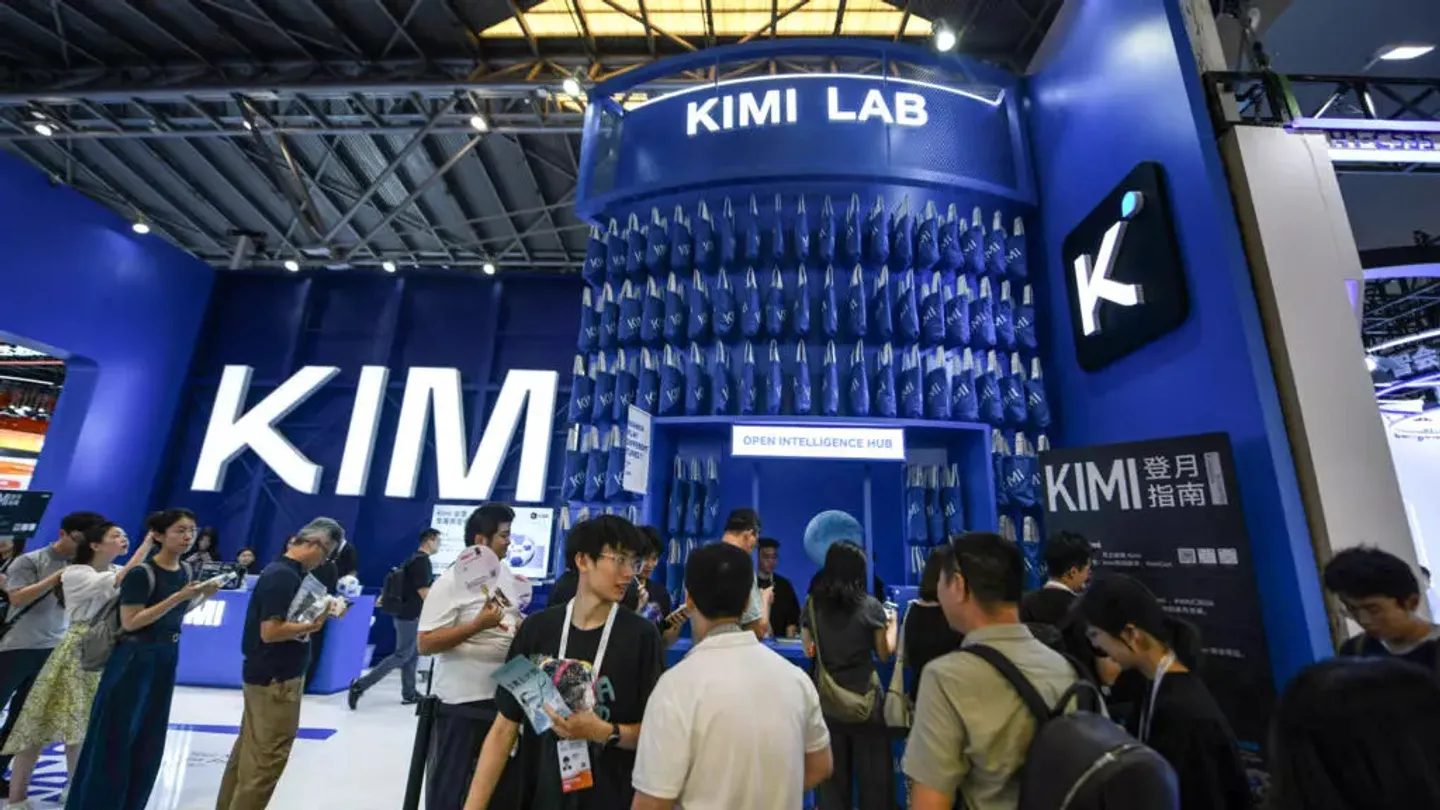
Another powerful new artificial intelligence model from China has taken the US tech industry by surprise, the latest sign that Chinese startups that publicly release their “open-source” AI technology are making the California titans of AI sweat.
The newest Kimi K3 model from Beijing-based startup Moonshot, run by an entrepreneur who earned his doctorate in Pittsburgh, appears to be catching up to the best versions of Anthropic's Claude and OpenAI's ChatGPT.
“This may be the single biggest release of the year,” and marks a moment when open-source Chinese models are surpassing closed US models, said Anastasios Angelopoulos, co-founder and CEO of Arena, on Friday a platform for evaluating AI systems.
Kimi K3 topped the charts in Arena's ranking of what it calls “front-end coding capability,” a measure of an AI large language model's performance. “More results are rolling in that are likely to continue to show it is at the top of the pack,” Angelopoulos said on social media.
It was unlikely to be a coincidence that K3's unveiling came shortly before Chinese President Xi Jinping's opening address on Friday at the nation's annual World Artificial Intelligence Conference in Shanghai.
“The development of artificial intelligence should not be a solo performance by any single country but rather a symphony of global cooperation,” Xi said at the event.
Chinese AI models have shown large strides K3 follows another major AI model release last month from the Chinese startup Zhipu, or Z.ai.
Its new flagship GLM-5.2 model is already being widely used by software developers around the world who say it can perform work almost as good as the top US models at a cheaper price.
The hype over the new Chinese model resembles the market-shaking panic that followed the release of a new model from Chinese startup DeepSeek in early 2025, though not everyone finds it justified.
The response to K3 is an “overreaction shockingly similar” to DeepSeek's release last year, said tech analyst Patrick Moorhead on social media. He said it could be good for parts of the broader AI industry but pose a revenue challenge to Anthropic and OpenAI.
During the conference that runs until Monday, tech giant Huawei has also been showcasing a new AI computing system called the Atlas 950 SuperPoD, a signal that China increasingly is amassing the domestic hardware it needs despite US restrictions on imports from chipmakers like Nvidia.
Moonshot hasn’t said what hardware it used to build K3, but the startup is a partner with Huawei.

The price to use K3 is highest yet for a Chinese AI model, but it is still half as expensive as OpenAI’s high-performing GPT-5.6 Sol model, according to a Friday report by Bank of America research analysts.
US politicians and several major AI companies including Anthropic and OpenAI have accused Chinese AI models of illicit “distillation” of their models to extract their technologies, a claim that Beijing says is “groundless.”
Anthropic in February accused DeepSeek, Moonshot and a third China-based AI lab, MiniMax, of engaging in campaigns to “illicitly extract Claude’s capabilities to improve their own models” using the distillation technique that “involves training a less capable model on the outputs of a stronger one.”
Battle for AI supremacy
Anthropic said that distillation can be a legitimate way to train AI systems but it’s a problem when competitors “use it to acquire powerful capabilities from other labs in a fraction of the time, and at a fraction of the cost, that it would take to develop them independently.”
But it can go both ways. San Francisco-based startup Anysphere, maker of the popular coding tool Cursor, has acknowledged that one of its top products was based on Moonshot’s K2.5 model.
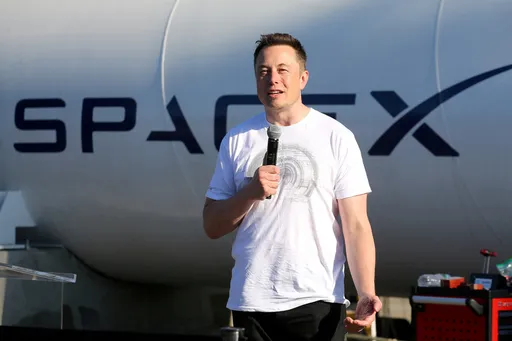
Elon Musk’s SpaceX is planning to close a deal to buy Cursor for $60 billion later this year.
K3 marks a leap for ‘open-source’ AI models. Moonshot co-founder and CEO Yang Zhilin earned his PhD in 2019 at Carnegie Mellon University, where he is said to have made fundamental contributions to the machine-learning field and was known for a love of rock bands like Pink Floyd.
The pride among his former colleagues at the school in Pennsylvania transcends the US-China rivalry.
“What a huge win for the open-source community! It feels like just yesterday Zhilin was graduating from my lab at CMU," wrote his former adviser Russ Salakhutdinov, who is also a former director of AI research at Apple.