The European Union has moved forward with a vast overhaul of its migration policy, aiming to ramp up deportations and ink controversial deals to build detention centres abroad, in what rights groups compare to the Trump administration's aggressive immigration policies.
“The new regulation will speed up the return process and increase returns of persons who have no legal right to stay in the EU,” said Nicholas Ioannides, deputy migration minister for Greek-administered Southern Cyprus, which holds the rotating presidency of the 27-nation bloc.
Only 29 percent of migrants with no legal right to remain in Europe leave the EU, Euronews reported, citing official figures.
The deal was struck between the EU's three main institutions, the European Commission, the European Council and European Parliament, during a so-called “trilogue” on Monday evening.
"This is a really very important step in making sure that we have control over what is happening in the EU, over who comes but also who has to leave the EU," Home Affairs Commissioner Magnus Brunner said.
Critics compared the regulation to the immigration strategy of the Trump administration, which has struck a series of secretive agreements with nations around the world to deport thousands of people to countries that are not their own. The United Kingdom also planned to deport migrants to Rwanda, but the plan was bogged down in legal red tape and the new government dropped the plan as soon as it came into power.

"The Regulation is going to create a draconian detention and deportation machine,” said Silvia Carter, spokesperson for the Brussels-based Platform for International Cooperation on Undocumented Migrants.
“Across the Atlantic, we see the violence and fear created by ICE’s brutal immigration enforcement. Europe should be learning from the harms of that model, not building its own version of it.”
The provisional agreement will now head to the EU lawmakers and heads of state, where approval will likely be swift.
Currently, most migrants can only be returned to their country of origin or to a country where they have an established connection. Under the new system, this requirement will no longer apply. The only exception would be unaccompanied minors, who could not be sent to a return hub, whereas families with children would remain eligible for transfer to such hubs, Euronews reported.








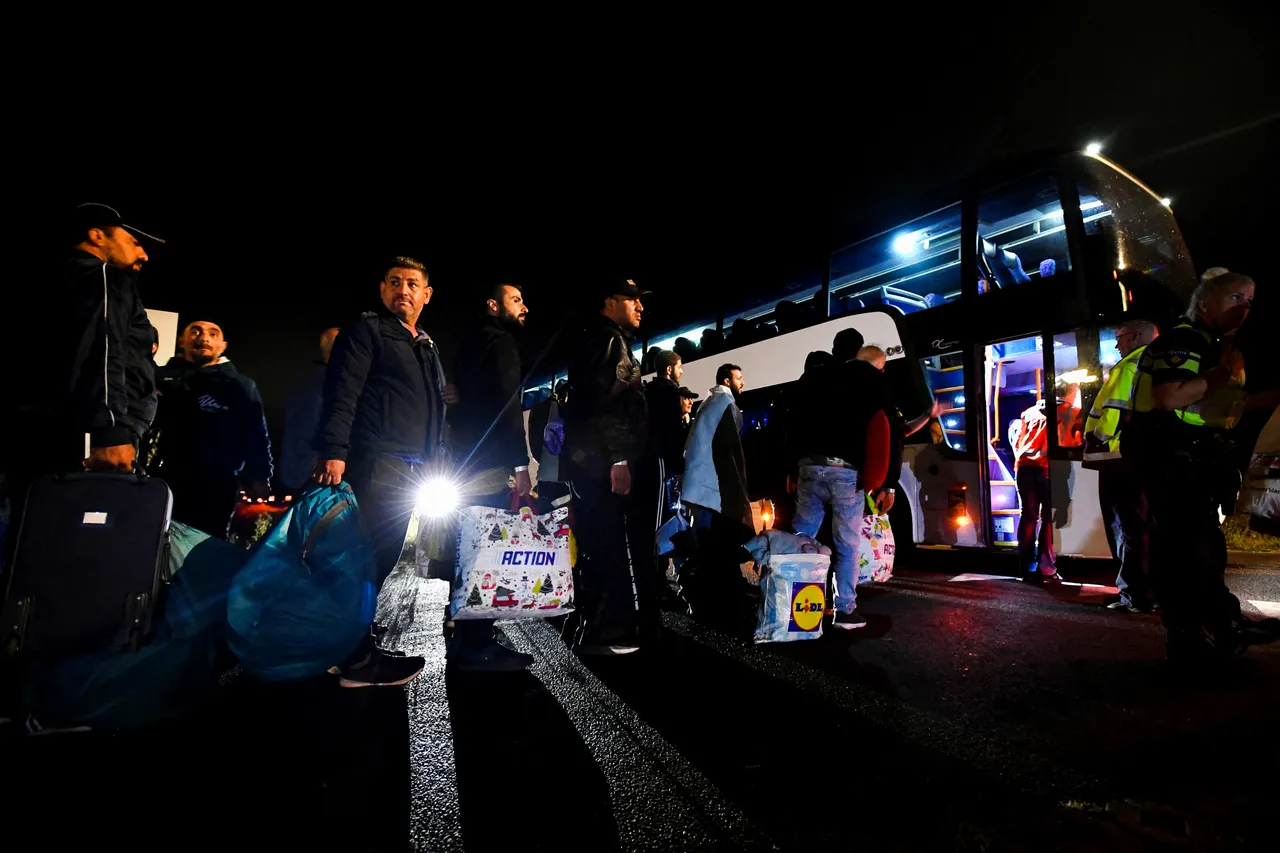
EU member nations will soon be able to set up bilateral deals with countries outside the bloc to build deportation centres. At least five EU nations — Germany, Austria, the Netherlands, Denmark and Greece — are already in talks with third countries, mostly in Africa, to host “return hubs” on the model of Italy's detention deal with Albania.
Other measures include extended detention periods, stricter entry bans, and expanded powers to track down irregular migrants. The maximum period of detention for irregular migrants awaiting return would increase from six months to two years, with a possible additional six-month extension and no time limit for individuals deemed a security risk. Entry bans would also be substantially tightened, increasing from five to ten years in most cases, with the option of lifetime bans for those considered a security threat.

The EU has continually toughened migration policies after right-wing parties took power in some countries in 2024. European Commission President Ursula von der Leyen, from the centre-right European People’s Party coalition, has said that the new measures will prevent a repeat of the 2015 crisis caused by Syria’s civil war, when about 1 million people arrived to seek asylum.
Centre-right political groups allied with the far-right to overcome opposition from centrist and left-wing parties, said Mélissa Camara, a French lawmaker and member of the Greens who called the deal “a historic setback” for human rights in the bloc.
“The legalisation of return hubs outside the European Union, the green light for the detention of minors, home visits inspired by ICE practices: the legal arsenal serving a xenophobic ideology is now complete,” she said.
Activist groups warned the legislation would cut deep into the protections granted by the EU fundamental charter on human rights and expose people to risks outside the bloc.
“This deal will give governments much broader powers to detain and deport people," said Marta Welander, a spokesperson for the International Rescue Committee.
"It looks set to normalise immigration raids, expand the use of detention in prison-like facilities outside EU territory that are essentially legal black holes, and increase the risk of people being deported to countries where they could face persecution, torture or worse.”