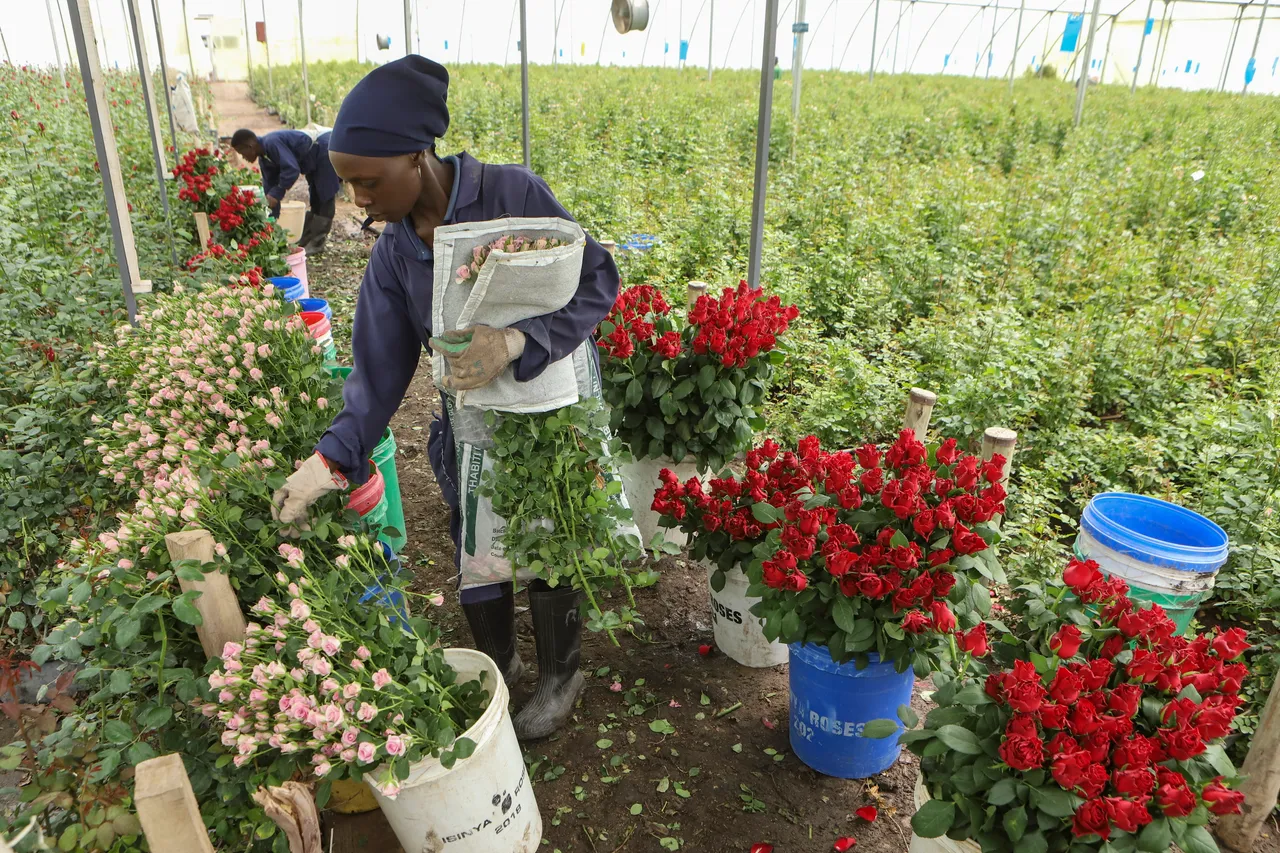
Kenya’s flower industry has reported weekly losses of up to $1.4 million since the US-Israeli war on Iran began, with growers attributing the losses to a decline in demand and shipping disruptions.
The Kenya Flower Council, a private sector organisation representing growers and exporters of cut flowers and ornamentals in Kenya, said on Tuesday that the ongoing conflict has resulted in over $4.2 million in losses over the last three weeks.
“We are seeing a reduction in movement, delays in movement of produce, and longer routes, while pricing is extremely high. Last week, we were at $5.80 per kilo, which is the highest we’ve had in the last 10 years,” KFC Chief Executive Officer Clement Tulezi said.
Kenya's horticulture sector, one of its most important industries, is worth over $800 million annually, according to the Central Bank of Kenya.
At Isinya Flower Farms, located 56 kilometres south of Nairobi, Marketing Manager Anantha Kumar says exports have dropped by more than half.
“Previously, we used to export 450,000 stems per day, and currently we are doing about 150,000 to 200,000 stems a day. So we are discarding almost 50 percent,” Kumar said.








Demand for direct cargo flights to Europe
Normally, direct flower exports to the Middle East account for about 30 percent of business at Isinya Flower Farms and up to 15 percent nationally, with Europe being the largest market, accounting for up to 70 percent.
However, while the Middle East isn’t Kenya’s main export market for flowers, cargo freight to Europe been disrupted by the conflict in the Middle East, resulting in reduced exports as well as higher costs.
“With the current freight rates, customers are not able to buy. And while the freight rates are high, it is also difficult to get the freight. Only a few freights are operating, as mainly the Middle Eastern carriers have stopped, and the European carriers are charging about $5 per kilo, which is two times the normal rate,” Kumar said.
Growers like Isinya Flower Farms now warn that, should the conflict drag on, the sector will continue to deteriorate, with scenarios similar to the Covid-19 period looming. Experts warn this will likely result in job losses in a sector that employs up to half a million Kenyans directly.
The Kenya Flower Council now says it is lobbying the Kenyan government to introduce direct cargo flights to Europe in a bid to maintain the European market and cushion growers.