 Owais Tohid
There is a magic to Isfahan, the ‘Nesf-e-Jahan’ - said to contain the beauty, art and architecture of “half the world”.
Nestled within the foothills of the Zagros ‘Rainbow’ Mountains, the city is contoured by the Zayandeh River meandering to its historical core. Prominent domes of mosques and cathedrals frame the azure skyline, and grand palaces stand alongside the labyrinthine bazaar.
The layered history whispers through structural memory: from the ruins of the fire temple of the Zoroastrian Sassanian Empire to the Gunbad-i-Khaki – the Dome of Earth, described as music in brick form and said to have been either influenced or designed by Omar Khayyam, the great Persian poet and mathematical genius.
Yet today these monuments face a devastating threat.
The US and Israel attacks are targeting the cultural and historical heritage sites across Iran. And Isfahan faces the brunt of it.
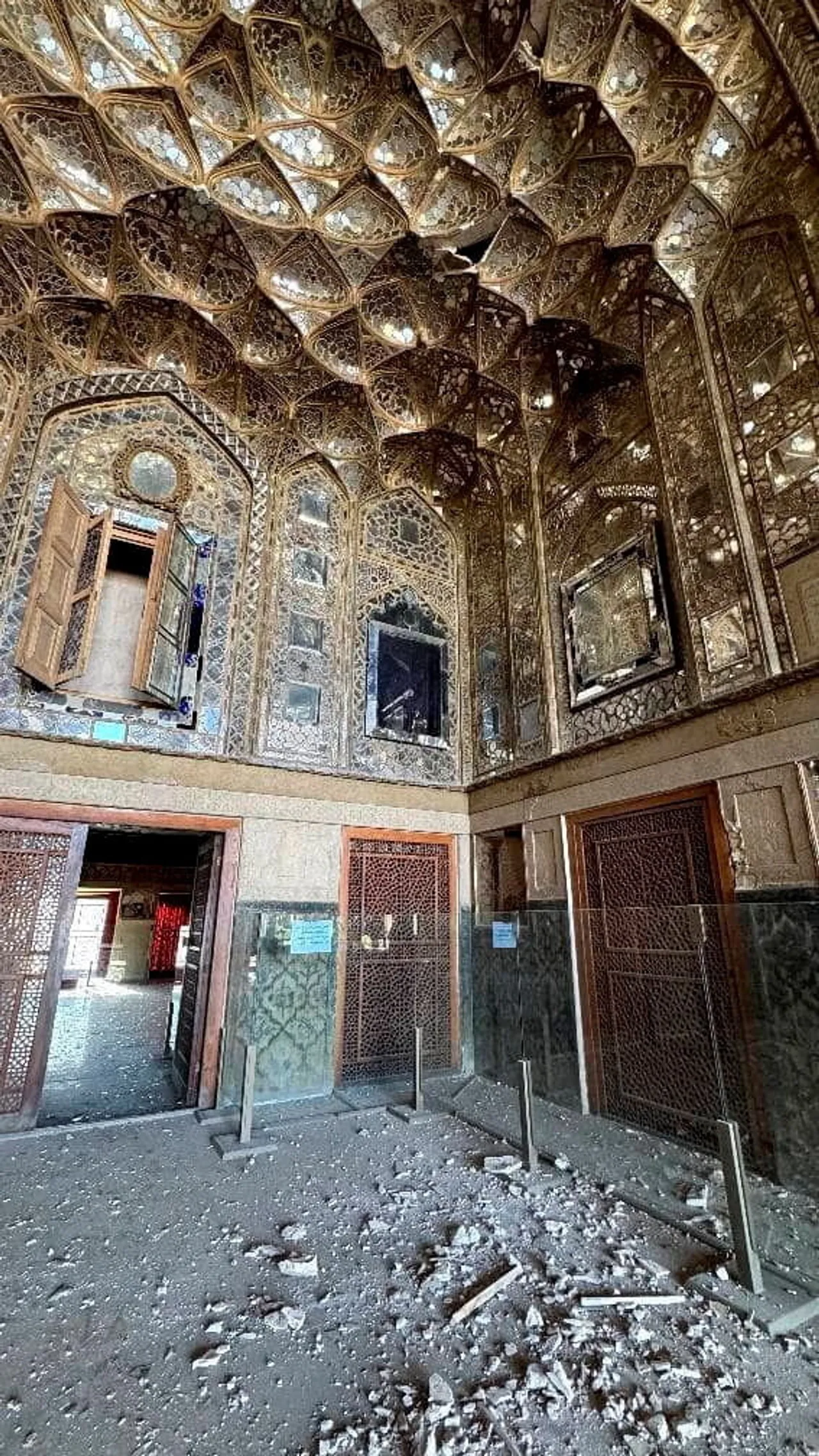
The Chehel Sotoun monument and pavilion, a UNESCO World Heritage site, was impacted by airstrikes that damaged its Safavid frescoes, tilework, and mirror mosaics.
The towering six-storey Ali Qapu Palace and the surrounding Naqsh-e-Jahan Square were also damaged. Visuals show broken windows, hanging doors and dislodged tilework.
Isfahan remained Iran’s capital in three historical eras.
The Safavid dynasty from the 16th to the 18th century left behind a legacy of grandeur.
The ruler Shah Abbas the Great invited theologians from Lebanon, Armenian artisans, miniature painters, carpet weavers, jewellers and potters, making the city enormously wealthy and one of the most beautiful in the world.
“The Royal Square of Isfahan surpasses any public square I have seen in Rome or throughout the West,” wrote Pietro Della Valle, the celebrated 17th-century Italian traveller.
Mehdi Jamalinejad, the governor of Isfahan, described the city as “a museum without a roof”.
Protesting against the damage, he said the coordinates of the historic sites were circulated among the warring parties. Additionally, blue shield signs were placed on the roofs of the monuments, designating them as historical treasures under the 1954 Hague Convention for the protection of cultural property in war.
The deadly US-Israeli air strikes also hit monuments in Tehran, including Golestan Palace, the 19th-century masterpiece of the Qajar Dynasty.
The palace was the Persian royal residence and seat of power of the Qajar family. The coronation ceremony for Mohammad Reza Pahlavi was held there in 1969. Its celebrated hall of mirrors lies shattered.
In Sanandaj, the country's second-largest Kurdish city, local media reported that the 19th-century museums and heritage sites—specifically the Salar Saeed and Asef Vaziri mansions—sustained damage.
Iran's cultural heritage ministry reported that at least 56 historical sites, museums, and monuments have been damaged by the US and Israeli airstrikes.
History repeating itself
But we have seen all this before. In the chaotic aftermath of the 2003 American invasion of Baghdad, the world witnessed the destruction of Iraq's heritage. The National Museum was looted, the Koranic library burned, and ancient Sumerian and Babylonian artefacts plundered.
The late journalist Robert Fisk, reporting from the ground at the time, implicated US forces.
Fisk famously recounted alerting the US Marines as the National Library and archives went up in flames – only to be ignored.
In his words, the destructive levelling brought Iraq to ‘Year Zero’, reducing its millennia of history to ashes.
History is peppered with examples of invaders and warmongers destroying cultural treasures and historical artefacts.
From the temple of Palmyra by Daesh terrorists and the Bamiyan Buddhas by the Taliban in recent times, to the Khmer Rouge and destruction of Warsaw by Nazi Germany in the 20th century, to further back in history, when British and French troops burnt down the Summer Palace in Beijing, and Spanish Conquistadors wreaked havoc on temples and codices of Aztec and Inca empires.
Yet Ispahan’s monuments largely withstood the brutality of invaders.


From the Mongols to the Timurids, and from the Afghans to the Iraqis during the ‘Sacred War’ – all chose not to attack its architectural heritage.
The US Committee of the Blue Shield, a non-profit organisation, expressed deep concern over such attacks, saying Iran’s historic sites “belong not only to the Iranian people, but to all of humanity”.
The Isfahan Governor decried the attacks as a “declaration of war on a civilisation”.

Link to a storied past
Iranians have a profound connection to their culture and its cultural artefacts, more so because Iran sees itself as a civilizational state rather than a modern nation-state.
It views its identity as rooted in thousands of years of history, in which Shia Islamic identity merged with Persian heritage rather than supplanting it.
Festivals such as Nowruz, the Iranian New Year – celebrated to welcome spring – along with cultural observances like Yalda Night (the winter solstice) and Chaharshanbeh Suri (the fire festival), continue to reflect the deep-rooted influence of ancient pre-Islamic Persia.
The enduring legacy of the poet Ferdowsi and his epic Shahnameh (Book of Kings) is regarded as a cornerstone of Iranian nationhood, having preserved Persian cultural identity for more than a millennium.
So deeply embedded is this sense of pride in Iranian society that the clergy, despite its ideological leanings, has learned to accommodate it and even use it to strengthen nationalist sentiment.
Here’s a cinematic illustration: In 1994, in an extraordinary swap, the ruling clergy brought the greatest surviving Persian manuscript of the Shahnameh back to Iran after 400 years.
Made in Tabriz in the 1520s, it was presented to Ottoman Sultan Selim III, and it ended up with Baron Rothschild.
The Iranian government circumvented sanctions by exchanging the manuscript for a painting of a naked woman by de Kooning, stored at the Tehran Museum of Contemporary Art, both valued at twenty million dollars each.
After years of secret talks with a British art dealer, the exchange took place at a Vienna Airport tarmac, with armoured vans chained to the aeroplane’s landing gear.
The swap was approved by Iran's then vice president, Hassan Habibi.
Even today, the clergy understands how damage to cultural heritage strips nations of their past, and that art, culture and poetry bring the nation together.
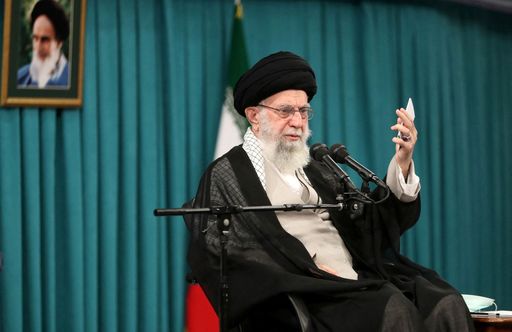
Poetry runs through the veins of Iranian history. Even the staunchest clerical leaders reflect this. Imam Khomeini, the founding father of the Islamic Revolution, was a poet, and Khamenei a literary critic – in the 80s, he delivered a lecture on Allama Iqbal’s poetry in Lahore.
When I was leaving Washington DC last year, my Iranian friend Majed Azizi gifted me a copy of the diwan of Hafez, Iran’s beloved 14th-century poet.
I would meet Azizi, a businessman, at a cafe in Virginia, where he would often translate and explain Persian poetry to me. Azizi would relive memories of his hometown, Isfahan and tell me that Tehran is Iran’s mind, Isfahan its heart.
Today, I phoned him to ask how his family back home is coping with the war.
While they are well for now, he feels heartbroken about the bombing around Naqsh-e-Jahan Square, but also hopeful that spring will return to its gardens soon. He recited another verse of Hafez over the phone.
I cast this omen; the star of misfortune has passed, and the struggle is over
All the pride and luxury that Autumn displayed
Has finally ended at the feet of the Spring breeze
Perhaps Isfahan, too, wishes to feel the fresh breeze of spring.