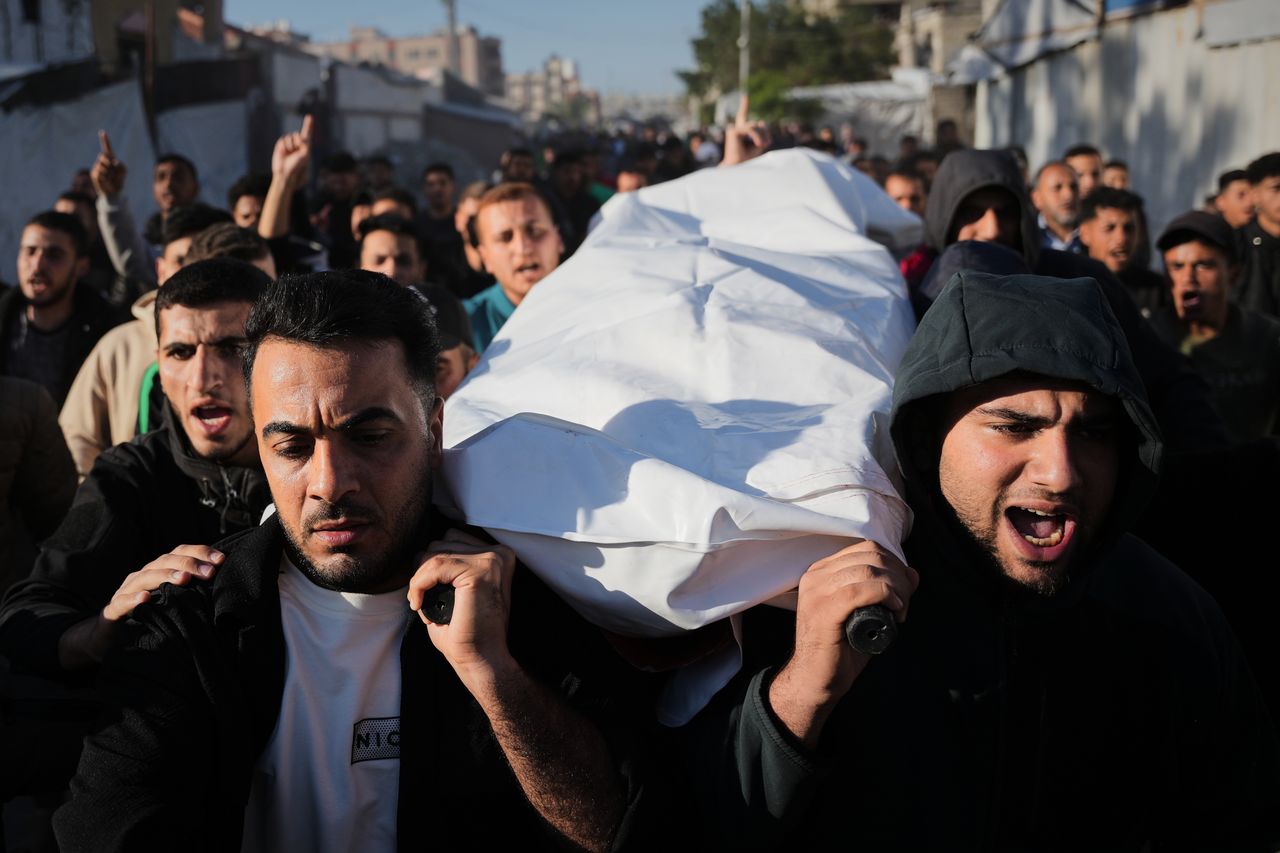
A fresh report by Doctors Without Borders (MSF) details how Israel deliberately restricted food and aid in Gaza, creating a "manufactured malnutrition crisis" with particularly devastating impacts on infants and pregnant and breastfeeding women.
The UN officially declared famine in parts of Gaza in August last year, with the UN relief chief Tom Fletcher calling for an end to Israel’s “systematic obstruction” of essentials and aid.
According to the rights group Euro-Med Human Rights Monitor, this policy of blocking basic things necessary for human survival proved Israel’s intent to starve Gaza and kill more Palestinians.
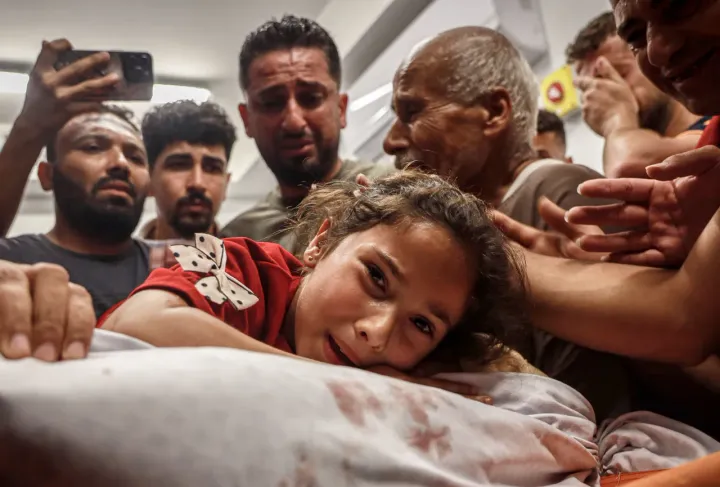
Israel’s forced starvation killed at least 440 Palestinians in Gaza, including 147 children, according to Gaza’s health ministry.
The MSF report warned on Thursday that the situation remained "extremely fragile", despite a ceasefire in place since last October.
"The malnutrition crisis is entirely manufactured," Merce Rocaspana, MSF's medical referent for emergencies, said in a statement.
The analysis showed significantly higher levels of prematurity and mortality among infants born to malnourished mothers and spikes in miscarriages.
Deliberate starvation
MSF linked this malnutrition to Israel's blockade of essential goods and attacks on civilian infrastructure, including medical facilities, despite a ceasefire.
"Insecurity, displacement, restrictions on aid, and limited access to food and medical care have had devastating consequences for maternal and newborn health," the charity said in a statement.
The UN said last month that Israel denied or impeded nearly half of coordinated humanitarian aid movements inside Gaza despite a ceasefire deal.
UN spokesperson Stephane Dujarric warned that humanitarian operations "continue to face significant impediments".
The WHO said in May 2025 that “deliberate withholding of humanitarian aid” was intensifying starvation risks across Gaza.
The UN-backed Integrated Food Security Phase Classification (IPC) later warned that the “worst-case scenario of famine” was unfolding in parts of Gaza amid “severely restricted humanitarian access".
Several humanitarian organisations and medical groups have accused Israel of using starvation as a method of warfare.
MSF said Israeli policies amounted to the “deliberate use of starvation".
WHO’s Eastern Mediterranean Health Journal described the crisis as the result of “siege warfare", arguing that restrictions on food and healthcare created predictable mass malnutrition outcomes.
Experts say Gaza’s malnutrition and food crisis is a result of deliberate Israeli policy choices rather than inevitable wartime chaos.
Renowned famine scholar Alex de Waal stated after four decades of studying such crises: “There is no case of such minutely engineered, closely monitored, precisely designed mass starvation of a population as is happening in Gaza today.”
Not just restriction but destruction
But the malnutrition crisis in Gaza was not caused only by restrictions on aid.
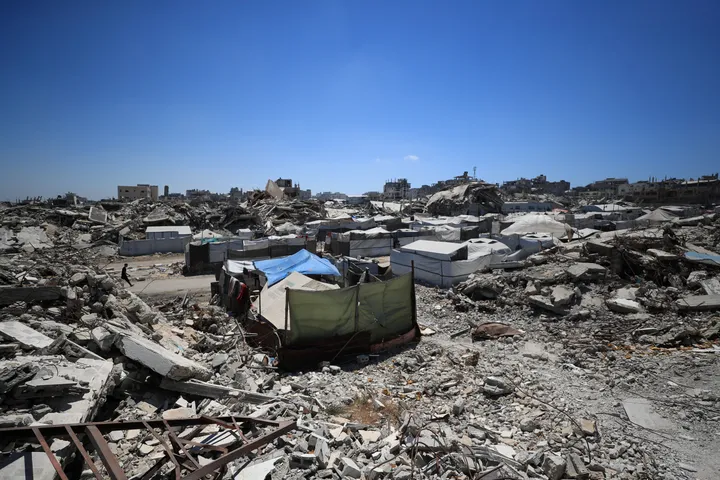
Over the course of the war, Gaza’s entire local food-production and distribution system was progressively dismantled by Israel.
Agricultural land was bombed, and fishing ports were destroyed. Water systems collapsed.
Israel repeatedly bombed food warehouses and markets.
By mid-2025, the UN’s Food and Agriculture Organization (FAO) reported that 98.5 percent of Gaza’s cropland was either damaged, inaccessible or both, leaving only 1.5 percent available for farming in a territory of more than two million people.
The Guardian, citing UN assessments, reported last year that more than 90 percent of Gaza’s cattle had been wiped out. Either killed by Israeli attacks or due to lack of fodder.
Even before October 2023, the Palestinian enclave’s fishermen operated under heavy restrictions imposed by Israel. Fishing zones were repeatedly reduced.




According to the Gaza Fishermen’s Syndicate, at least 238 fishermen have been killed by Israel since October 2023.
Israeli attacks damaged or destroyed over 94 percent of fishing boats, according to FAO.
Fishing still remains severely limited.
Deadly aid by GHF
The MSF report also examines the harm done by the US- and Israeli-backed so-called ‘Gaza Humanitarian Foundation (GHF)’, set up last year to largely replace UN distribution of aid in Gaza.
GHF was described by the UN as a “death trap” and an "abomination".
MSF pointed out that by late May 2025, food distribution points in Gaza had dropped from around 400 to four under GHF, which disbanded last November following the October ceasefire.
The food distribution points were "militarised and deadly", said Jose Mas, head of the MSF emergency unit.
According to the UN Office for Human Rights, between May 27 and August 13 2025, at least 1,760 Palestinians were killed while trying to access aid: 994 near GHF sites and 766 along supply convoy routes.
During the period when GHF was functioning, MSF said that facilities it supported in Gaza had seen "a sharp increase in patients seeking care due to violence perpetrated at food distribution points and malnutrition linked to deprivation of food".
MSF teams had also observed a high number of miscarriages during this period, it said.
Devastating impact on mothers and newborns
MSF said it had collected data from more than 200 mothers and newborns receiving treatment in neonatal intensive care units at hospitals in Khan Younis and Gaza City between last June and January.
Its analysis found that more than half of the women were affected by malnutrition at some point during their pregnancy.
A quarter of them were still malnourished during delivery.
The impact was clear: 90 percent of the babies born to malnourished mothers were born prematurely and 84 percent had low birth weight, the analysis found.
"Neonatal mortality was twice as high among infants born to mothers affected by malnutrition compared with those born to mothers without malnutrition," MSF said.
The medical charity also examined data from 513 infants under six months of age admitted to outpatient therapeutic feeding programmes in Khan Younis between October 2024 and December 2025.
Of them, "91 percent were at risk of poor growth and development", it said.
By last December, 200 of the infants were no longer in the programme, but fewer than half had been cured, it found. Seven percent of them had died, it added.
Between January 2024, when the first cases of child malnutrition were reported in Gaza, and February 2026, MSF said it had admitted 4,176 children under 15 years old , 97 percent of them younger than five, for acute malnutrition programmes.
During the same period, 3,336 pregnant and breastfeeding women were enrolled in outpatient programmes, it said.
Israeli attacks have killed 824 Palestinians and wounded 2,316 since the ceasefire deal was signed in October last year.
The agreement was reached after two years of Israel’s genocidal war launched in October 2023, which left more than 72,600 Palestinians dead, over 172,000 injured, and caused massive destruction to 90 percent of civilian infrastructure in Gaza.