 Abhishek G Bhaya
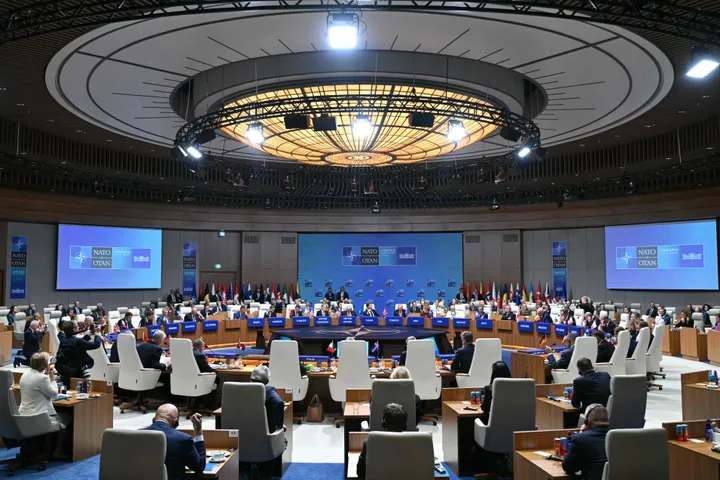
NATO used the opening day of its 2026 summit in Ankara to showcase a sweeping expansion of the alliance's defence industrial ambitions, announcing a series of multinational procurement projects that involve several members, including Türkiye.
The joint manufacturing initiatives and new investments aim to strengthen Europe's military capabilities while reinforcing transatlantic industrial cooperation.
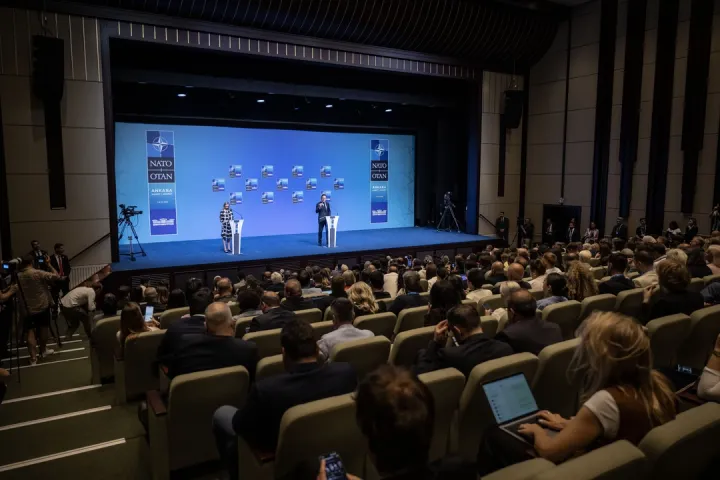
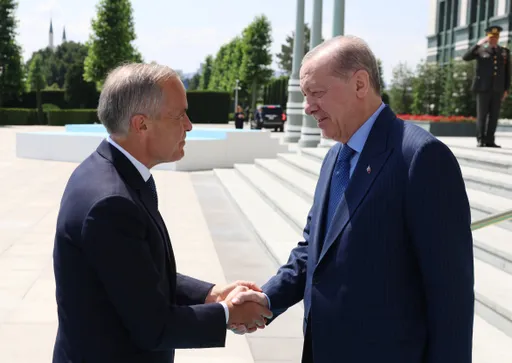
The announcements came during the NATO Defence Industry Forum — the first official event of the two-day summit in the Turkish capital — where Secretary General Mark Rutte said the alliance was translating last year's commitment to increase defence spending into concrete military capabilities.
"Allies and industry from both sides of the Atlantic will reveal new major projects and sign contracts worth literally billions of dollars," Rutte told delegates, describing the investments as essential for strengthening NATO's deterrence while boosting economic growth and defence manufacturing across the alliance.
The forum set the tone for a summit expected to be dominated by defence investment, industrial capacity, burden-sharing and continued support for Ukraine.
Earlier, Turkish National Defence Minister Yasar Guler emphasised the need to translate commitments on defence spending into real projects.
New multinational defence projects
Among the headline announcements was the launch of a multinational Airbus A400M fleet initiative involving Belgium, Croatia, France, Poland, Spain, Türkiye and the United Kingdom.
The project follows NATO's existing multinational A330 Multi-Role Tanker Transport (MRTT) programme and adopts a "pooling and sharing" model, allowing participating countries to jointly procure aircraft, share operational costs, logistics and training.
Finnish membership in the MRTT fleet was also confirmed, while NATO announced the imminent delivery of the fleet's tenth Airbus A330 tanker aircraft.
Rutte also confirmed a joint procurement programme for up to five MQ-4C Triton high-altitude, long-endurance surveillance drones. Denmark, Finland, Germany and Norway will jointly acquire the aircraft to expand NATO's Intelligence, Surveillance and Reconnaissance (ISR) capabilities, particularly over maritime regions including the Arctic and the High North.
The Tritons will complement NATO's existing Alliance Ground Surveillance fleet based in Sigonella, Italy.
In another major capability announcement, NATO said allies will jointly procure up to ten Saab GlobalEye airborne surveillance aircraft to replace the alliance's ageing Boeing E-3A AWACS fleet, marking one of NATO's most significant airborne early warning modernisation efforts in decades.
Defence production moves to centre stage
Beyond procurement, NATO also unveiled a series of initiatives aimed at accelerating defence manufacturing across the alliance.
Several member states formed new multinational procurement coalitions to jointly acquire critical capabilities, particularly in air defence and long-range strike systems, with the objective of accelerating deliveries for both allied militaries and Ukraine.
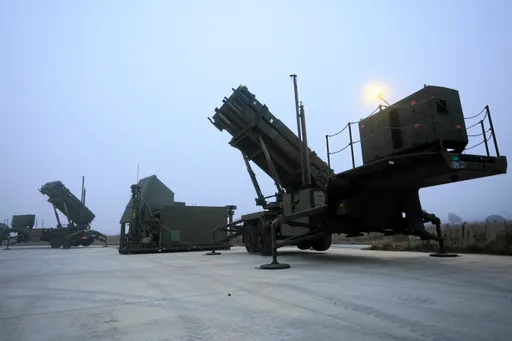
Among the industrial announcements were new co-production initiatives between US and European defence firms, including an agreement between Lockheed Martin and Germany's Rheinmetall to expand European production of the ATACMS long-range missile system, alongside a separate Lockheed Martin programme to strengthen European sustainment of Patriot PAC-3 missile interceptors.
The move is intended to strengthen transatlantic industrial cooperation while helping Europe rapidly expand production capacity.
"This is big news, and a demonstration of NATO transatlantic unity in delivering key capabilities for our security," Rutte said.
"Our alliance can do more when we do it together."





According to NATO, the co-production initiatives form part of efforts to translate the alliance's new defence investment target into tangible military capabilities by leveraging combined industrial capacity on both sides of the Atlantic.
Türkiye pushes for capabilities over spending
Hosting this year's summit, Türkiye also used the occasion to underline that increased defence spending must translate into tangible military capability rather than remain a budgetary commitment.
Speaking at a separate NATO event in Ankara, Turkish National Defence Minister Yasar Guler welcomed allies' growing willingness to raise defence spending but argued that deterrence ultimately depends on the ability to generate ready forces, ammunition, integrated air and missile defence, logistics and a resilient defence industrial base.
"Increasing defence spending is important, yet spending money alone does not produce deterrence," Guler said.
He said Türkiye supports a stronger European contribution to NATO's defence while maintaining what he described as the indispensable transatlantic bond with the United States.
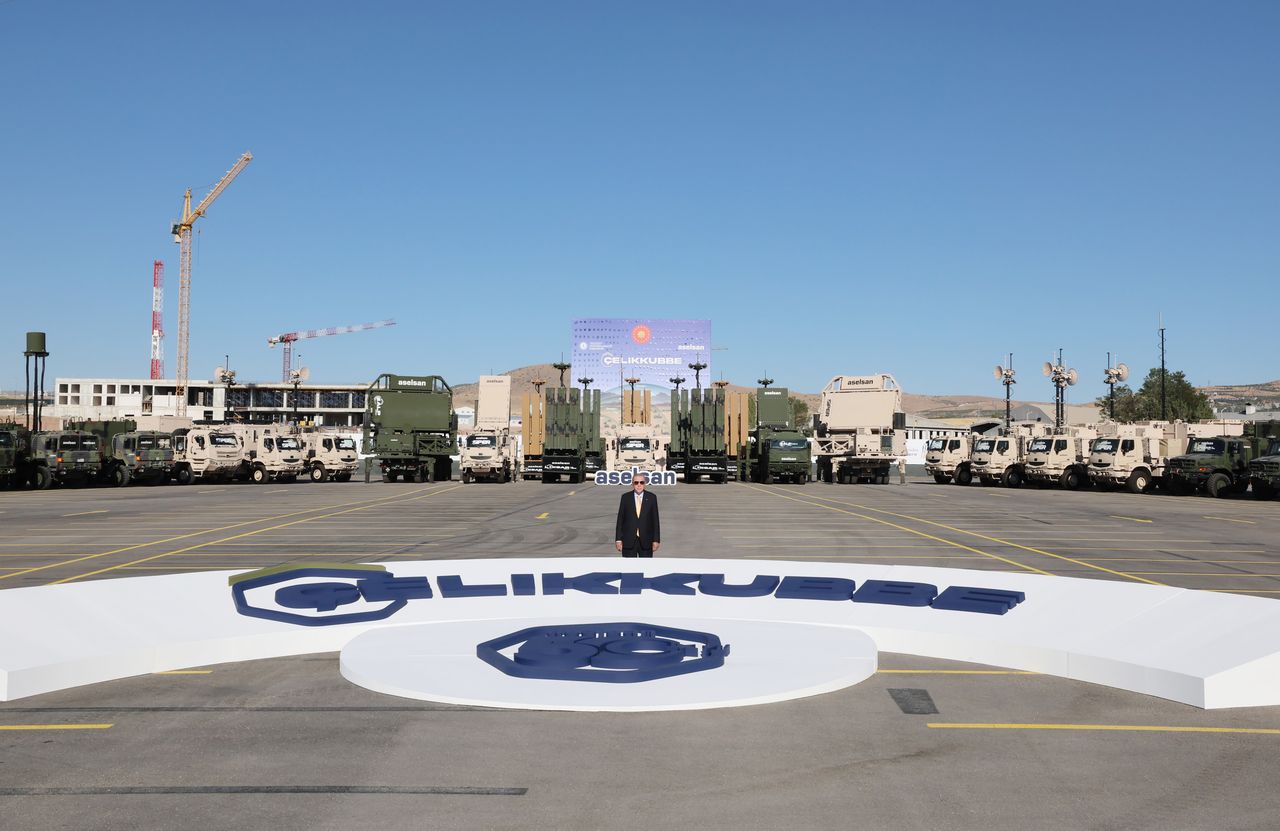
Guler also highlighted Türkiye's expanding defence industry, saying Ankara has developed advanced capabilities in unmanned systems, electronic warfare, air defence and naval platforms, and plans to prioritise investments in air and ballistic missile defence, long-range strike systems and unmanned technologies over the next three years.
He argued that NATO-EU defence cooperation should remain "inclusive, integrating and mutually reinforcing," adding that jointly developed capabilities could help close the alliance's production and capability gaps.
New initiatives on drones and manufacturing
Rutte, meanwhile, also announced several new alliance-wide industrial initiatives designed to address emerging battlefield requirements.
The NATO Engine initiative will establish a network of defence factories and manufacturing facilities across allied countries to expand production capacity.
"No single nation can meet growing demand alone," Rutte said while unveiling the programme.
NATO also launched the Drone Edge initiative aimed at improving counter-drone capabilities. Under the initiative, allies committed more than $40 billion in counter-drone investments over the next five years, while agreeing to train five times more drone operators by the end of 2027.
The announcements reflect lessons drawn from modern conflicts, particularly the extensive use of drones in Ukraine.
Demonstrating delivery
The defence industry announcements come as European allies seek to demonstrate that last year's commitment to spend up to five percent of GDP on defence is beginning to translate into concrete capabilities.
The showcase also arrives amid continued calls from US President Donald Trump for European allies to shoulder a greater share of NATO's defence burden.
European governments are increasingly taking responsibility for conventional defence on the continent as Washington signals a gradual shift towards expecting allies to provide greater military capabilities themselves.
Rutte described the developments as evidence of what he called "NATO 3.0" — an alliance in which a stronger European defence industrial base complements continued transatlantic cooperation.